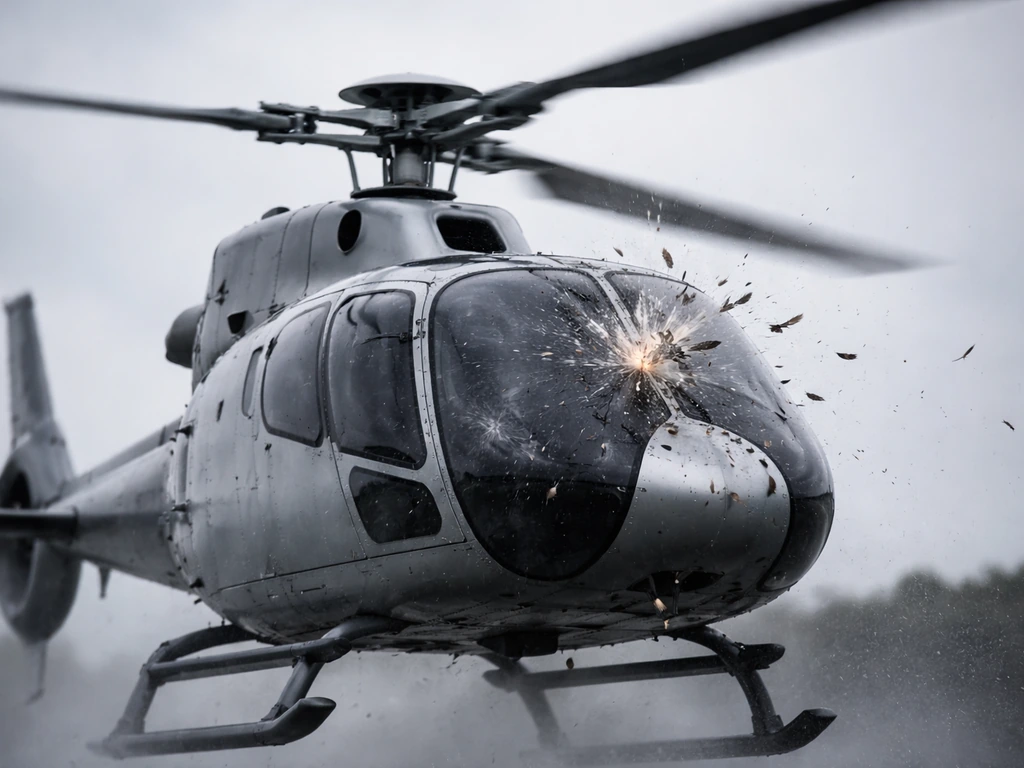
When a bird strikes a plane, the outcome depends almost entirely on where the impact happens and what phase of flight the aircraft is in. Most strikes are minor fender-benders that get logged in a database and forgotten. Some cause real damage to engines or windshields that triggers immediate crew action and a mandatory post-flight inspection. A small number are serious enough to affect flight safety. And for the bird, the collision is almost always fatal. If you are wondering what happens if a helicopter hits a bird, the same kind of impact effects can lead to serious rotorcraft windshield and control concerns. Here is what actually happens, step by step.
What Happens When a Bird Strikes a Plane

Maya Chen
21 May 2026
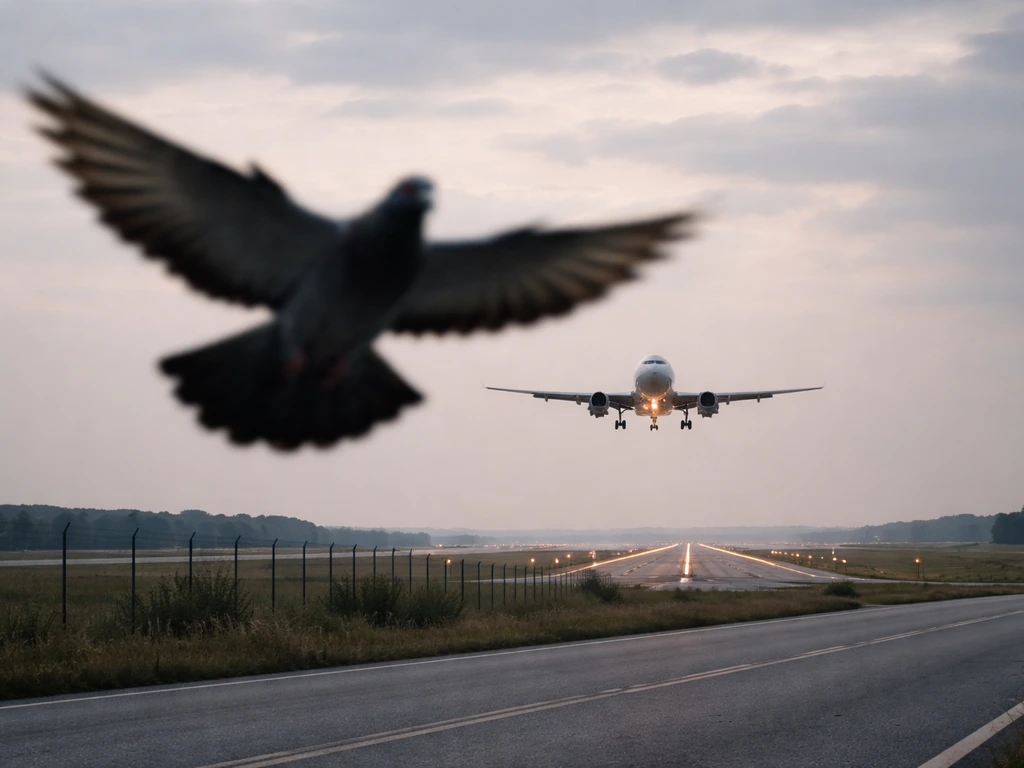
What happens the instant a bird hits a plane
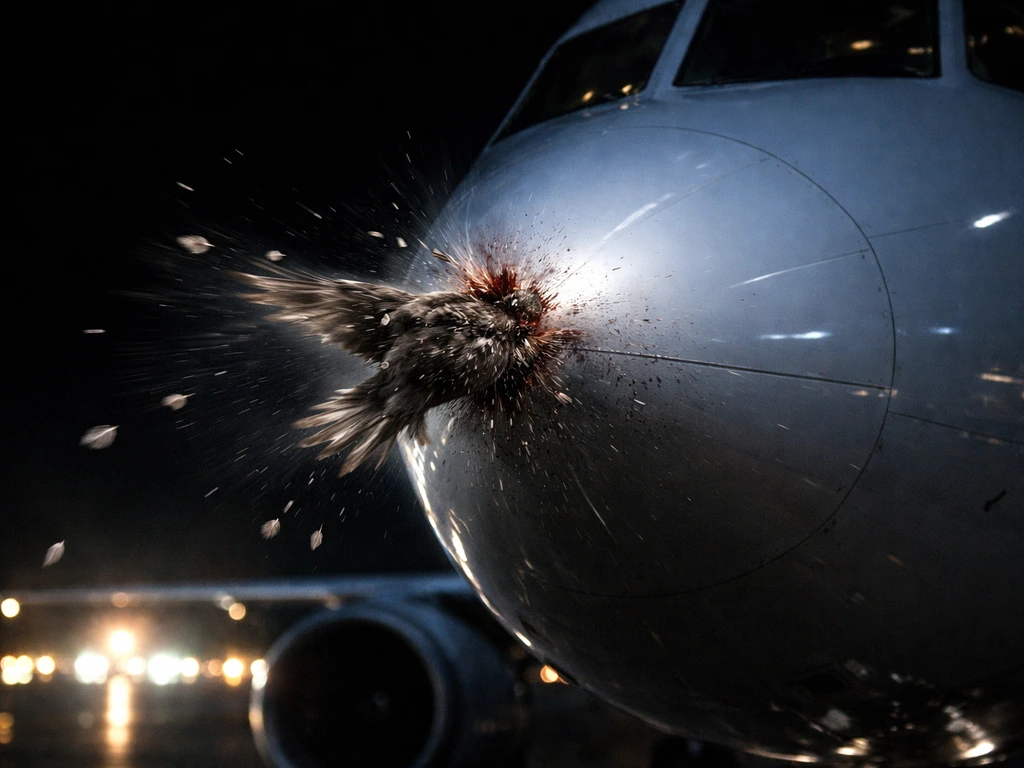
The physics are brutal and fast. At approach speeds of 150+ knots, even a 4-pound Canada goose carries an enormous amount of kinetic energy on impact. The aircraft does not feel it the way a car feels a pothole. The crew typically hears a loud thump or bang, sometimes sees a flash or smear on the windshield, and may get a sudden instrument or engine reading change. If the strike hits the airframe only, that is often the full extent of what the crew notices.
The critical variable is where the bird goes. A bird that bounces off the nose or fuselage is a nuisance. A bird that enters an engine intake is a completely different problem. And because about 61% of U.S. bird strikes happen during descent, approach, and landing roll, with another 36% during takeoff and initial climb, both phases where engines are running at high power, the engine ingestion scenario is not rare.
Engine strikes versus airframe and windshield strikes
These two categories play out very differently for the crew and the aircraft, so it helps to separate them.
Engine ingestion
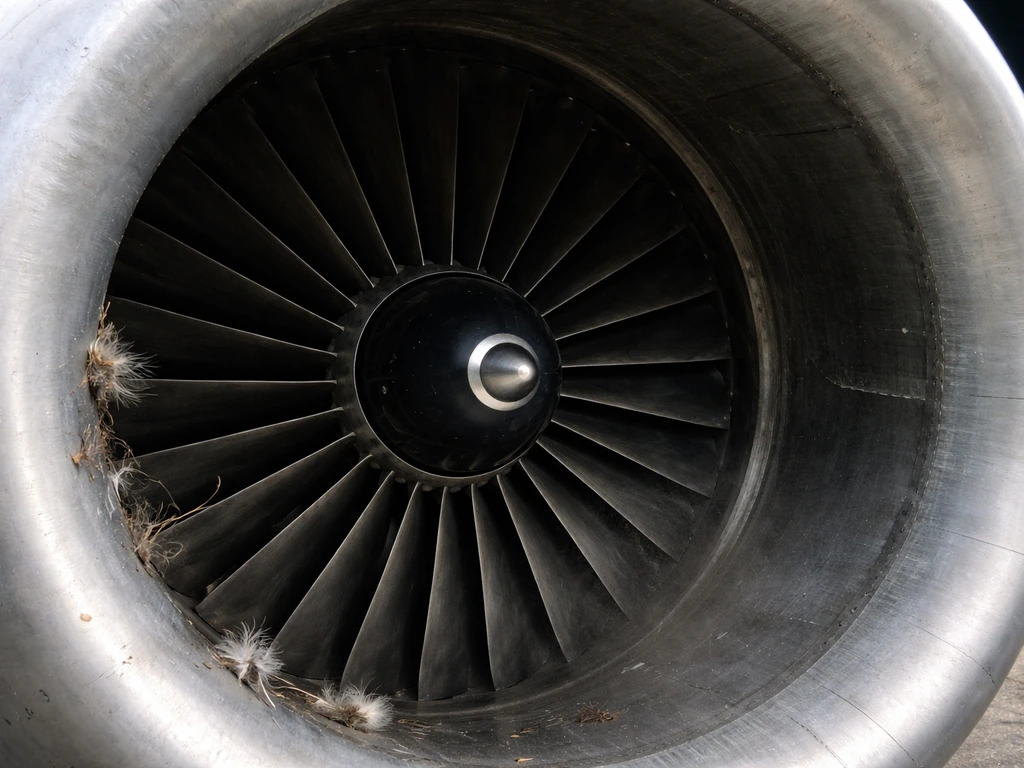
Engines and wings each account for roughly 25% of all damaged aircraft components in U.S. bird strike data going back to 1990. When a bird enters a jet engine, the fan blades can be bent or broken. If the damage is severe, you get compressor stall, power loss, or in rare cases an uncontained failure where blade fragments exit the engine housing. Modern turbofan engines are certified under 14 CFR §33.76 specifically to handle bird ingestion at defined bird sizes and speeds, and the standard requires that the engine either continue running safely or shut down without losing the aircraft. That certification standard exists in equivalent form in EASA's CS-E 800. So a single-engine ingestion on a twin-engine transport is survivable and the aircraft should be able to continue to a safe landing. The real danger escalates when multiple engines ingest birds simultaneously, which is exactly what happened in the famous 2009 US Airways Flight 1549 case. Waterfowl, especially geese and ducks, are only about 4% of all bird strike events but cause 27% of the strikes that actually damage aircraft. Their mass is the reason.
Windshield and airframe strikes
A windshield strike can crack or even penetrate the glass, and in helicopter operations the forces are particularly significant. This same bird-strike physics can apply to rotorcraft too, which is why people ask can a bird take down a helicopter. EASA has flagged an upward trend in rotorcraft windshield strikes with high impact forces as a meaningful safety concern. One documented FAA case involved a Sikorsky S-76C+ where the bird strike to the windshield area caused unintended movement of the engine control levers toward flight idle, cutting power on both engines. That is a good illustration of a secondary effect: the initial impact does something unexpected downstream of the obvious damage. SKYbrary's guidance for air traffic controllers specifically flags the possibility of reduced cockpit visibility and potential loss of control when windshield penetration occurs, precisely because these secondary effects can be non-obvious from the outside.
| Strike Location | Immediate Effect | Severity Range | Certification Standard Applies? |
|---|---|---|---|
| Engine intake | Fan blade damage, power loss, possible shutdown | Minor to catastrophic (multi-engine) | Yes — 14 CFR §33.76 / CS-E 800 |
| Windshield | Cracking, penetration, cockpit visibility loss, possible control interference | Minor to serious | Partial — structural standards vary |
| Nose/fuselage skin | Dent, puncture, surface damage | Usually minor | No specific bird-strike standard |
| Wing leading edge | Structural deformation, possible fuel system concern | Minor to moderate | Partial — airworthiness limits apply |
What happens after the plane lands: inspections and reporting
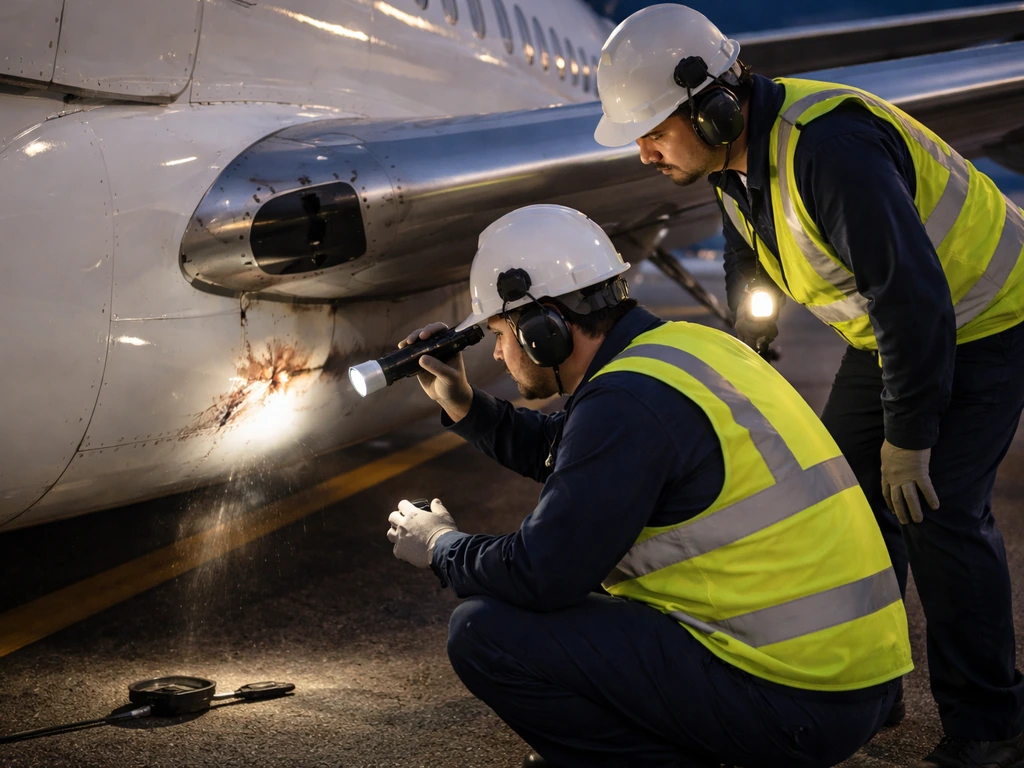
After a confirmed or suspected bird strike, there is a defined workflow that kicks in before the aircraft flies again. It is not optional and it is not bureaucratic box-ticking. The inspection is the mechanism that catches damage the crew may not have been aware of.
The inspection itself
Maintenance crews check the areas most likely to have been struck based on the crew's report. When engine ingestion is suspected or confirmed, the inspection follows a structured task list that includes looking for physical signs of ingestion, checking for blade damage, and in some cases sniffing for unusual cabin odors that can indicate internal engine damage. The SKYbrary operator checklist guidance specifically emphasizes that inspection workflows need to be ingestion-aware because not all engine damage is visible from the outside.
Reporting the strike
In the United States, pilots are urged under FAA AIM §7-5-3 to file a wildlife strike report using FAA Form 5200-7. That form, updated as of August 2024, captures species information, bird size, how many birds were struck, what phase of flight the strike occurred in, and what damage resulted. The data goes into the FAA's National Wildlife Strike Database, which now covers 1990 through 2024 and is the source for most of what we know statistically about when and where bird strikes happen. The U.S. Fish & Wildlife Service explains that the FAA developed the blank" rel="noopener noreferrer">Wildlife Strike Report Database to track and analyze wildlife strikes, and that AHAS (Avian Hazard Advisory System) uses radar plus modeled bird survey data derived from the FAA database as a secondary collision-risk layer. The data goes into the FAA's National Wildlife Strike Database, which now covers 1990 through 2024 and is the source for most of what we know statistically about when and where bird strikes happen chances of a bird hitting a plane. The FAA also uses the Avian Hazard Advisory System (AHAS), which pulls from radar data and the strike database to calculate collision risk for low-level flight routes.
At the international level, ICAO's Bird Strike Information System (IBIS) collects parallel data. Reporting under IBIS can include sophisticated species identification using feather fragments and DNA analysis when visual identification of the bird is not possible, which is often the case since there is rarely much left of the bird after the collision.
Is there any disease risk to people after a bird strike?
This is where a lot of misinformation circulates, and it is worth being clear. For passengers on a plane that has just experienced a bird strike, there is essentially no meaningful disease exposure. You are inside a sealed cabin. The biological material from the bird stays outside on the aircraft surface or inside the engine. You are not exposed to it.
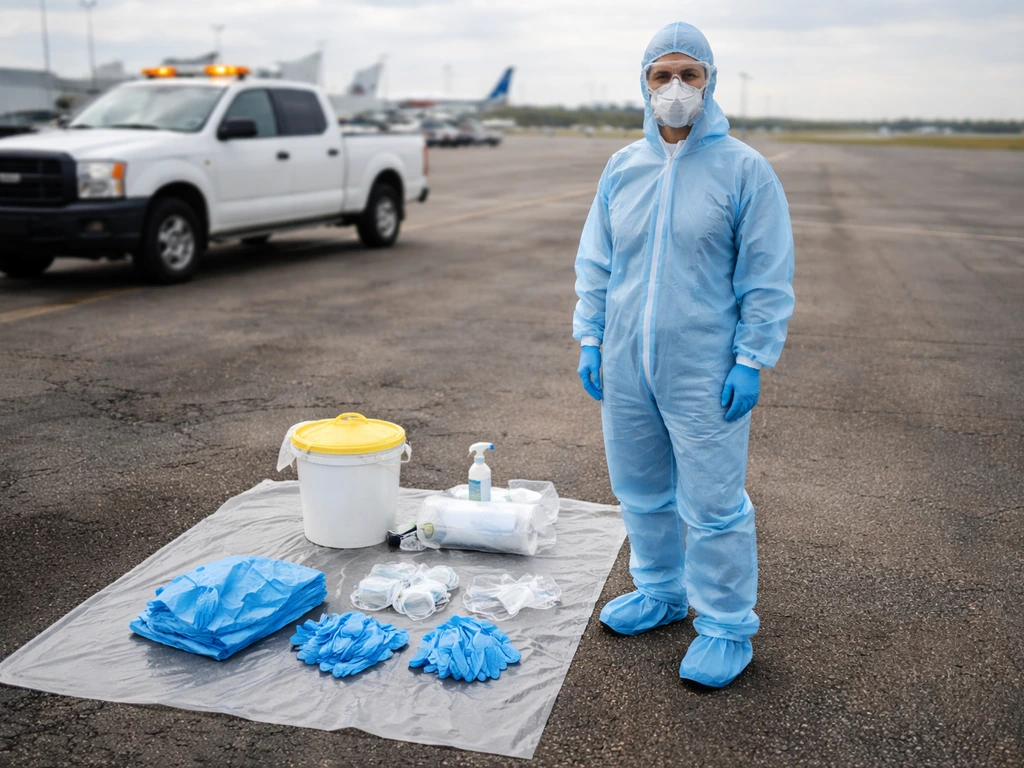
The small group of people with any real exposure concern is ground crew and maintenance workers who physically handle the aircraft post-strike, especially when cleaning up bird remains from engines, inlets, or airframe surfaces.
What the science actually says about disease risk
Avian influenza transmission to humans from contact with bird remains is rare even in high-exposure agricultural settings. The CDC notes that human infections with avian flu viruses are uncommon despite contact with infected bird droppings being a recognized transmission route for exposed workers. The risk for someone briefly near a bird-struck aircraft is lower still. West Nile Virus is another concern people raise, but infection via casual contact with bird tissue is not a documented transmission route. It is a mosquito-borne illness.
That said, if you are a maintenance worker or ground crew member physically cleaning bird remains from an aircraft, basic precautions matter. The CDC and OSHA guidance for these situations is practical:
- Wear gloves and avoid touching your face, eyes, or mucous membranes while handling bird material
- Do not use pressurized water or power-wash bird remains, as this aerosolizes pathogens
- Wash hands thoroughly immediately after removing gloves or finishing cleanup
- Use respiratory protection (a fitted N95 at minimum) if cleaning enclosed spaces where feathers or feces are disturbed
- Follow your facility's PPE removal protocol, which should include sanitation steps before leaving the work area
The bottom line: the disease myth far outpaces the actual risk for the vast majority of people involved in or near a bird strike event. Real precautions are for hands-on cleanup workers, not for passengers who never leave the cabin.
What happens to the bird
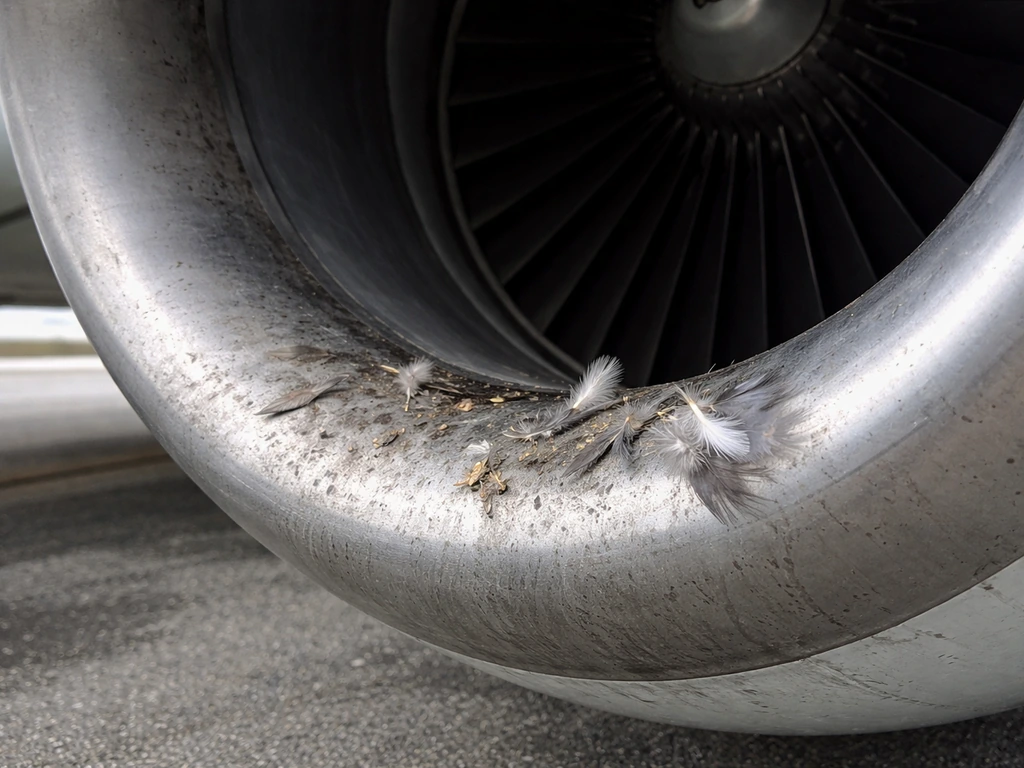
Survival for the bird is nearly impossible in most bird strike scenarios. A collision with an aircraft at approach speeds typically results in fatal trauma from the force alone. Birds that enter a running jet engine do not survive. Birds that strike a windshield or leading edge at high speed are killed by the blunt force impact. The rare exception is a low-speed encounter where a larger bird grazes a slower-moving aircraft at a shallow angle, but this is uncommon.
From an ecological standpoint, bird strikes are also a mortality concern at the population level for some species, particularly large, slow-reproducing birds like vultures, eagles, and pelicans. The FAA's strike database has become a useful tool for ornithologists tracking which species are most frequently involved in collisions, because the species ID data from reports and DNA analysis feeds back into conservation planning as well as safety planning.
How airports and flight operations reduce strike risk
Given that most strikes happen during takeoff and landing, the airport environment is where risk reduction efforts are concentrated. This is not about scaring birds away with noise cannons once a week. Modern bird hazard management is a structured, regulatory requirement.
What certified airports are required to do
Under 14 CFR §139.337, certificated airports in the U.S. must develop a Wildlife Hazard Assessment and, if the assessment identifies a significant risk, implement a formal Wildlife Hazard Management Plan (WHMP). ICAO Annex 14 sets the equivalent international standard, with parallel guidance in the ICAO Wildlife Hazard Management Handbook. The FAA's wildlife management framework ties these plans to habitat control, active deterrence, and species monitoring.
What actually reduces bird strike frequency
- Habitat management: removing standing water, tall grass, and food sources that attract birds to the airport environment
- Active deterrence: trained falconers, pyrotechnics, distress calls, and laser systems used in rotation so birds do not habituate
- Species monitoring and strike data analysis: identifying which species are most active near the airport and when, then focusing deterrence efforts on those windows
- Runway management: coordinating departures and arrivals around known bird movement patterns, particularly at dawn and dusk
- Pilot reporting: encouraging crews to file Form 5200-7 so the NWSD stays current and risk models reflect real conditions
- AHAS integration: using the Avian Hazard Advisory System for low-level route planning, especially in military and training operations
None of this eliminates the risk entirely. Birds are not predictable, airports are ecological transition zones that naturally attract wildlife, and aircraft will continue to operate in shared airspace with birds. But the combination of engineering standards (engine certification), operational protocols (post-strike inspection and reporting), and habitat management reduces both the frequency and severity of strikes in measurable ways. The data from the FAA's strike database directly informs these improvements, which is one reason why accurate strike reporting matters even when the immediate damage seems trivial.
FAQ
What happens immediately after a bird strike during takeoff or landing roll?
The crew focuses on aircraft indications tied to the impact location, especially engine-related warnings and any sudden changes in thrust, vibration, or controllability. Even if it feels minor, the aircraft is typically stabilized and the crew plans for an inspection before further flight, because ingestion damage can be intermittent or not fully visible until engines are examined.
Can the engine keep running if a bird goes into an intake?
Often yes, modern turbofan certification standards are designed so the engine can continue safely or shut down in a controlled way without endangering the aircraft. The key caveat is that risk rises when multiple birds are ingested at once or when damage causes compressor stall, power loss, or unusual indications that require immediate operational decisions.
How do crews decide whether the strike was “just a thump” or a serious event?
They treat it as more than sound based on where the impact likely occurred (nose, wing leading edge, windshield, or engine inlet), what instruments moved, and whether there are visible signs like smears, cracks, or debris. The decision is then confirmed through a structured maintenance inspection, since some engine damage shows up only after inspection rather than immediately during flight.
What if the windshield is hit, is it automatically unsafe to fly?
Not always, but windshield penetration or cracking triggers concern beyond appearance, including visibility degradation and potential control or systems effects from the impact forces. Rotorcraft in particular may see secondary consequences, so maintenance typically verifies both glass integrity and any related effects on cockpit controls and engine levers before returning to service.
Do passengers need to worry about getting sick from a bird strike?
For most passengers, there is essentially no meaningful disease exposure because the cabin is sealed and the biological material is outside the aircraft surfaces or inside the engine. Any realistic concern is for people who physically clean up remains or work near engine inlets during post-strike maintenance.
What safety precautions should ground crew take after a bird strike?
Ground crew should use basic protective steps aligned with workplace guidance, since they may be handling contaminated bird remains. This is especially important around engine inlets and airframe surfaces where residues can cling, and it is when gloves and proper cleanup procedures matter most.
If I’m on the ground near a plane after a bird strike, should I stay back?
It is prudent to follow crew or airport instructions and keep distance until maintenance begins cleanup, particularly if there are bird remains near intakes, vents, or the windshield area. The disease risk is low for brief proximity, but restricted access reduces the chance of coming into contact with residues and supports safe maintenance operations.
Can a bird strike affect helicopter engine controls even if the rotors are fine?
Yes, secondary effects are possible. A documented event involved windshield impact causing unintended engine control lever movement toward flight idle, cutting power on both engines. That is why rotorcraft procedures account for non-obvious downstream effects, not only visible damage.
How is bird strike data used after the event?
The aircraft operator and crew file a wildlife strike report that records species, bird size, number of birds, flight phase, and damage type, feeding national databases. That information is then used for risk calculations for low-level routes and to improve wildlife hazard plans at airports, so even “small” incidents can meaningfully affect future prevention.
What if the bird species cannot be identified after the strike?
Reporting workflows can still capture useful evidence, such as feather fragments, and some international systems allow advanced identification using DNA when visual identification fails. This matters because species, size, and behavior influence how airports and flight routes assess hazard levels.
Is bird hazard management just deterrence, like noise cannons?
No. Modern wildlife hazard management is structured and tied to wildlife habitat assessment, deterrence methods, active monitoring, and a formal plan when significant risk is identified. Deterrence alone is rarely enough, especially because airports naturally attract wildlife as ecological transition zones.
What happens if a pilot suspects a bird strike but has no visible damage?
A suspected strike still triggers the same core logic, inspection planning based on the expected impact area, and reporting. Some damage, especially related to ingestion, may not show externally, so the inspection workflow is designed to catch hidden effects even when the aircraft appears normal.
Next Article
What Happens If a Helicopter Hits a Bird
Realistic outcomes of a helicopter bird strike: rotor damage chances, bird injury signs, myths debunked, and immediate s