
If Sue the bird is sitting on the ground, hunched up, breathing hard, or not flying away when you approach, she is almost certainly hurt or seriously stressed and needs your help right now. People also sometimes ask about unusual situations, like whether a golfer has ever hit a bird has a golfer ever hit a bird. Sometimes a bird is hit by a baseball when it flies low near the play area, and the same triage and rehab steps apply. A bird acting that way is not resting. The normal rule is simple: a healthy bird that can fly will fly. If she isn't flying, something is wrong.
Is Sue Bird Hurt? Triage Guide for Injured or Sick Birds

Maya Chen
6 May 2026
How to tell if Sue the bird is injured (fast triage)
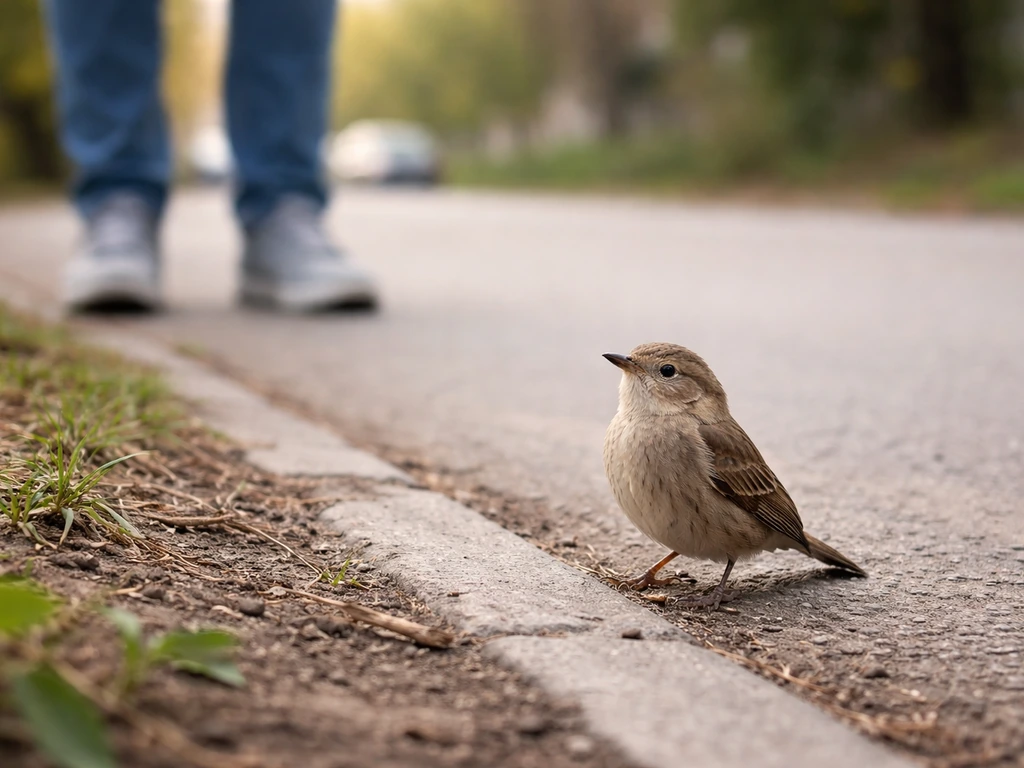
You don't need a veterinary degree to do a quick, reliable check. Stay calm, keep your distance at first, and just observe for 60 seconds before you do anything else. You're looking for a short list of signs that tell you whether this is a mild stun or a genuine emergency.
Run through these checks visually before you ever touch the bird:
- Is she lying flat on the ground or unable to stand upright?
- Is one wing drooping lower than the other, or held at an odd angle?
- Can you see visible wounds, blood, or exposed tissue?
- Is she breathing with her mouth open, gasping, or showing her beak pointed upward?
- Is her tail bobbing up and down with each breath (a sign of labored breathing)?
- Is she puffed up and sitting very still, as if too exhausted to move?
- Is she unresponsive when you walk toward her?
- Is she limping, or favoring one leg over the other?
Even one of these signs is enough to treat the situation as a potential injury. Two or more means you need to act right away. These are the same criteria used by wildlife clinics like Tufts Wildlife Clinic and published guidelines from Merck's veterinary resources, and they hold for both pet birds and wild birds.
Signs that need urgent help vs watchful waiting
Not every grounded bird is critically injured. A window-collision bird, for example, may just be stunned and can recover on its own within one to two hours. The RSPCA and multiple wildlife rehab organizations use a roughly two-hour window as a practical rule: if the bird hasn't recovered by then, contact a rehabilitator. But some signs skip that waiting period entirely and mean you need professional help immediately.
| Sign | What it means | Action |
|---|---|---|
| Open-mouth gasping or labored breathing | Possible internal injury, severe stress, or respiratory illness | Get help immediately, do not wait |
| Active bleeding or visible wound | Trauma injury | Get help immediately, do not wait |
| Drooping or asymmetrical wing | Possible fracture or soft-tissue damage | Get help immediately, do not wait |
| Unable to stand or lying flat | Neurological issue, severe trauma, or illness | Get help immediately, do not wait |
| Tail bobbing with every breath | Respiratory distress | Get help immediately, do not wait |
| Stunned but upright, eyes open, no wounds | Likely window-strike concussion | Contain safely, observe for up to 2 hours |
| Puffed up, eyes half-closed, but stable | Possible illness or mild shock | Contain safely, contact rehabber for guidance |
| Sitting still on the ground, alert and watching you | May just be resting (especially in heat), but worth monitoring | Observe 30 minutes, intervene if not gone |
The two-hour threshold is a practical rule, not a hard medical cutoff. If Sue is still panting fast after two hours, or still cannot fly when you open the box, she needs professional care. Mass Audubon also points out that window-strike birds can have brain swelling that temporarily incapacitates them, which is why the monitoring window matters and why you shouldn't just leave them on the ground and walk away.
Common causes and what they mean for your next step
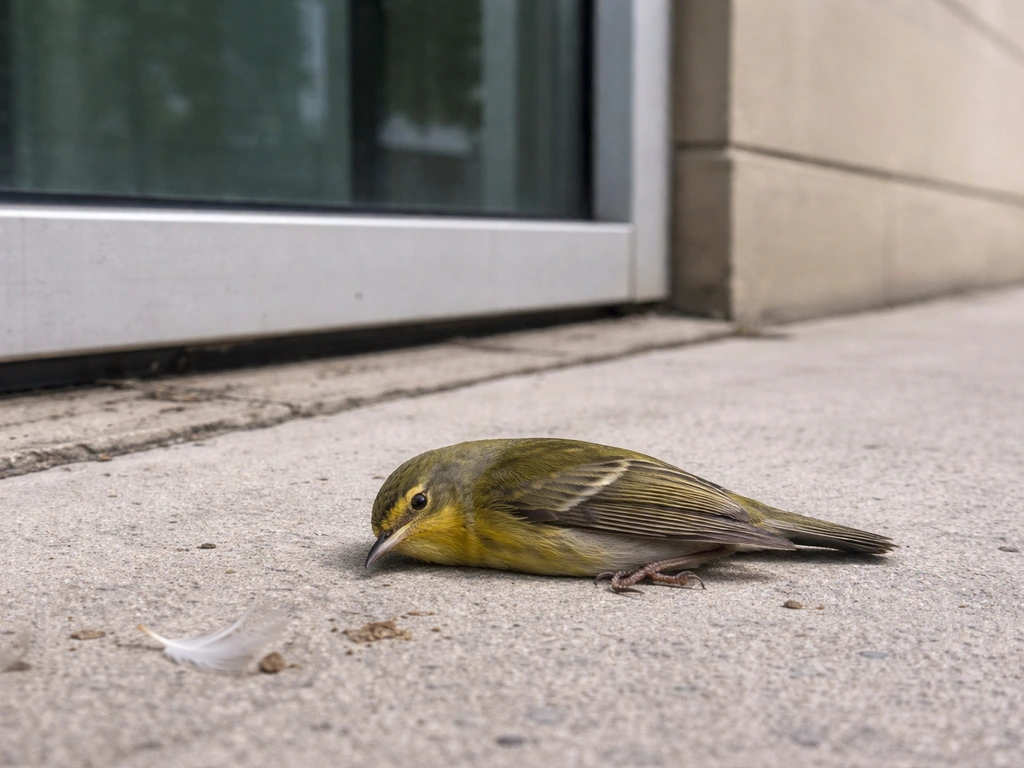
Knowing what happened to Sue changes what you look for and how urgently you need to act. Each cause has its own injury pattern.
Window strikes
This is by far the most common cause of a bird suddenly appearing grounded or stunned near a building. The bird hits glass at full speed, sustains a concussion, and drops. The external appearance can be completely normal even when there are serious internal injuries. All About Birds is clear on this: birds that have struck windows may have internal damage that isn't visible, and their best chance is a wildlife rehabilitation facility, not a shoebox in your yard. If you’re also wondering when Randy Johnson hit the bird, it’s a famous baseball incident with a well-known date and details when did randy johnson hit the bird. Do not assume she'll be fine just because there's no blood.
Cat or dog attacks
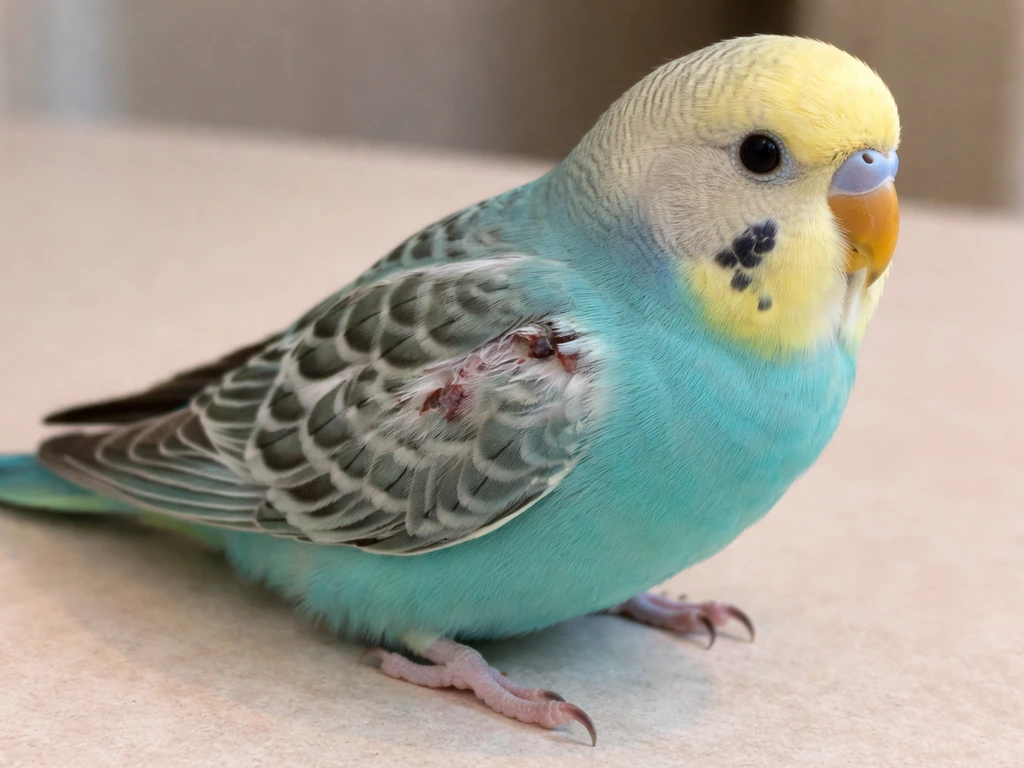
Cat and dog bites are deceptively dangerous. The puncture wounds from a cat's teeth are tiny and easy to miss, but cats carry bacteria that cause fatal sepsis in birds within hours. Even if Sue looks okay after a cat grabbed her, she needs to see a vet or wildlife rehabber urgently. Do not wait and see.
Falls (especially for pet birds)
A pet bird that has fallen from a perch or cage may have fractured a bone, suffered a head injury, or gone into shock. Look for the drooping-wing and inability-to-perch signs listed above. If she can't grip a perch with both feet or one wing hangs lower than the other, treat it as a fracture until a vet says otherwise.
Power line exposure or electrocution
Birds can be electrocuted when they bridge energized and grounded parts of a power line or distribution pole. The external signs can be tiny entry and exit wounds, or the bird may appear dead on impact. Internal burns and tissue damage are often severe and invisible. This is a specialist case: do not try to treat it yourself. Get the bird to a wildlife rehabber or avian vet immediately.
Entanglement
String, fishing line, netting, or even plant material can wrap around legs, wings, or the neck. If you can see the material and safely remove it without pulling on the bird's tissue, do so gently. If it's embedded, cutting off circulation, or you're not sure, contain the bird and get expert help. Pulling at entangled material can cause more damage than leaving it temporarily.
What to do immediately: safe steps at home
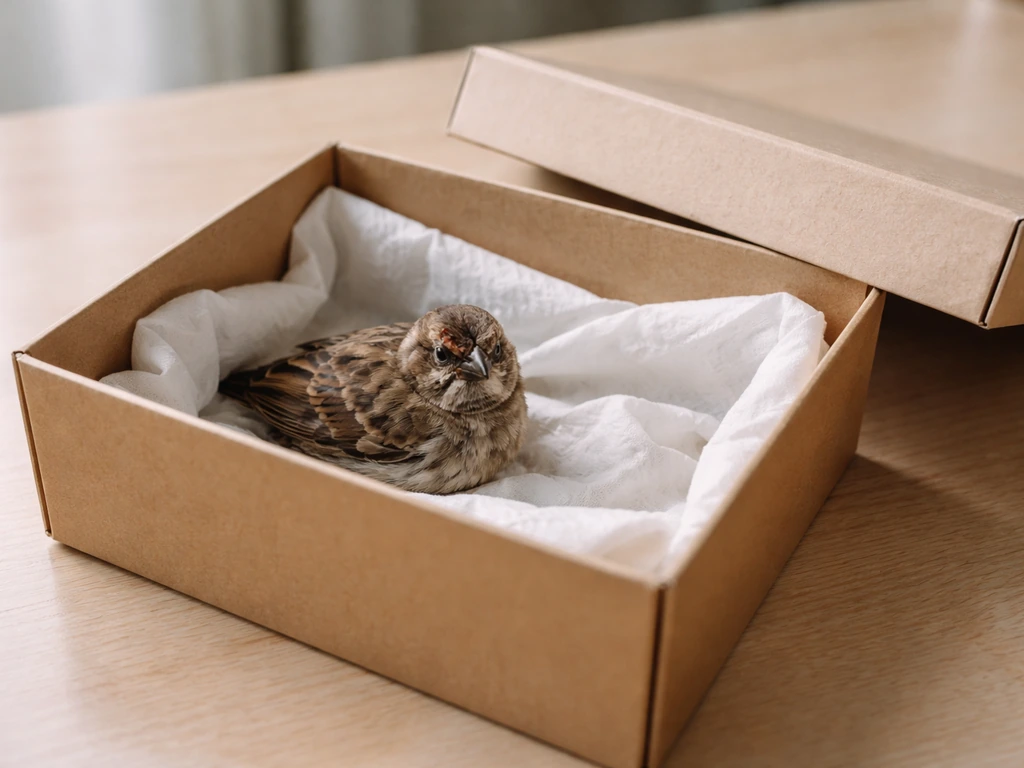
The goal right now is to reduce stress, prevent further injury, and keep Sue stable while you arrange help. Speed and calm matter more than elaborate first aid.
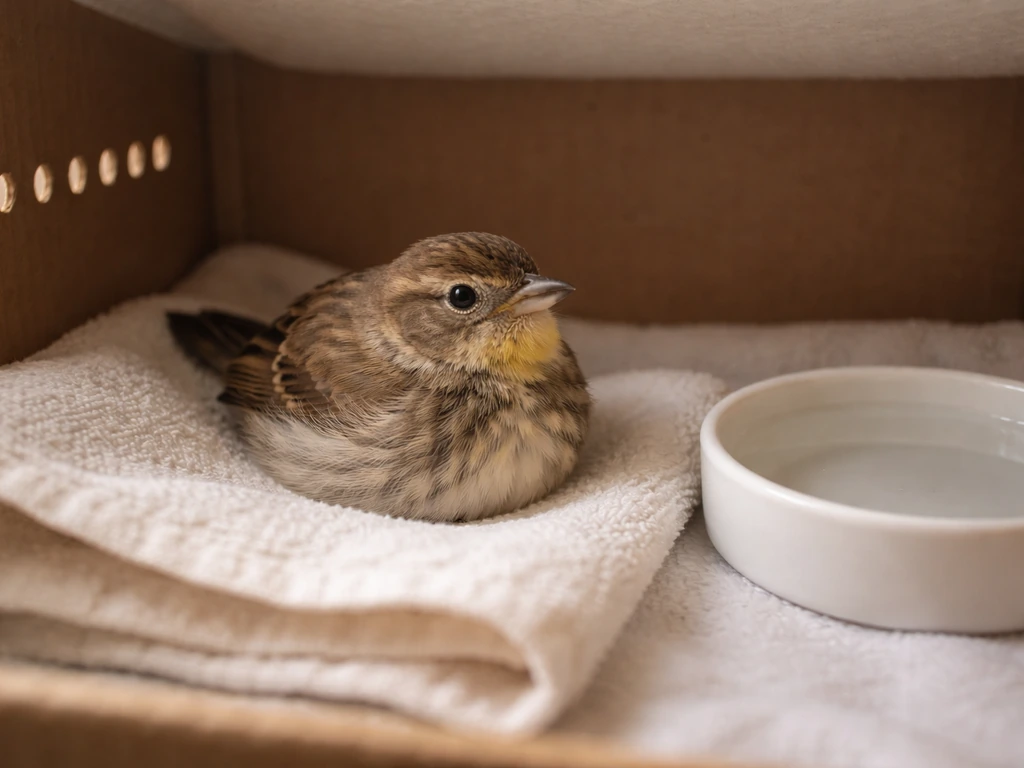
- Find a cardboard box with a lid (a shoebox works well). Line it with a soft cloth or paper towel. Poke a few air holes in the sides.
- Put on gloves if you have them. If not, use a light towel to pick up the bird. Scoop her gently from underneath rather than grabbing from above, which triggers panic.
- Place her in the box and close the lid. Dark, quiet environments reduce stress hormones rapidly.
- Warm the box if the bird is cold or shivering. Fill a water bottle with warm (not hot) water, wrap it in a towel, and place it against one side of the box so she can move toward or away from the heat.
- Keep the box in a quiet room away from pets, children, and noise. Turn off music or TV nearby.
- Do not put food or water in the box. This is counterintuitive but important: an injured bird with a respiratory or swallowing problem can aspirate liquid and die. Even if she looks hungry, wait for professional guidance.
- Check after one to two hours by taking the box outside, opening it gently, and stepping back. If she flies away cleanly, she's likely recovered from a mild stun. If she doesn't, call a wildlife rehabber.
- When transporting to a vet or rehabber, keep the car quiet (radio off) and the box level and secure.
What not to do (myths and mistakes that make things worse)
There are a handful of well-meaning instincts that consistently make injured birds worse. Knowing them is just as important as knowing the right steps.
- Don't feed her. Forcing food or water into an injured bird's mouth is one of the fastest ways to cause fatal aspiration pneumonia. Multiple wildlife organizations, including Tufts Wildlife Clinic, the Bird Center of Michigan, and Audubon, all agree: no food, no water until a professional advises otherwise.
- Don't assume a grounded bird is fine. 'She's just resting' is almost never true for a bird you can approach and pick up. Healthy birds don't let humans get that close.
- Don't keep her in a clear container. Visibility causes constant stress. A dark, enclosed space is calming.
- Don't try to splint a broken wing yourself. Improper splinting causes pain, additional tissue damage, and complications. Get her to an expert.
- Don't let her loose to 'see what happens.' If she can't fly, releasing her outside exposes her to predators and weather.
- Don't place her in direct sunlight or near a heat vent. Overheating kills injured birds quickly.
- Don't handle her more than necessary. Every time you pick her up, her stress hormones spike. Minimize handling to the essentials.
When to contact a vet or wildlife rehabber
The honest answer is: when in doubt, call. If you are wondering whether a specific person, like Randy Johnson, could be involved in harming a bird, treat it as an urgent safety concern and contact the proper authorities or a wildlife professional for guidance did randy johnson kill a bird. Most wildlife rehabbers and avian vets are happy to give quick phone guidance before you even bring the bird in. You don't have to be certain something is wrong to make the call.
Contact a wildlife rehabilitator or avian vet immediately if Sue shows any of these: Tufts Wildlife Clinic also advises keeping a sick or injured bird contained in a covered box or crate and contacting a wildlife professional rather than trying to feed it at home Contact a wildlife rehabilitator or avian vet immediately.
- Visible bleeding or open wounds
- Open-mouth breathing or gasping
- Inability to stand or complete inability to use both legs
- One wing drooping noticeably lower than the other
- Signs of cat or dog attack, even with no visible wound
- Known or suspected power-line exposure
- Still unable to fly after two hours in a warm, quiet box
- Fast panting that has lasted more than two hours
To find a licensed wildlife rehabilitator near you, search your state's fish and wildlife agency website (most states maintain a public directory), or use the National Wildlife Rehabilitators Association's online finder. For a pet bird, an avian vet is the right call. Not every general-practice vet has bird experience, so asking specifically for an avian vet or exotic animal vet gets better results.
If you found the bird and are unsure what species it is, take a photo before you do anything else, as the RSPCA recommends. Species identification helps the rehabber prepare the right care before you even arrive.
Health and safety after contact: disease risk and cleaning up
Handling an injured bird carries a real but manageable health risk. The main concerns are psittacosis (a bacterial infection spread through dried droppings and respiratory secretions), avian influenza, and salmonella. Both sick and apparently healthy infected birds can shed bacteria in their droppings and secretions, according to the CDC, which means you can't judge risk by whether the bird looks ill.
These are straightforward precautions that dramatically reduce your risk:
- Wash your hands thoroughly with soap and water immediately after any contact with the bird, its droppings, or surfaces it touched.
- Avoid touching your face, mouth, or eyes while handling the bird.
- If the bird defecated on a surface, wet the area with a damp cloth before cleaning it. Do not sweep or vacuum dry droppings, as this aerosolizes the particles you most want to avoid inhaling.
- Dispose of any materials (paper towels, cloth lining) the bird was in contact with in a sealed bag.
- If you handle the bird without gloves, wash your hands and forearms, not just your palms.
- If you develop flu-like symptoms, respiratory issues, or a fever in the days following contact, mention the bird exposure to your doctor.
The risk from a single brief handling of one bird is low for most healthy adults. These precautions are about keeping that risk low, not about panic. The same CDC guidance that covers avian flu and psittacosis consistently points to basic hygiene as the most effective protective measure, not avoidance of all contact.
What recovery looks like vs what worsening looks like
If you're monitoring Sue in a box over the course of one to two hours, here's what to watch for so you know which direction things are heading.
| Improving signs | Worsening signs |
|---|---|
| Sitting upright on her own | Slumping or lying flat |
| Eyes open and alert | Eyes closing or sunken |
| Breathing quietly through closed beak | Mouth still open, tail bobbing |
| Holding both wings evenly | Wing drooping further |
| Attempting to move around the box | No movement at all |
| Flies away when box is opened outside | Still unable to take off after 2 hours |
Improvement on most of those signs within an hour or two, combined with a clean takeoff when you open the box outside, means she likely had a mild concussion and has recovered. Any worsening, or no change after two hours, means she needs professional care and the monitoring window is over. Call the rehabber or vet and describe exactly what you're seeing.
Birds are resilient but they hide symptoms well, which is actually what makes this tricky. By the time many birds show obvious distress, they've been struggling for a while. Acting on early signs rather than waiting for things to get dramatically worse gives Sue the best possible chance.
If you've ever looked into what happens when a bird collides with something at speed, whether a window, a vehicle, or even a baseball pitch, the internal injuries can be severe and invisible from the outside. In golf, hitting a bird can stun or injure it, so treat the situation like any other grounded bird and get help if it does not recover quickly what happens if you hit a bird in golf.
The safe move is always to take the signs seriously and get expert eyes on her sooner rather than later.
FAQ
If Sue looks alert but she is still sitting on the ground, is she necessarily hurt?
No. If a bird is grounded, hunched, breathing hard, or not flying away after you approach, assume it is injured or seriously stressed and start the same triage steps. The “healthy birds fly” rule still applies even if the bird seems alert.
Where should I keep Sue while I watch her for one to two hours?
For outdoor monitoring, put the box or container in a quiet, dim, draft-free spot and keep pets and people away. Avoid direct sun and don’t put a heating pad under the bird, especially if you do not know the cause of injury.
How much can I handle an injured bird, and what are the key hygiene steps?
Handle only to move the bird to safety or to remove safely accessible entangling material. Wear disposable gloves or use a barrier like a towel, wash hands immediately afterward, and avoid touching your face. If you have been sneezed on or the bird’s secretions contact you, be extra cautious and seek medical advice.
If there is no blood or obvious injury, can a window-strike bird still need help?
Yes. A bird can look “fine” externally after a window strike, and internal issues like concussion can still prevent normal flight. Blood is not required for serious injury, so rely on posture and breathing signs rather than visible bleeding.
Should I try to test Sue’s wings or make her fly to see how bad it is?
Don’t try to “test” the wing or force the bird to stand or fly. Instead, observe whether she can hold posture normally, whether breathing looks labored, and whether she can take off when you open the container outside after the monitoring window.
What if Sue is tangled, but the string is wrapped tightly, can’t easily be removed, or seems embedded?
If you can see the line or string and you can remove it without pulling on the bird’s tissue, carefully unloop it. If it is embedded, tight around the neck, cutting into skin, or you are uncertain, contain the bird and get professional help instead of attempting to cut it in place.
How urgent is it to get help if a cat or dog bit or grabbed Sue but she seems okay?
If Sue might have been bitten, delayed care matters. Cat bites especially can cause rapid infection in birds even when the bird initially looks only mildly affected. Treat bites as urgent and contact a wildlife rehabilitator or avian vet right away.
If Sue is improving a little within an hour, when should I still escalate to professional care?
Look for signs that rule out “just stunned,” like panting fast, inability to perch or grip, drooping wing, or worsening alertness. If she cannot fly when you open the box at the end of the monitoring window, escalate to a vet or rehabilitator without waiting longer.
How do I recognize suspected electrocuted injury, and what should I not do?
Power-line electrocution can be fatal even when external wounds are small. If you suspect electrocution, do not attempt first aid like bathing or using home “burn” treatments. Contain her and get her to a wildlife rehabber or avian vet immediately.
If I suspect a specific person was involved in harming a bird, what should I do first?
If you think the incident involved harassment, harm, or a high-profile person, don’t investigate or confront anyone. Treat it as a safety issue for the animal and contact wildlife professionals or the proper local authorities, then focus on getting the bird to care.
What photo details should I capture if I’m not sure what species Sue is?
Yes, species ID can change the rehab priorities, diet, and housing setup. Take a clear photo before you handle the bird, and share details like location, time found, and any suspected cause (window, cat, fall, entanglement).
What should I clean or do at home after I bring an injured bird into a box?
After collecting the bird safely, wash hands thoroughly, don’t touch your face during care, and clean any surfaces the bird contacted. Limit contact until you are done, and keep children and pets away. This reduces risk even if Sue looks healthy.
Next Articles
Has a Baseball Ever Hit a Bird? Real Cases and What to Do
Real documented cases of baseball hitting birds, which birds and fields face risk, and what to do if it happens.
Has a Golfer Ever Hit a Bird? Facts and What to Do
Reality check on whether golfers ever hit birds, what happens, and step by step first aid and prevention tips.
What Happens If You Hit a Bird in Golf: Steps to Take
What happens if you hit a bird in golf, what to do immediately, safety risks, cleaning steps, and when to call staff