
Several bird species genuinely kill and eat snakes, including red-tailed hawks, great horned owls, short-toed eagles, and the famously specialized secretary bird. But none of them are a reliable pest-control solution for your yard. Snake predation by birds is opportunistic, seasonal, and depends heavily on the bird's size, the snake's size, and pure chance. If you have a snake problem right now, the practical answer is to call local wildlife control, not wait for a hawk to show up.
Which Bird Kills a Snake? Facts, Raptors, and Safety Steps

Maya Chen
27 May 2026
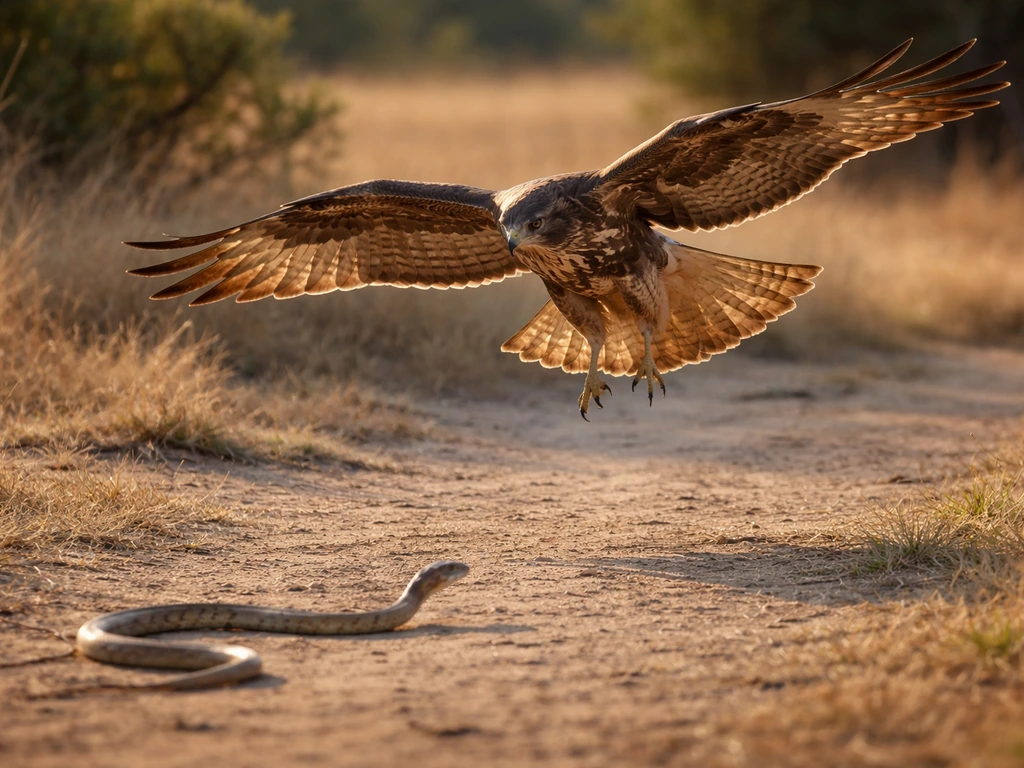
Do birds really kill snakes reliably? The myth vs. the evidence
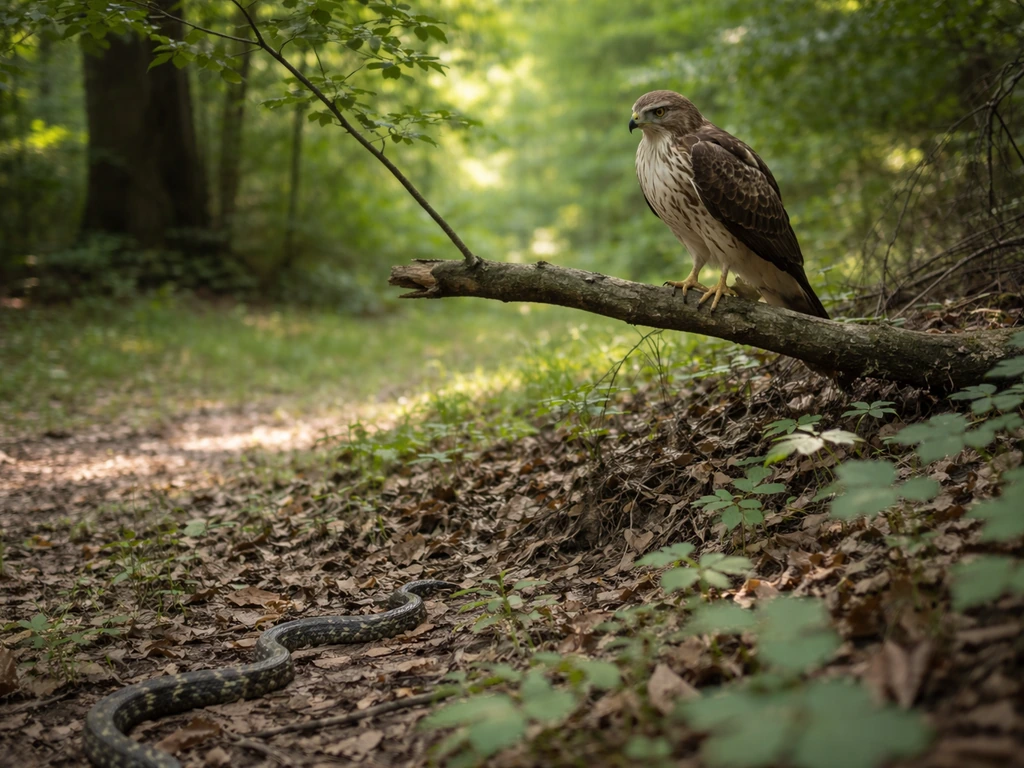
The idea that certain birds act as natural snake exterminators is one of those beliefs that sounds plausible but falls apart under scrutiny. Yes, many raptor species eat snakes when the opportunity presents itself. But there is no credible evidence that any bird species will consistently reduce snake populations around your home or garden. Snake-eating by birds is opportunistic, meaning a hawk or owl takes a snake when conditions are right: the snake is the right size, the habitat allows detection, and the bird is hungry enough to risk a potentially dangerous prey item.
Diet studies on raptors make this limitation clear. Records of snakes in bird diets are based on what researchers find in stomach contents or regurgitated pellets, which only captures successful ingestion events. Failed attempts, snakes that escaped, or prey the bird chose not to pursue simply aren't counted. That means the actual frequency of snake predation is almost certainly lower in practice than diet data suggests, and it varies enormously by region, season, and individual bird.
Bird species that actually hunt and kill snakes
Secretary bird: the most specialized snake killer
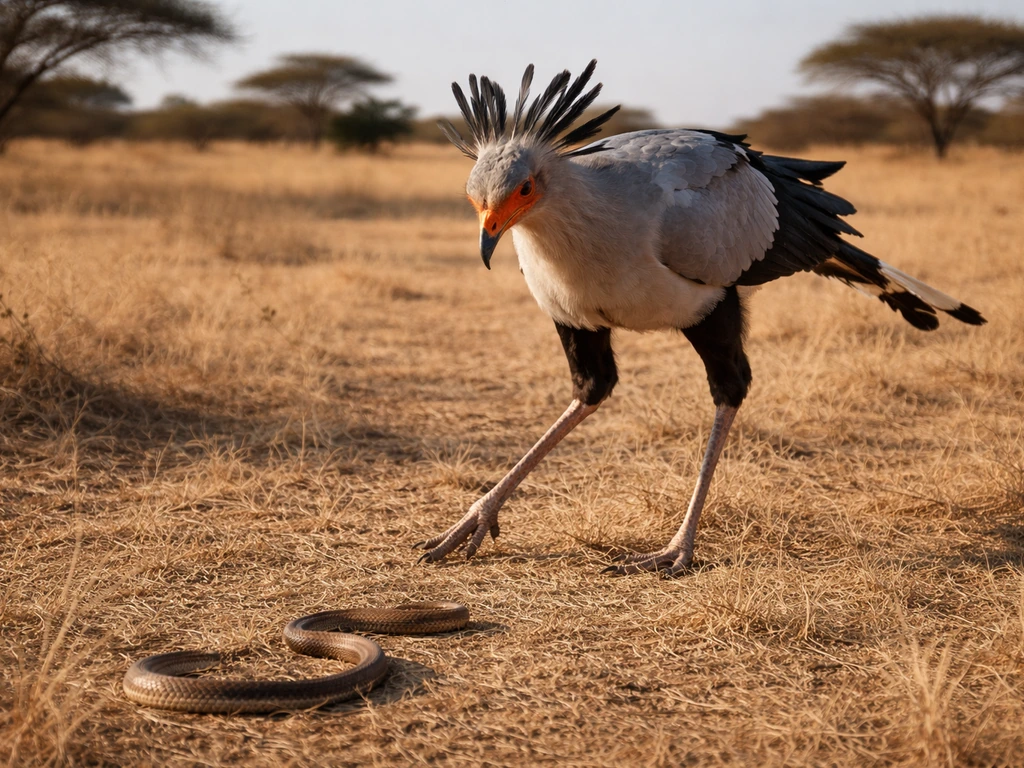
If any bird deserves the title of dedicated snake hunter, it's the blank" rel="noopener noreferrer">secretary bird (Sagittarius serpentarius) of sub-Saharan Africa. So while the secretary bird is known for aggressively hunting snakes, no bird is proven to reliably kill a lion. Unlike most raptors that swoop from above, the secretary bird hunts on foot, stalking through open grassland and savanna. Its technique involves powerful stamping kicks delivered just behind the snake's head, snapping its neck or stunning it.
A biomechanics study measured those kicks at roughly five times the bird's body weight in striking force. Its legs are covered in thick scales that offer some protection from bites, and if a snake does strike, it often gets a mouthful of feathers from the bird's large outstretched wings rather than skin or flesh.
Short-toed snake-eagle: the specialist raptor
The short-toed eagle (Circaetus gallicus), found across Europe, Asia, and Africa, is the most snake-specialized aerial raptor. During its breeding season in one Spanish study, snakes made up nearly 95% of its diet by both frequency and biomass. It hunts by hovering or perching at height, scanning open ground, then swooping fast to a strike. It sometimes hunts at grass fires, taking prey flushed by smoke and flames. This level of dietary specialization is unusual and doesn't extend to most other raptors.
Red-tailed hawk and other North American raptors
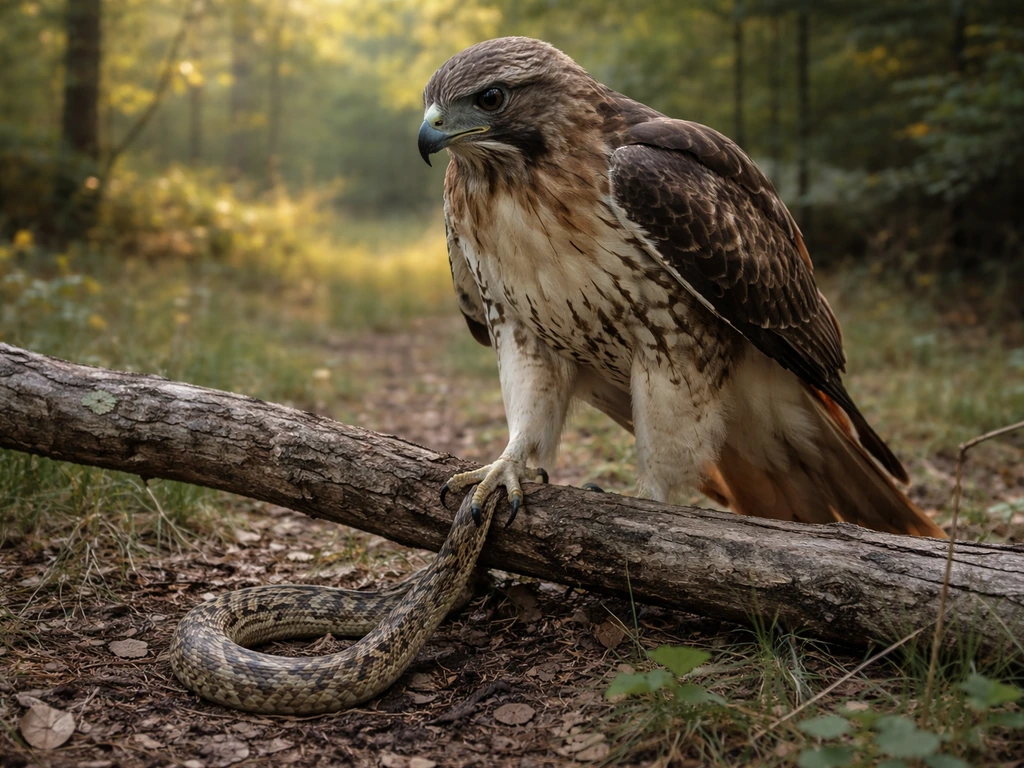
In North America, the red-tailed hawk is probably the most frequently cited snake predator. A 1976 diet study found a notably high incidence of snakes in the diet of nesting red-tailed hawks, suggesting snakes are a meaningful food source particularly during the nesting period. Other North American raptors, including Cooper's hawks, broad-winged hawks, and red-shouldered hawks, also take snakes opportunistically. The key word is opportunistically: snakes appear more in hawk diets during seasons when they're active and detectable, not as a constant food source year-round.
Great horned owl: capable but risky
The great horned owl will tackle snakes, but it's a riskier proposition than it sounds. There's a documented case of mutual mortality between a great horned owl and a southern black racer, meaning both animals died from the encounter. This is worth knowing because it underlines that even large, powerful birds don't always win against snakes, particularly venomous ones or large constrictors. Owls hunt at night, which also limits how often snake encounters occur, since many snake species are diurnal.
Other birds of note
Peregrine falcons have been documented taking snakes as well. One peer-reviewed observation confirmed predation of a Pacific rattlesnake by a peregrine, identified through bone remains in pellets. Roadrunners (in North America) are also well-known snake hunters at a smaller scale, capable of taking small or juvenile snakes. Common ravens and some stork species take snakes opportunistically too. The pattern across all of these is the same: snakes are prey when conditions align, not a dietary staple for most of these species.
Where and when this predation actually happens
Snake predation by birds happens most often in open habitats where snakes are visible from above or from a scanning perch: grasslands, open fields, scrublands, and dry hillsides. Dense vegetation dramatically reduces a raptor's ability to detect and strike a snake. Suburban backyards with garden beds, ground cover, or brush piles are not ideal hunting grounds for most snake-eating raptors.
Timing matters too. Most raptor predation on snakes happens during the day when both predator and prey are active. The breeding season sees increased snake consumption in some species, likely because the energy demands of feeding chicks push birds to take larger, higher-calorie prey. Winter sees almost no snake predation simply because snakes are dormant or far less active and detectable.
Snake size is a firm limiting factor. Small birds can only handle small or juvenile snakes. Even large raptors typically target snakes under three or four feet. A large, thick-bodied snake or a venomous species capable of a fast defensive strike represents a real threat to a bird, which is why most raptors are selective about what they attempt. You won't see a hawk carrying off a large timber rattlesnake.
Safety for you and your pets when birds and snakes are both present
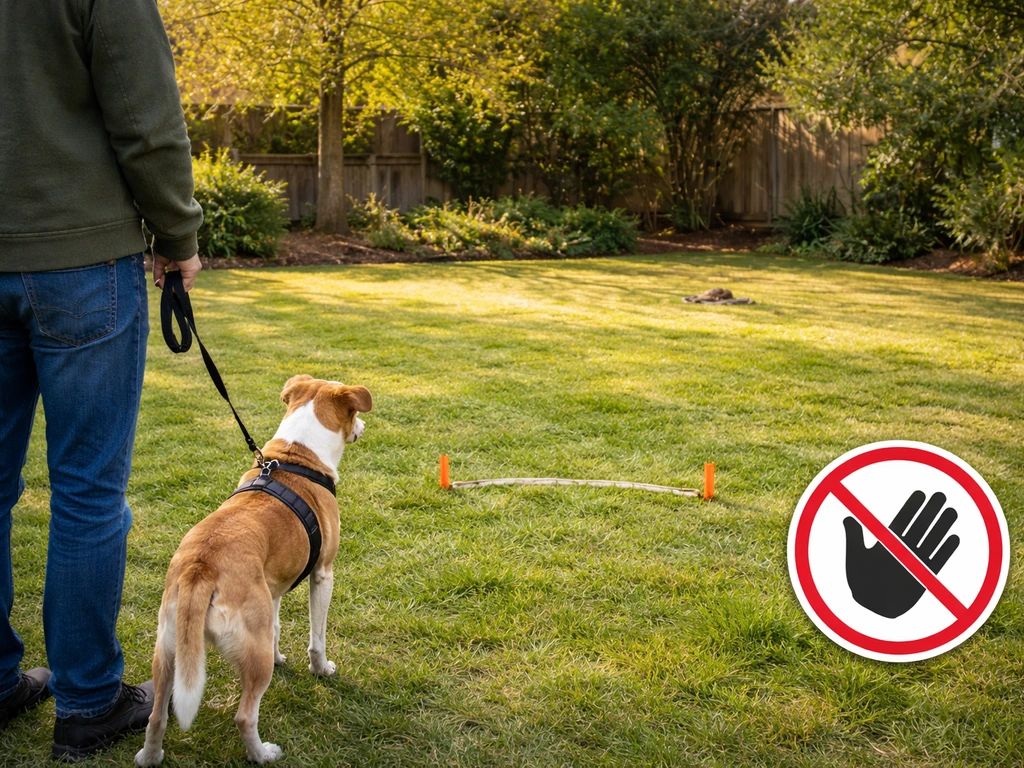
If you see a snake in your yard, the US Forest Service guidance is simple: do not handle, tease, or harass it, and keep at least six feet of distance. This applies even if a bird seems to be interacting with the snake. Do not assume the bird has the situation under control, and do not move closer to observe what happens. The snake is still dangerous to you regardless of what a hawk is doing nearby.
The CDC advises keeping pets away from any snake and calling animal control to remove it from the property. A dog or cat investigating a snake is at serious risk of a bite, and the presence of a bird of prey in the area adds another hazard: birds guarding nests or actively hunting can become aggressive toward people who get too close.
If you are wondering what animal destroys bird nests, the answer is often a mix of predators and nest-robbing species like raccoons and snakes, not helpful raptors. The US Fish and Wildlife Service notes that if threat displays fail, birds may lunge, dive-bomb, or use wings, talons, or bills. So a situation where there's an active raptor near a snake is a situation where you want to keep your distance from both animals.
Supervise pets outdoors any time you know snakes are active in your area. Small dogs and cats are most at risk from both snake bites and, in rare cases, from large raptors. Keep them on a leash or within sight, and avoid letting them investigate ground-level disturbances in brush or tall grass.
What to actually do today if you have a snake problem
Waiting for birds to deal with a snake is not a plan. If you’re wondering what bird kills pigeons, the short answer is that predation varies by species and situation, so you should not count on birds as dependable pest control Waiting for birds to deal with a snake is not a plan.. Here's what actually works:
- Keep your distance immediately. Stay at least six feet away and move children and pets indoors.
- Identify whether the snake is venomous if you can do so safely from a distance. In the US, you can send a photo to your local extension service or a wildlife hotline for ID help.
- Call local animal control or a licensed wildlife removal service. This is the fastest and safest way to get a venomous snake removed. Many counties handle this for free.
- If the snake is non-venomous and in a low-risk location, it may simply move on its own within a day or two. Do not attempt to handle or relocate it yourself.
- After removal, reduce attractants. Snakes follow prey, so address any rodent problems around your property. Remove brush piles, woodpiles stacked on the ground, and debris that provides cover.
- Seal entry points to your home. Snakes can enter through gaps around pipes, vents, and foundations. A hardware cloth or weatherstripping fix is more reliable than any bird-based deterrent.
- If you have a persistent snake issue, consult your local wildlife authority or a humane wildlife conflict specialist for an exclusion plan specific to your property.
When birds might actually help, and when they won't
Birds can and do provide some natural reduction of snake populations in certain rural and open-habitat settings. If you live on or near large open fields, grasslands, or agricultural land where raptors are abundant and active, you're likely in an area where hawks and eagles take snakes regularly enough to have a measurable effect on local populations. That does not mean any bird can reliably kill an eagle hawks and eagles take snakes regularly enough. Research confirms that reptiles make up more than 10% of some raptor diets under the right regional conditions. That's a real, if modest, ecological service.
But in a typical suburban or semi-rural yard, the conditions for this to matter simply aren't present most of the time. Your yard is probably too small, too covered, and too far from the open habitat that hunting raptors prefer. The snake you're dealing with today is almost certainly not going to be taken by a bird before it becomes a problem. Eagles may be known for hunting snakes, but people often ask what eagles are afraid of, too what bird are eagles afraid of. And even in ideal open-habitat conditions, birds are not going to clear an area of snakes the way a removal service would.
Seasonal timing is another hard limit. Snake-hunting by birds peaks in spring and summer when snakes are surface-active and raptor breeding demands are high. In late fall and winter, it's essentially zero. If your snake encounter is happening outside the warm months, birds are not a factor at all.
| Bird Species | Region | Snake Specialization | Hunting Method | Practical Relevance for Homeowners |
|---|---|---|---|---|
| Secretary bird | Sub-Saharan Africa | High (main food source) | Ground-based stamping/kicking | Not present outside Africa |
| Short-toed eagle | Europe, Asia, Africa | Very high (up to 95% of diet in some studies) | Aerial hover and swoop | Limited to its native range; not controllable |
| Red-tailed hawk | North America | Moderate (higher during nesting) | Aerial swoop from perch | Common but opportunistic; not reliable pest control |
| Great horned owl | North America | Low to moderate | Nocturnal ambush | Risk of mutual mortality with large snakes |
| Peregrine falcon | Global | Low (documented but rare) | High-speed aerial strike | Rarely targets snakes; documented but not typical |
| Roadrunner | North America (Southwest) | Moderate for small snakes | Ground pursuit | Handles small/juvenile snakes only |
The bottom line is that birds are a real part of the natural ecology that keeps snake populations in check over large scales and long timeframes. They're not a tool you can deploy for a snake in your yard this afternoon. Treat birds near snakes as wildlife to respect and observe from a distance, not as allies to rely on. For the immediate problem, call wildlife control, secure your property, and remove the conditions that attract snakes in the first place.
FAQ
If I see a hawk or owl near a snake, should I assume the snake is harmless now?
No. Predation is unpredictable, and snakes can still bite if threatened. Keep your distance and avoid approaching to “check” what the bird is doing, because the bird may not be able to subdue the snake quickly, especially if it is venomous or large.
Which bird is best at killing snakes in suburban yards?
None is reliably effective in suburban settings. Snake-hunting birds prefer open habitats with good sightlines, and dense ground cover, brush piles, and garden beds reduce their ability to detect and strike consistently.
Do birds eat all types of snakes equally, including venomous ones?
Not equally. Many birds selectively target snakes they can safely handle, often smaller or less dangerous species. Venomous snakes or thick-bodied constrictors can be a real risk, so predation is limited by the bird’s ability to control the snake during and after the strike.
What should I do if a snake is in my yard and a bird of prey is circling nearby?
Treat both animals as hazards. Stay back from the snake, keep people and pets indoors, and contact local wildlife control or animal removal to remove the snake safely rather than trying to intervene while the bird is present.
Can I encourage snake-eating birds by making my yard more “bird-friendly”?
You can support local wildlife broadly, but don’t expect it to solve a current snake problem. Improvements like reducing dense clutter, improving yard visibility in outdoor living areas, and removing easy prey attractants can help, but birds still won’t clear snakes on a predictable timeline.
Why do I only see snake predators during certain months?
Snake predation by birds is strongly seasonal. Many raptors hunt when snakes are active and when they are feeding chicks, so activity drops sharply in late fall and winter when snakes are less surface-active and harder to detect.
Are raptor pellet or stomach-remains studies enough to estimate how often birds kill snakes?
They tend to overrepresent successful ingestion. Diet records usually reflect what was eaten and digested, not failed attacks or snakes that escaped, so real-world encounter outcomes are likely less frequent than the raw diet percentages suggest.
What is the safest way to protect pets if I suspect snakes are nearby?
Supervise anytime pets are outdoors, keep dogs on a leash, and prevent cats from roaming. Avoid letting pets investigate brush, tall grass, or ground-level disturbances, since those are common snake approach and strike zones.
What if the snake is near my home entry, driveway, or garage door?
Keep everyone away from that entry point and call animal control or local wildlife removal. Avoid using tools or trying to move the snake yourself, and do not block the area in a way that corners the snake or puts you close to it.
Is it ever a good idea to relocate a snake yourself?
No. Handling and relocation can lead to bites and can also increase risk to others. Contact professionals who can identify the species, manage risk, and remove it appropriately.
Do birds that prey on snakes also raid nests, making the overall impact on birds negative?
Sometimes. Nest loss is usually caused by a mix of nest predators and nest robbers, and raptors near the area can still be a hazard to people and pets. The presence of snake-eating birds does not automatically translate into a net benefit for backyard birds.
What specific yard conditions most increase snake likelihood?
Snakes often use cover and hunting opportunities. Brush piles, dense ground cover, stacked lumber, and abundant rodents or insects can increase snake activity. Removing cover and reducing food sources for prey animals typically helps more than relying on predators.