
The bird you're thinking of is most likely a raptor, specifically a member of the falcon or hawk family, though eagles and some corvids do this too. The behavior has a name: prey dropping, or sometimes called "stooping to strike" depending on the context. It is a real, well-documented hunting and prey-finishing technique, not a myth. If you watched a bird carry something into the air and then release it, or repeatedly drop it onto a hard surface, you just witnessed one of nature's more efficient killing strategies.
What Bird Drops Its Prey to Kill It: Identification and Safety

Maya Chen
16 Apr 2026
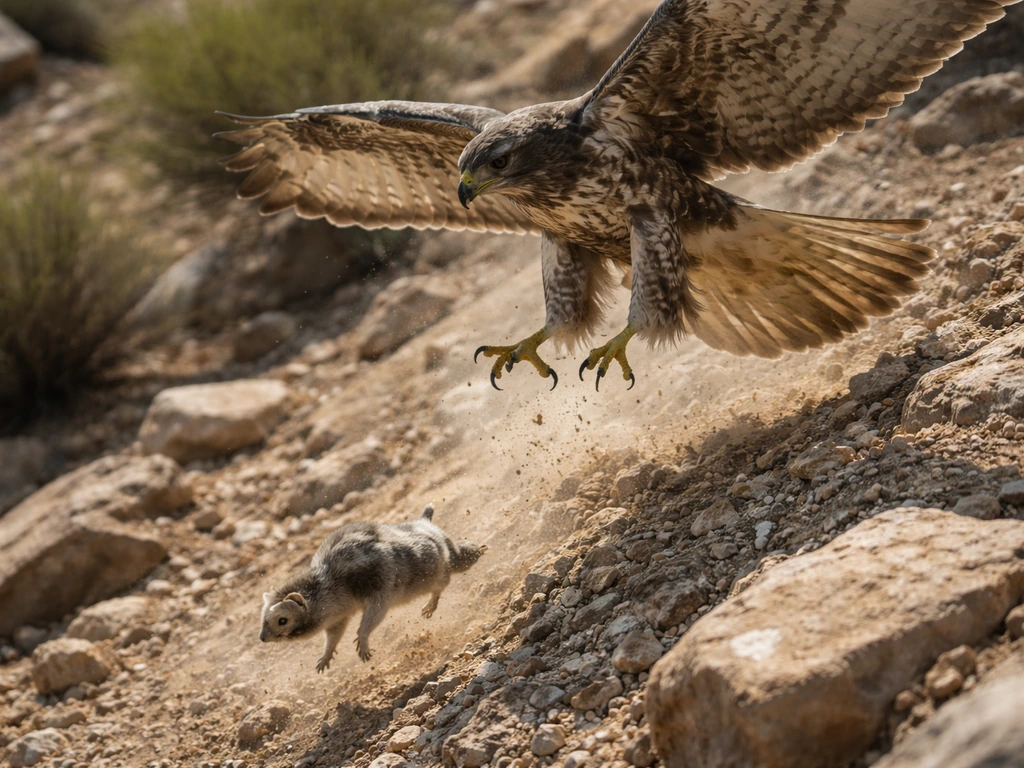
The exact behavior you're seeing: what dropping prey actually means
There are actually two related but distinct behaviors that both get described as "dropping prey to kill it." The first is aerial dropping: a bird lifts prey (often a tortoise, crab, shellfish, or hard-shelled animal) to a significant height and releases it onto rocks or pavement to crack it open. The second is strike-killing: a raptor dives at high speed, hits prey with its talons mid-air or on the ground, and the force of impact alone causes fatal injuries. Both qualify as "dropping" in everyday language, but they work differently.
A third scenario people often witness is a raptor repeatedly dropping and re-gripping struggling prey on the ground or a perch. This is the finishing step, not the kill method itself. Research on raptor feeding morphology confirms that falcons and hawks pin prey between their feet using talons and then use their hooked beak to tear and kill, rather than swallowing prey whole the way owls do. So if you see a hawk or falcon standing over something and working at it with its beak, the "dropping" phase is already done.
Which birds actually do this, and what they target
The Lammergeier (Bearded Vulture)
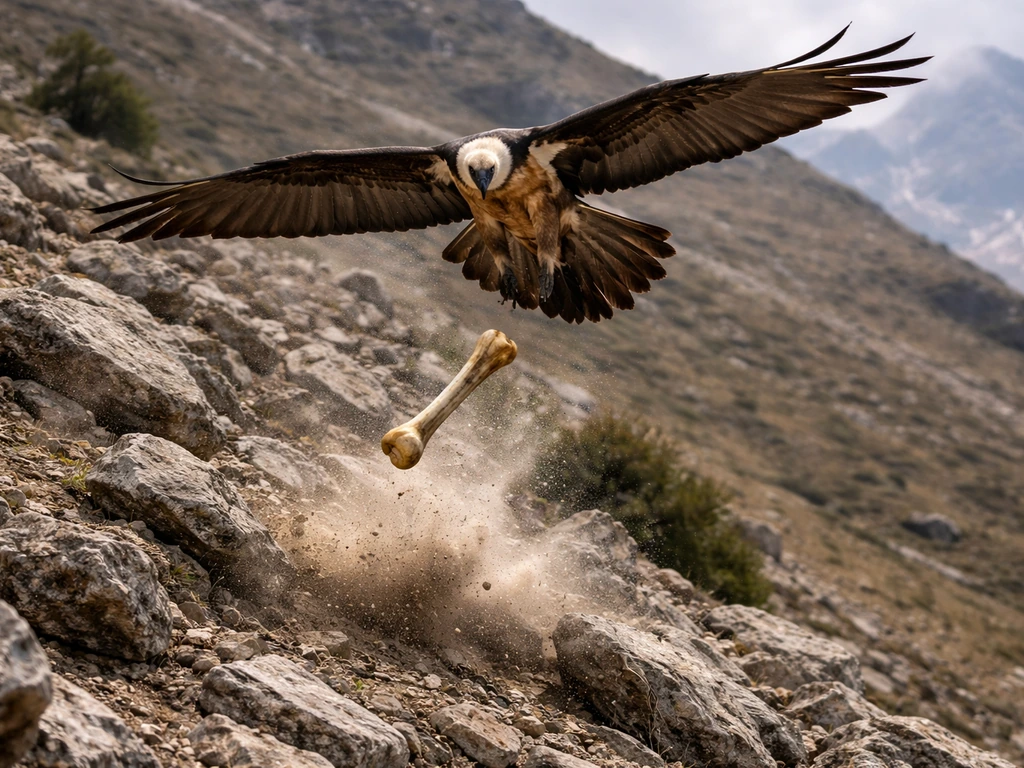
The most famous aerial dropper is the Lammergeier (Bearded Vulture, Gypaetus barbatus). It specializes in dropping large bones from heights of 50 to 80 meters onto rocky slopes to shatter them and access the marrow inside. This bird has been doing it so reliably that the ancient Greeks apparently wrote about it, and there are medieval accounts attributing the death of the playwright Aeschylus to a tortoise dropped by one. The Lammergeier lives in mountainous regions of Africa, Europe, and Asia, so if you're in North America, this is not your bird.
Eagles
Several eagle species drop prey onto hard surfaces. Golden Eagles are documented dropping tortoises in the American Southwest and Mediterranean. Bald Eagles drop fish or waterfowl from height when the prey is too heavy to carry to a perch. Short-toed Snake Eagles will drop and re-grasp snakes repeatedly to subdue them, which is a practical safety move: a writhing venomous snake is a genuine hazard. If you're curious about just how formidable eagles are as predators, it's worth knowing that what bird can kill an eagle is a surprisingly short list, which tells you a lot about where they sit in the food chain.
Falcons
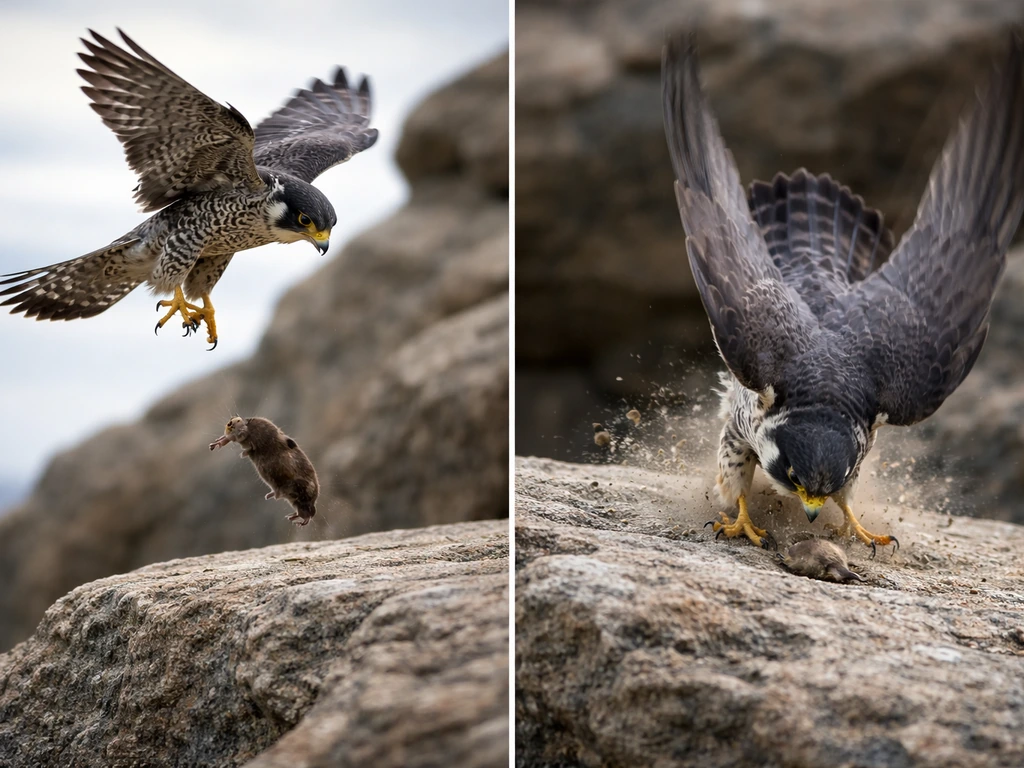
Peregrine Falcons are famous for their stoop, a near-vertical dive that can exceed 240 mph (390 km/h). Guinness World Records also documents peregrine falcon hunting stoops with an estimated record speed around 242 mph (389. 46 km/h) in a stoop reported in 1999 [Peregrine Falcons are famous for their stoop, a near-vertical dive that can exceed 240 mph (390 km/h). ](https://www.
guinnessworldrecords. de/world-records/70929-fastest-bird-diving). The impact of the strike kills or stuns prey outright. The Peregrine doesn't need to drop prey from a height onto rocks; the kinetic energy of its own body does the work.
A Peregrine hitting a pigeon mid-air is the classic example, and it's one reason these birds are so effective at hunting pigeons in urban environments. You'll often find prey fallen below a tall building ledge or bridge where Peregrines nest.
Crows, Ravens, and Gulls
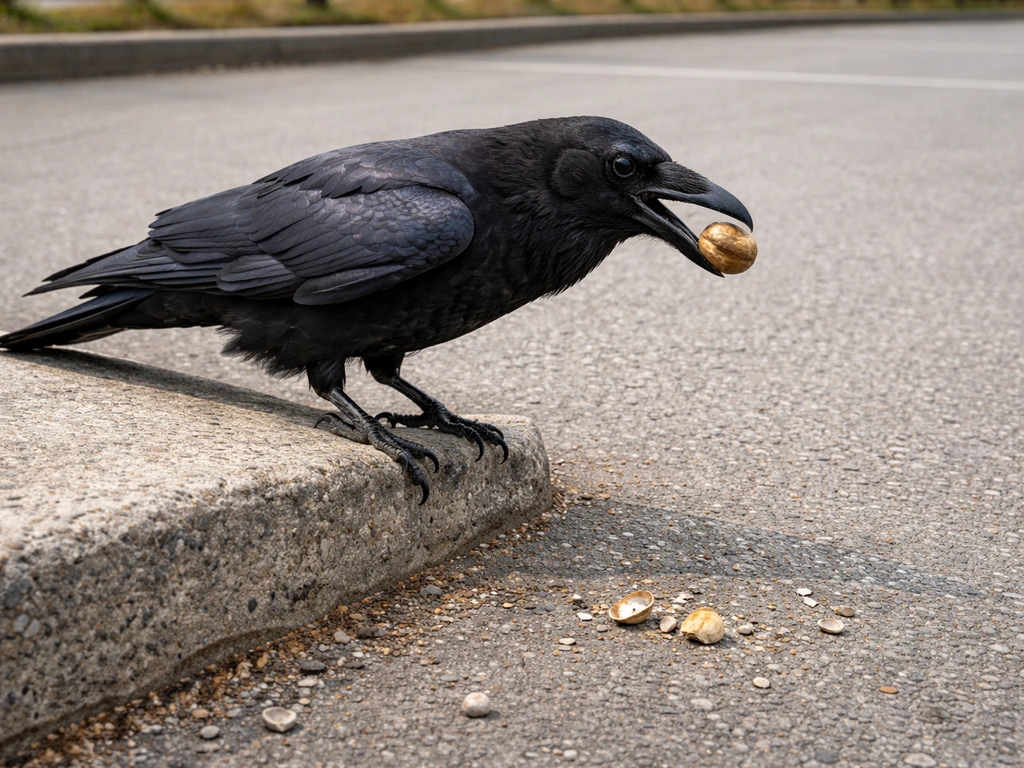
Corvids (crows and ravens) are opportunistic droppers. They carry walnuts, clams, mussels, and small prey into the air and drop them on hard surfaces like roads and parking lots. This is learned, tool-like behavior. Gulls do the same with shellfish, crabs, and occasionally small vertebrates. If you've seen a large dark bird repeatedly dropping something onto asphalt, it was almost certainly a crow or raven. Gulls are also capable of killing smaller seabirds, though they usually don't need aerial dropping to do it.
Why birds drop prey: the mechanics behind it
The reason varies by species and prey type, but it always comes down to efficiency and safety. Hard-shelled prey like tortoises, crabs, and mollusks can't be opened without tools, and a bird's beak isn't a can opener. Dropping from height is the bird's workaround. For raptors dealing with dangerous prey like snakes, dropping and re-catching subdues the animal while keeping the bird's face away from fangs. Snake-killing birds have evolved specific behaviors and even physical adaptations for exactly this reason.
For falcons, the stoop isn't about height at all, it's about velocity. The bird stores gravitational potential energy and converts it into kinetic energy at impact. The result is a strike powerful enough to decapitate prey or cause fatal internal injuries instantly. It's also why falconers say a Peregrine needs open sky to be effective; constrained spaces reduce the stoop and blunt the kill.
Corvids and gulls drop prey purely to access it, not to kill it first. A clam is already dead; the drop is just the opening move before eating. When a crow drops a walnut in front of a traffic light and waits for a car to run over it, that's the same logic scaled up. The behavior is learned and even culturally transmitted within crow populations.
How to figure out which bird did it from the evidence on the ground
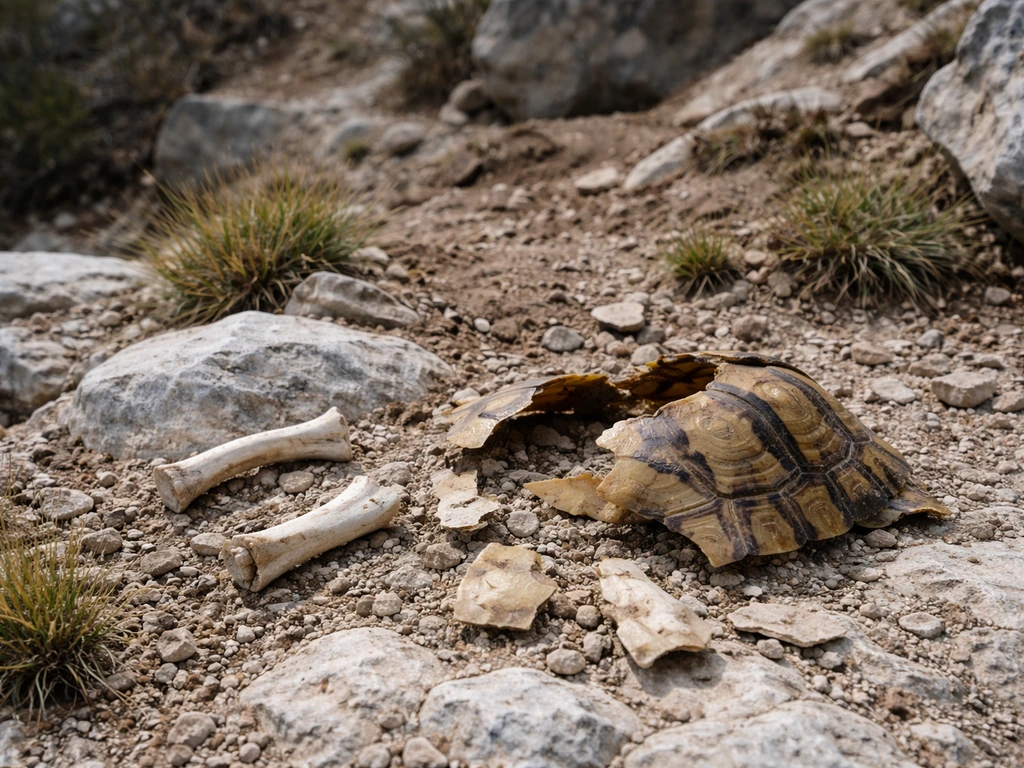
You don't need to have seen the bird. The scene left behind tells you a lot. Here's what to look for:
- Shattered tortoise shell or large bone fragments on a rocky slope or hard surface: almost certainly a large eagle or Lammergeier. Location matters, the Lammergeier is only in mountainous Old World regions.
- Plucked bird feathers in a neat pile, with the carcass partially or fully eaten and the breastbone picked clean: a Peregrine Falcon or large accipiter (Cooper's Hawk, Goshawk). Falcons leave a characteristic "plucking post" site with feathers radiating outward.
- A bird carcass with the head missing or the neck broken and little else eaten: often a Peregrine strike that wasn't followed up, or a large falcon that was disturbed. The strike alone decapitates or breaks the neck.
- Cracked shellfish or clam halves on a hard surface near the coast: almost certainly a crow, raven, or gull. Look for a nearby elevated perch they return to.
- A snake carcass with multiple puncture wounds and no signs of eating: possibly an eagle or secretary bird that dropped and re-struck the snake to subdue it before losing interest or being disturbed.
- Pellets (compacted fur, bone, feathers) near a roost site: an owl. Owls swallow prey whole and regurgitate indigestible parts. Wildlife agencies recommend dissecting pellets under magnification to identify exactly what species the owl was targeting.
Location is one of your best clues. Urban bridge or skyscraper ledges with pigeon feathers below mean Peregrine. Rocky mountain terrain with smashed bones means eagle. Coastal parking lot with broken shells means corvid or gull. Cross-reference the prey type with what birds are actually present in your area and you can usually narrow it to one or two species.
Comparing the main species that drop prey
| Bird | Prey Dropped | Drop Purpose | Typical Location | Geographic Range |
|---|---|---|---|---|
| Lammergeier | Large bones, tortoises | Access marrow/soft tissue | Rocky mountain slopes | Africa, Europe, Asia |
| Golden Eagle | Tortoises, large prey | Kill hard-shelled prey | Rocky open terrain | North America, Eurasia, Africa |
| Peregrine Falcon | Birds (pigeons, waterfowl) | Kill via high-speed strike | Urban buildings, cliffs, coastlines | Worldwide |
| Bald Eagle | Fish, waterfowl | Subdue or reposition prey | Near water, coastal areas | North America |
| Short-toed Snake Eagle | Snakes | Subdue dangerous prey safely | Open grassland, scrub | Europe, Africa, Asia |
| Crow / Raven | Shellfish, nuts, small animals | Open hard-shelled food | Roads, parking lots, rocky coasts | Worldwide |
| Gull | Shellfish, crabs, small vertebrates | Open hard-shelled food | Coastal areas, parking lots | Worldwide |
Is this behavior a danger to people or pets?
For people directly, the risk is essentially zero. No raptor in the world has a documented history of deliberately targeting adult humans as prey. The concern is more about pets, specifically small dogs and cats under about 5 pounds (2.3 kg), and outdoor poultry. A Bald Eagle or large Golden Eagle can carry prey up to roughly 5 to 8 pounds depending on the bird's size and wind conditions. Great Horned Owls are the more frequent threat to small pets at night.
If you live in an area with active raptors and have small pets, practical steps help: supervise outdoor time for small animals, bring them in at dusk (Great Horned Owls hunt at night), and cover poultry runs with wire mesh on top, not just on the sides. Raptors are federally protected in the US under the Migratory Bird Treaty Act, so you cannot legally harm or trap them even if they are targeting your animals.
One scenario worth knowing: crows and ravens that have learned to drop objects from height will sometimes drop things onto rooftops, cars, and occasionally near people. This is incidental, not targeted. The bird is using your driveway as a cracking surface, not attacking you. The same applies to gulls dropping shellfish onto coastal walkways. Move away and let it finish.
If you keep backyard birds and notice an unusual pattern of losses, it may be worth researching what animal destroys bird nests, since sometimes what looks like a predatory drop-kill is actually a nest raid by a mammal or corvid that was then interrupted.
Health and safety when you find carcasses, feathers, or prey remnants
Finding a fresh or partially-eaten carcass from a raptor kill is more common than most people realize. The real-world health risk is low but not zero, and how you handle it matters.
What's an actual risk vs. what's overblown
Avian influenza (bird flu) is the concern most people raise, and it's worth addressing directly. Wild bird carcasses can carry H5N1 and related strains. The risk of transmission to humans from casual exposure to a dead bird is low, but it is not zero for immunocompromised individuals. The bigger practical risk from a raptor kill site is secondary poisoning from rodenticide-laced prey: if a hawk killed a rat that had ingested anticoagulant rodenticide (a very common scenario), the carcass can contain active poison. This matters to you if you have dogs that might eat the carcass, not because of disease but because of the rodenticide itself.
Parasites like ticks and mites that were on the prey animal will leave the cooling carcass and look for a new host. If you're kneeling over a fresh kill site in tall grass, this is a real exposure route. Salmonella and Campylobacter can also be present in bird carcasses, but you'd need direct contact with contaminated material and then hand-to-mouth transmission to be at risk.
Practical handling steps
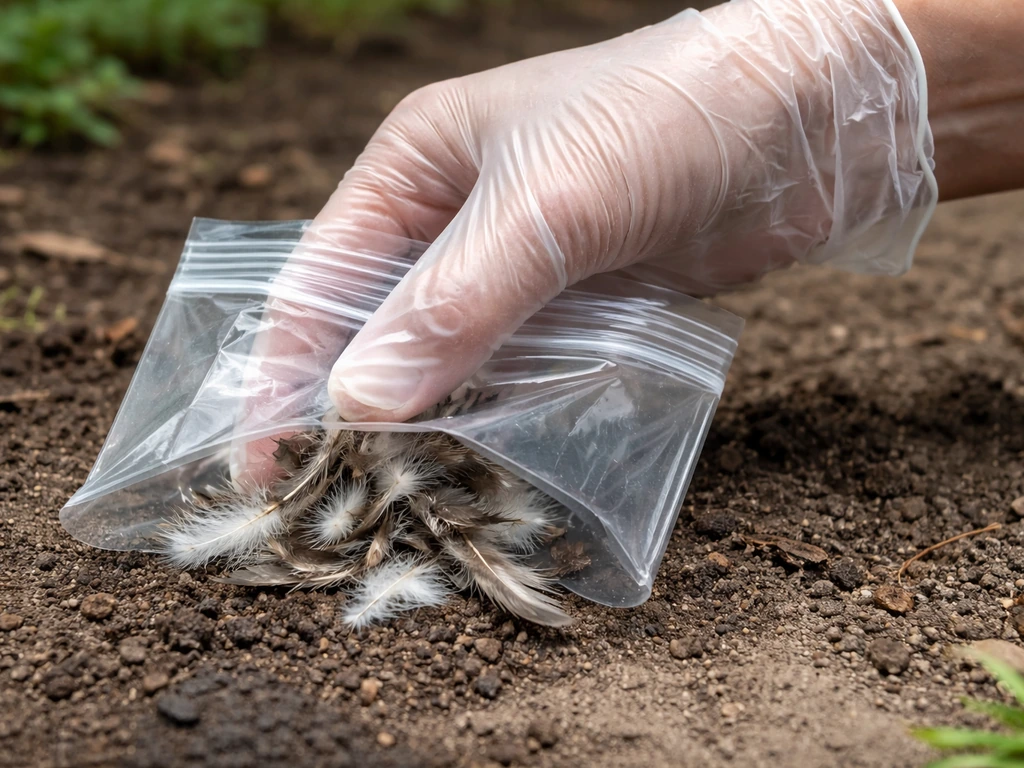
- Don't handle feathers, carcasses, or prey remains with bare hands. Use disposable gloves or a plastic bag inverted over your hand.
- If you need to move a carcass (from a path, a playground, etc.), double-bag it in plastic and dispose of it in a covered outdoor trash bin. Do not compost it.
- Wash hands thoroughly with soap and water after any contact, even gloved contact.
- Keep dogs on leash around fresh kill sites and do not let them eat or roll in carcass material.
- If you find a large volume of feathers with no obvious carcass nearby, note the location and report it to your local wildlife agency. Mass mortality events are tracked.
- If you see a raptor that appears sick or injured near a kill site, do not approach it. Call a licensed wildlife rehabilitator. A sick raptor is far more dangerous to handle than a healthy one.
Loose feathers alone (not attached to a carcass) carry minimal disease risk in normal outdoor conditions. The main concern there is legal, not medical: possessing most wild bird feathers is illegal in the US without a permit, even if you just picked one up off the ground.
Separating fact from folklore around this behavior
A few persistent myths circulate around birds that drop prey, and they're worth clearing up directly.
Myth: Eagles (and hawks) will drop prey on people intentionally
This comes from the story about Aeschylus dying from a tortoise dropped by an eagle (likely a Lammergeier). Even if we accept the story as true, the bird was not targeting a human head. It was targeting a shiny bald head that looked like a rock. Raptors do not have the cognitive model to identify humans as prey items and pursue them. A bird that drops prey near you dropped it near a hard surface that happened to be near you.
Myth: Only large birds of prey do this
Crows, ravens, jackdaws, and even some thrushes drop snails onto hard surfaces to crack them. The behavior isn't a raptor exclusive; it's a problem-solving strategy that has evolved independently in several bird lineages. Song Thrushes (Turdus philomelos) have favorite "anvil" rocks they return to repeatedly to smash snail shells.
Myth: The Peregrine Falcon carries prey up high and drops it
This is backwards. The Peregrine climbs to height and then dives at the prey below. It doesn't carry the prey up first. The killing happens at the end of the stoop (the dive), not from a stationary drop. People sometimes confuse this with the Lammergeier's behavior because both involve height, but the mechanics are completely different.
Myth: Birds that drop prey are "smarter" or more dangerous to humans than other birds
Corvids that drop objects are displaying impressive problem-solving, but it doesn't translate to any special threat to humans. Raptors that drop prey to kill it are following hardwired predatory programs, not calculated strategies. The most dangerous bird interaction for humans is still a nesting bird defending its nest, which involves dive-bombing at close range, not aerial dropping. Compared to the threat that large, powerful birds pose in theory, the practical real-world risk to people from any prey-dropping behavior is negligible.
Myth: Finding a smashed carcass means the bird "poisoned" the prey first
No bird species poisons its prey before dropping it. If you find a dead animal that appears to have been dropped, the cause of death is blunt force, either from the impact of a fall or from the raptor's strike. Any contamination in the carcass got there from the prey animal's own environment before it was caught. Some people confuse the paralyzing grip of a raptor's talon (which can cause rapid death from organ damage and shock) with poisoning, but talons don't inject any toxin.
One thing that's genuinely underappreciated is how birds that seem "designed" to kill specific prey types actually specialize far more than most people think. For instance, what birds make eagles nervous is partly about mobbing behavior, where smaller birds coordinate to deter much larger predators, which is a different kind of bird-on-bird interaction from prey dropping but equally misunderstood.
Your quick-reference summary
If you saw a bird drop something to kill it, the most likely candidates are a falcon (death by high-speed strike), an eagle (death by drop onto hard surface, especially tortoises or bones), or a corvid/gull (opening hard-shelled food, not killing per se). Identify the prey type and location first, then match to species range. The behavior is always about efficiency and safety for the bird, never about targeting humans. Handle any carcass or feather remnants with gloves, keep pets away, and report mass mortality events to wildlife authorities. The behavior is fascinating, well-understood, and poses no meaningful direct risk to people.
FAQ
How can I tell if the bird dropped prey to open it versus to instantly kill it?
Not necessarily. If the prey breaks open, cracks, or you see shell fragments, that points more to aerial dropping to access food (common with corvids, gulls, and some eagles). If the scene includes blunt-force trauma without obvious shell-cracking behavior, it may be a strike kill (often falcons or some hawks depending on what you observed).
What clues tell me whether I’m seeing prey-finishing versus aerial dropping?
Look for the “target” surface. Raptors that are finishing an animal usually stay close to the ground or perch while using their beak to tear, so you will not see a repeated lift-and-release from a height. In contrast, aerial droppers often fly up with the item, pause or position, then release onto a consistent hard spot (roads, rocks, ledges).
Could it be a Lammergeier if I saw it in my region (like North America)?
Yes, because behavior and outcomes are location-specific. Lammergeiers are mainly in mountainous areas of Africa, Europe, and Asia, so the “bone-drop” description is unlikely in most of North America. If you are in North America and the prey looks like shellfish or walnuts, corvids and gulls are often more plausible than eagles or lammergeiers.
What if the dropped item doesn’t look like typical raptor prey, what does that mean?
Birds can drop items for several reasons besides hunting, including learned “tool-like” cracking (walnuts, snails, clams) and sometimes nest-related disturbance in crowded areas. If the “prey” is not a typical food item for local raptors, or if there are repeated drops onto manmade surfaces with waiting behavior (like pausing for cars), that leans toward problem-solving food access rather than kill behavior.
Does a bird dropping prey near me mean it was trying to hit or attack humans?
If you see a bird drop prey and then return to the same spot to eat, it is probably the access-and-crack type or a finishing routine, not evidence that the bird targeted you. Raptors do not need to “aim at people,” they aim at a suitable hard surface or a safe approach angle for the prey.
How likely is it that a prey-dropping bird could take a small pet?
Use the prey type and the size of the bird together. Small dog or kitten sized prey is more realistically handled by owls at night and by ground-focused predators, while large eagles can carry heavier items but usually target available wild prey. For common street-level prey, corvids and gulls often operate at the “cracking” stage rather than lifting big animals into the air.
What practical safety steps actually reduce risk around active raptors?
Most “risk spikes” come from indirect exposure, not the drop itself. If you have small pets, bring them in at dusk, supervise outdoor time, and physically block access to poultry runs using covered tops with wire mesh (not just side walls). If your dog is likely to scavenge carcasses, that increases the chance of ingesting rodenticide residues from the prey chain.
What should I do if crows or gulls keep dropping objects near where people are walking?
If a bird appears to be dropping objects onto rooftops, cars, or walkways, treat it as incidental, not an attack plan. Move away to avoid the impact zone and then watch from a distance. The safest approach is to avoid standing directly under repeat drop points, especially if gulls or corvids are using your area as a consistent cracking surface.
If my backyard bird losses look like predation, how do I know whether it’s actually raptor dropping or something else?
Yes, carcass identification can be complicated. Sometimes you’ll find remains after a predatory event that was interrupted, or after a scavenger relocation. If you see a pattern of “losses” around nests, or missing chicks/eggs without clear raptor kill marks, other predators like mammals or corvid nest raiders may be involved rather than prey dropping.
What’s the safest way to respond if I find feathers or a partially eaten kill site?
Handle any carcass remnants as potentially contaminated, and keep pets away immediately. Wear gloves, avoid touching your face, and do not bag loose feathers without a plan. If you find widespread dead birds or multiple similar events, report to local wildlife authorities rather than trying to manage it yourself.
Is it legal to keep feathers or remnants if I find them after a raptor kill?
Legally, in many places you should not collect feathers unless you have the right permissions, and raptors are protected under bird protection laws in the US. If you found remains from a protected species, the safest choice is to leave it in place (if possible) and report rather than attempting to keep or transport items.
Can birds poison prey before dropping it to kill it?
If someone claims the bird “poisons” prey and then drops it, treat that as a myth. The most common lethal mechanisms are impact trauma, tearing with talons and beak, and effects from holding prey firmly. Poison injection is not how these predatory birds kill their prey.
If the bird is a Peregrine, does it drop prey from height or kill by the dive impact?
It depends on the species. Peregrines usually kill through high-speed stoop impact rather than lifting and dropping prey onto rocks. Eagles and some other raptors are more associated with dropping hard-shelled prey to access food or create fatal blunt-force injuries when the item is released from height.
Next Articles

What Bird Can Kill an Eagle or Bald Eagle? Real Predators
Find which birds can kill eagles or bald eagles, when attacks happen, and how to assess real risk vs myths.

Bird Causes Plane Crash? Risk, Mechanisms, Myths, Prevention
Whether bird strikes can cause plane crashes, how they happen, real risk data, debunked myths, and prevention steps

Can a Plane Crash Because of a Bird? Facts and Safety
Understand if a bird strike can crash a plane, what it damages, how often it happens, and what airports do to prevent it