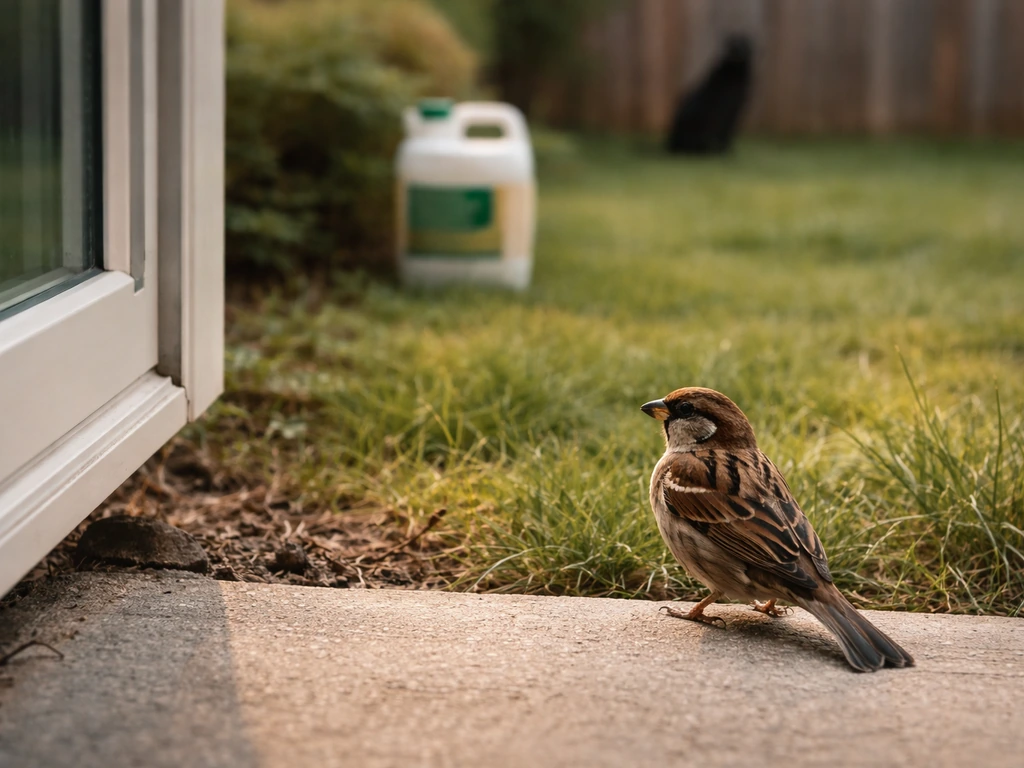
Yes, a dirty cage can kill a bird, and it happens more often than most owners expect. The risk is not just theoretical. Ammonia buildup from accumulated droppings, mold from wet bedding or spoiled food, fecal contamination of water and food dishes, and toxic fumes from cleaning products used in poorly ventilated spaces are all real, documented causes of serious illness and death in pet birds. The good news is that the fix is straightforward: consistent, proper cage hygiene removes almost all of these risks before they become lethal.
Can a Dirty Cage Kill a Bird? Risks, Signs, and Fixes

Maya Chen
27 Apr 2026
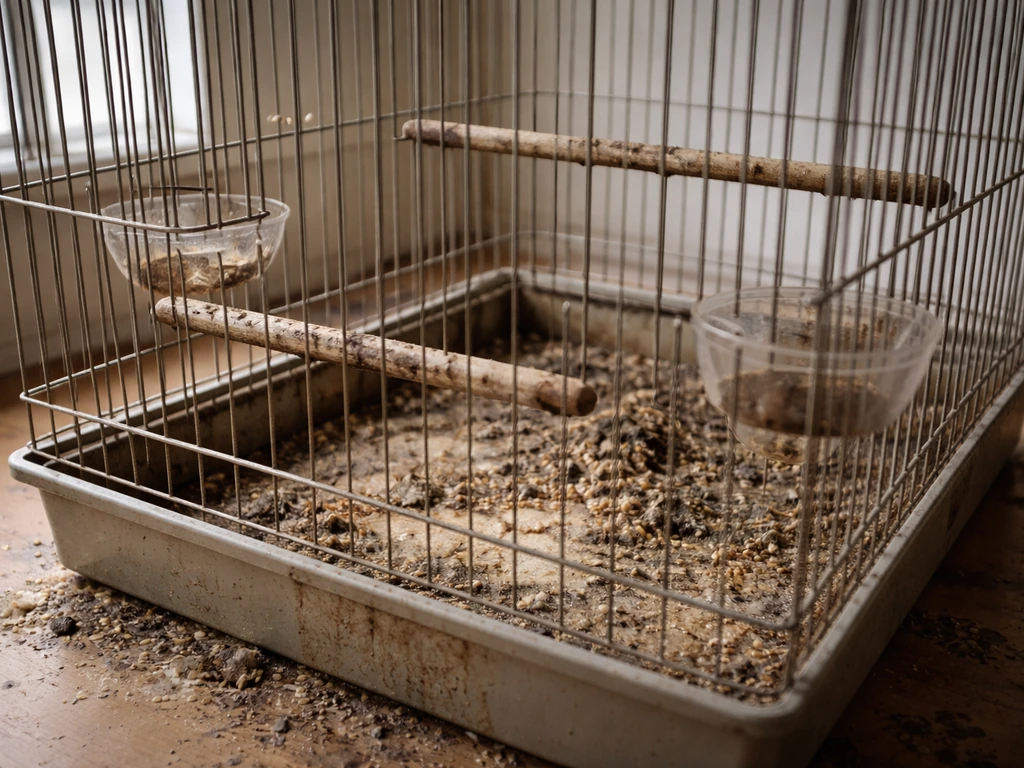
What 'dirty cage' actually means (it's more than just smelly)
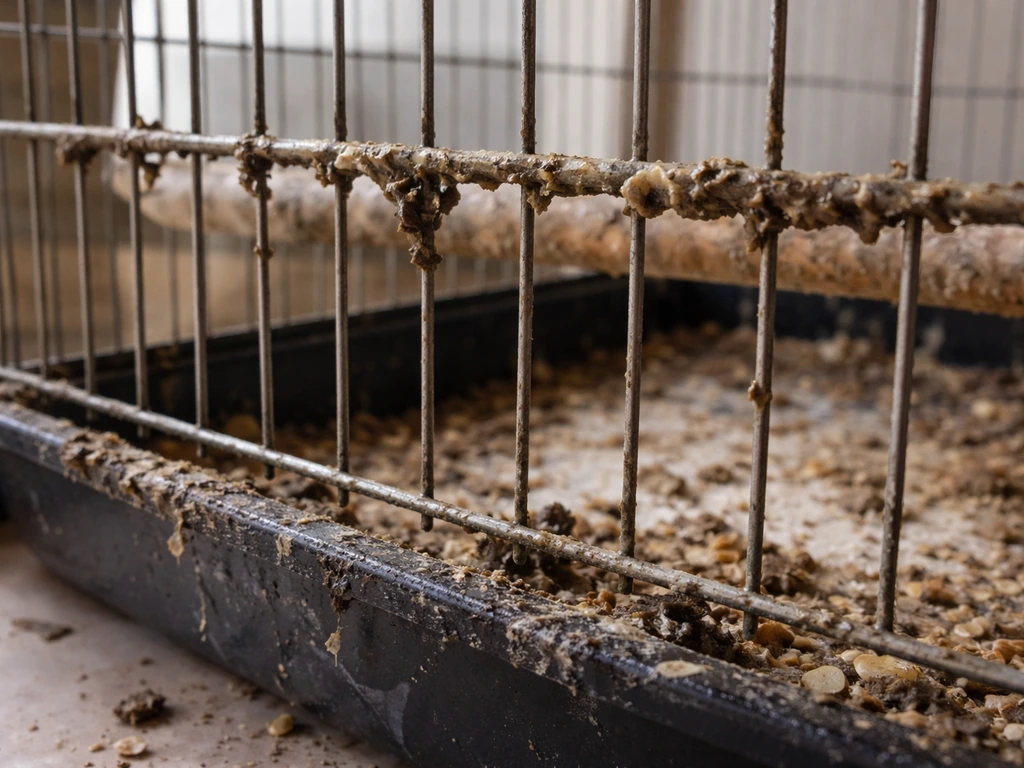
When people say 'dirty cage,' they usually picture visible droppings or a cage that smells bad. Those are signs of a problem, but the real dangers are less obvious. A cage becomes genuinely hazardous through a combination of things that build up over time.
- Accumulated droppings on cage bars, perches, and the cage floor, especially when wet or mixed with urine
- Wet or damp bedding and cage liners that have not been changed, which create a perfect environment for bacterial and mold growth
- Spoiled food left in the cage, including wet seed mixes, fresh fruit or vegetables past their prime, or softened pellets sitting in water
- Moldy substrate or cage litter, which can release fungal spores (particularly Aspergillus) into the air the bird breathes
- Dirty water bowls and food dishes that droppings have fallen into, contaminating what the bird eats and drinks
- Residue from cleaning products that were not thoroughly rinsed off before the bird was returned to the cage
Each of these creates a different type of hazard. Knowing which ones are present in your specific situation helps you prioritize what to fix first.
How a dirty cage actually harms birds
Respiratory damage from ammonia and mold
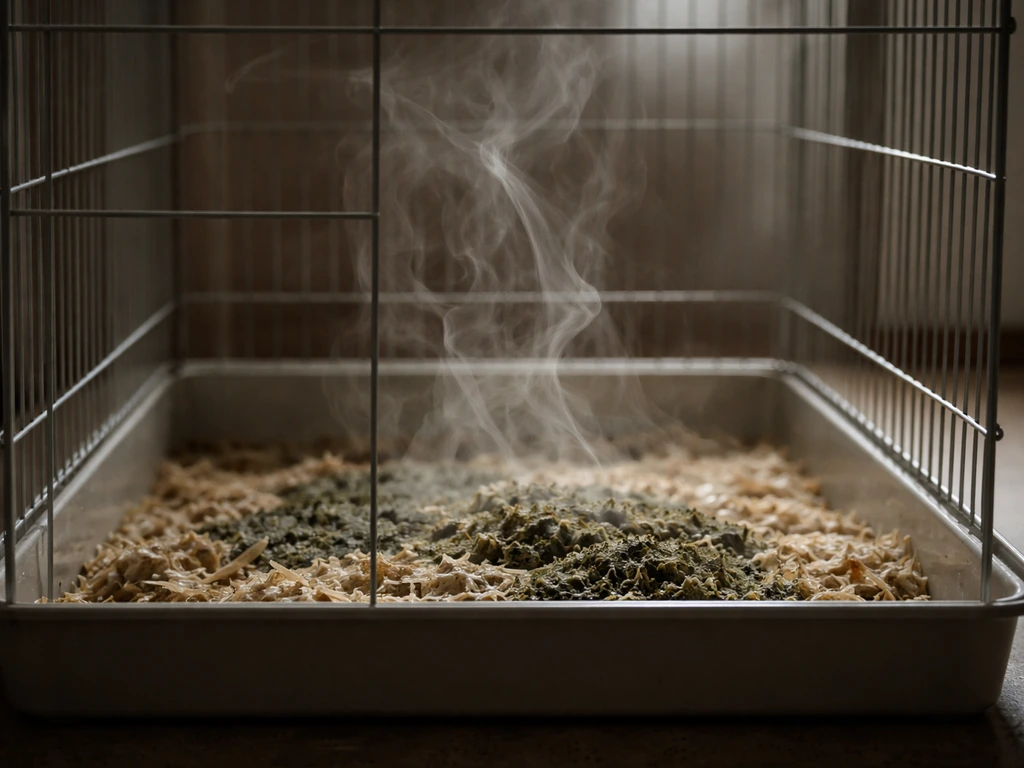
This is the most serious and fastest-acting threat. what can kill a bird instantly reddit. If you want to understand the broader, fast-acting side of risk, see what can kill a bird instantly for more examples beyond ammonia and mold. If you are also concerned about immediate hazards beyond cage hygiene, check out things that can kill your bird right away. In practice, the fastest way to kill a bird is through rapid respiratory toxicity, especially from ammonia buildup in a warm, humid cage what can kill a bird instantly. Avocados are also a well-known hazard for pet birds, which is why it is important to know how much avocado will kill a bird before offering any human foods. If you also wonder about foods, remember that toxic items like chocolate are another comparison point for how quickly something unsafe can harm birds how much chocolate can kill a bird. Bird droppings contain uric acid, and when waste accumulates in a warm, humid cage, ammonia gas is released. Birds have highly sensitive respiratory tracts, and concentrations as low as 25 to 30 parts per million are enough to damage the mucociliary lining of the upper airway, which is the bird's first defense against infection. At 50 to 75 ppm, ammonia can cause caustic burns and corneal ulceration. You do not need to see or smell a serious problem for it to already be at dangerous levels for a bird, because birds are affected long before humans notice the odor.
Moldy litter and wet bedding are the other major respiratory threat. Aspergillus fumigatus, a common mold found in damp organic matter, releases microscopic spores into the air. In dusty, poorly ventilated cages with moldy substrate, spore counts climb high enough to cause Aspergillosis, a serious fungal infection of the respiratory system that is difficult to treat and often fatal in pet birds.
Gastrointestinal infections from fecal contamination
When droppings accumulate on perches positioned above food and water dishes, or when dishes are not cleaned daily, the bird is essentially eating and drinking from a contaminated source. Bacteria including Campylobacter and various opportunistic pathogens thrive in these conditions. The resulting GI infections cause diarrhea, lethargy, poor appetite, and regurgitation. In small birds, even a short period of severe diarrhea and dehydration can be life-threatening.
Skin, feather, and parasite problems
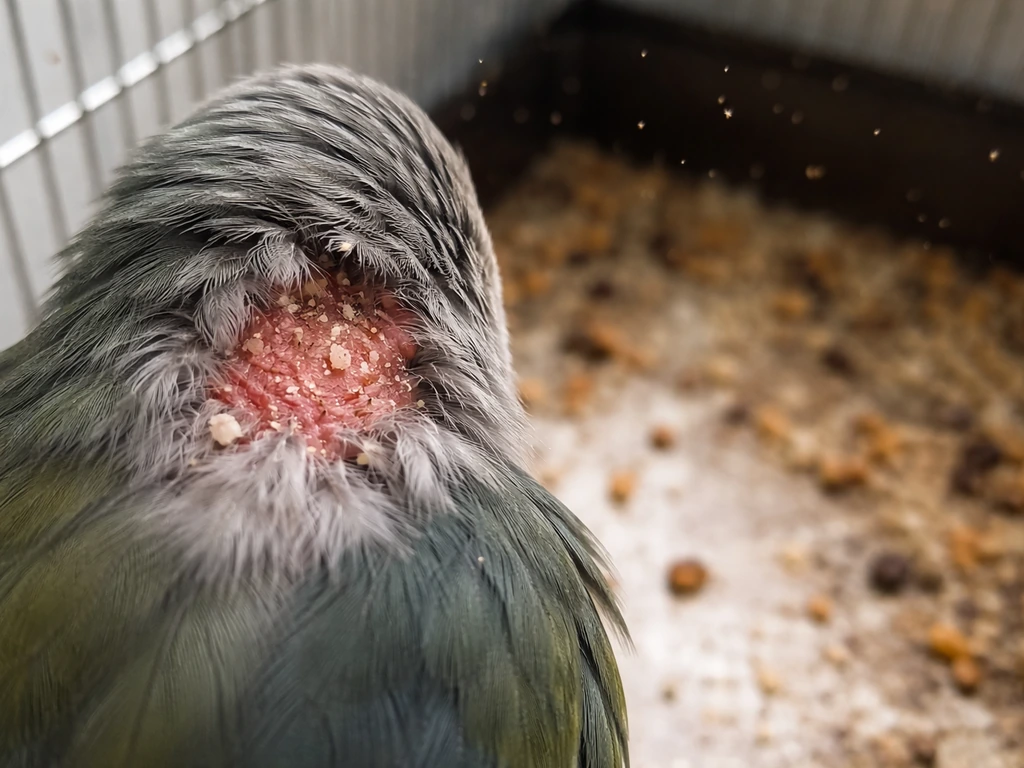
A cage with built-up debris and accumulated organic material creates a breeding ground for mites. Mites can live in the cage environment itself, not just on the bird, which means a dirty cage can continuously re-infest a bird even after treatment. Bacterial skin infections from staphylococci, streptococci, and Bacillus species are also linked to unsanitary cage conditions. Feather mites, while less common in strictly indoor pet birds, can be fatal if left untreated and spread easily to other birds in the same environment.
Toxic exposure from cleaning product residues and fumes
Here is a risk that trips up well-meaning owners: the very act of cleaning can kill a bird if done incorrectly. If you are wondering what can kill a bird instantly, improper cleaning and toxic fumes are one of the fastest ways birds can die. Bleach and ammonia-based cleaners are both toxic to birds via inhalation. blank" rel="noopener noreferrer">Mixing them produces chloramine gas, which can cause severe breathing distress and can be immediately lethal to birds. Even cleaning the cage in the same room with a bird present is enough to cause aerosol poisoning. Chemical residues left on cage surfaces, bars, perches, and dishes are also dangerous when the bird chews on or contacts them. Birds' respiratory systems are so sensitive that, as one avian health resource puts it, fumes of any kind can be toxic.
What makes a dirty cage more or less dangerous
Not every dirty cage is equally deadly. These factors determine how quickly a dirty cage becomes a lethal one.
| Risk Factor | Why It Matters | Higher Risk Scenario |
|---|---|---|
| Species size | Smaller birds have less physiological reserve; they deteriorate faster | Finches, canaries, budgies vs. large parrots |
| Ventilation | Poor airflow allows ammonia and mold spores to concentrate | Cage in a closed room vs. near an open window |
| Humidity | High humidity accelerates mold growth and ammonia release | Bathroom, basement, or humid climate |
| Time between cleanings | Longer intervals allow bacteria, mold, and ammonia to multiply | Cleaning weekly or less vs. daily spot checks |
| Diet type | Fresh foods spoil faster; wet seed becomes moldy quickly | Fruit and vegetable scraps left overnight |
| Multiple birds | More birds produce more waste faster | Colony cages with several birds |
How to tell if your bird is already in trouble
Birds instinctively hide illness, so by the time symptoms are obvious, the problem is often already serious. Check your bird closely every day, and know what to look for.
Signs that warrant a vet call within 24 hours
- Diarrhea or abnormal droppings (watery, discolored, containing undigested food, or with bubbles) that persist longer than 24 hours
- Fluffed-up feathers combined with lethargy or reduced activity
- Reduced appetite or not eating at all
- Discharge from nostrils or eyes
- Coughing, sneezing repeatedly, or clicking sounds when breathing
Signs that mean go to an avian vet right now
- Labored breathing, open-mouth breathing, panting, or tail bobbing with each breath
- Blue or purple tinge to the skin around the beak or feet (cyanosis, a sign of oxygen deprivation)
- Unable to stand, grip the perch, or hold its head up
- Tremors, seizures, or sudden loss of coordination
- Collapse or unresponsiveness
Respiratory emergencies in birds can progress from 'breathing oddly' to dead within hours. If you see open-mouth breathing or tail-bobbing after the bird has been in a dirty or recently cleaned cage with strong products, treat it as an emergency.
Use the droppings as a daily health monitor
Normal bird droppings have three parts: a solid dark-green or brown fecal portion, a white urate portion, and a small amount of clear liquid urine. Any change in color, consistency, volume, or frequency is your first clue that something is wrong. Loose, watery, unusually dark, or very infrequent droppings all deserve attention. Checking the cage floor each morning takes about ten seconds and is one of the best early-warning tools you have.
Clean the cage today: a safe step-by-step process
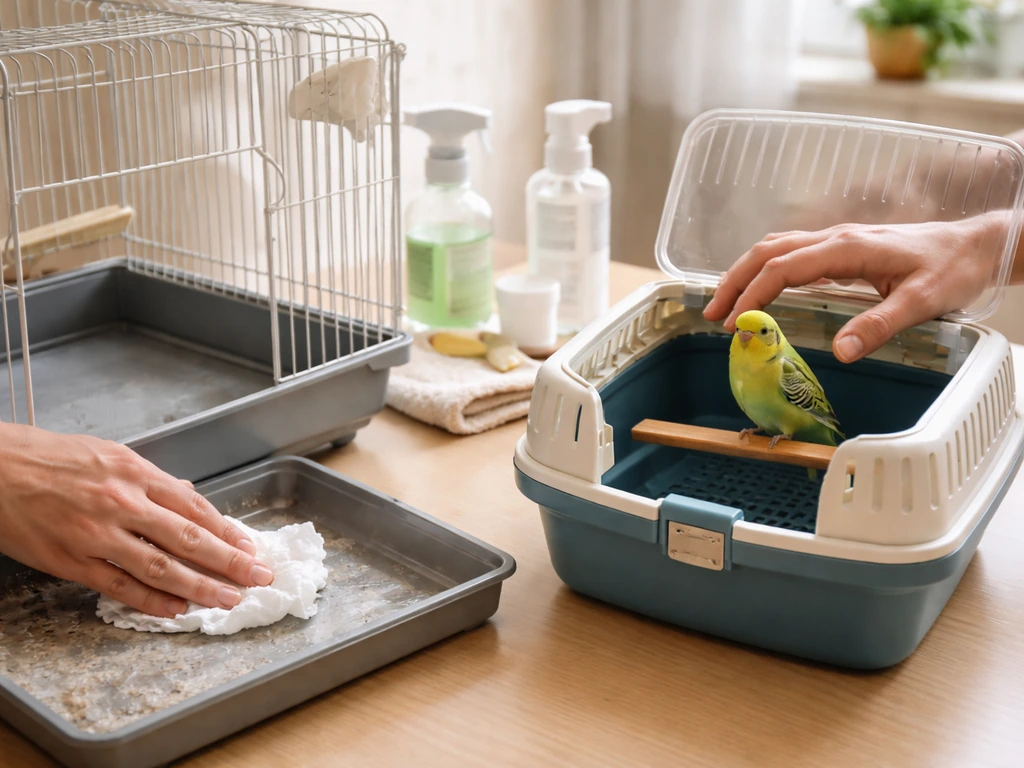
If you are reading this because your cage is overdue for a cleaning, here is how to do it safely right now.
- Move the bird to a safe, temporary location first. A clean travel carrier or a trusted person holding the bird works. The bird must not be in the room while you clean with any disinfectant product.
- Remove all cage contents: perches, toys, dishes, liners, and any cage accessories. Dispose of all soiled bedding, liners, or substrate.
- Dry-scrape all dried droppings from bars, perches, and the cage tray using a stiff brush or scraper. Do this before wetting anything, or you will just smear droppings into crevices.
- Wash all surfaces, perches, and dishes with hot water and unscented dish soap. Rinse thoroughly until no soap residue remains.
- Disinfect if needed (heavy soiling, suspected illness, or visible mold). Use a diluted bleach solution: about 1 part bleach to 32 parts water (roughly half a tablespoon per cup of water). Apply, leave for 10 minutes, then rinse extremely thoroughly with clean water.
- Dry everything completely before the bird returns. Damp surfaces encourage mold and bacterial regrowth. Air-dry in a ventilated space, or dry with clean towels.
- Ventilate the room. Open windows and let the area air out for at least 30 minutes after cleaning, even if you used only soap and water.
- Return the bird only when the cage is dry and the room smells neutral. If you can still detect any chemical odor, wait longer.
Never mix bleach with any ammonia-based cleaner, vinegar, or other product. Use one product, rinse completely, and dry before moving on. Never spray aerosol cleaners near a bird or in an enclosed room where the bird lives. If you are uncertain whether a cleaning product is safe, plain hot water and dish soap is sufficient for routine cleaning and far safer than a badly rinsed disinfectant.
One more thing to avoid: sandpaper cage liners sold in some pet stores. Birds often pick at them and can ingest the grit, risking GI irritation or obstruction. Plain paper liners (newspaper, paper towels, or purpose-made cage liners) are the safest option and the easiest to change daily.
A realistic prevention routine that actually sticks
The goal is to keep the cage clean enough that dangerous ammonia levels, mold growth, and fecal contamination never get a chance to build up. You do not need to do a full scrub every day, but you do need a consistent daily habit.
Daily (takes about 5 minutes)
- Replace the cage liner or remove and spot-clean the tray
- Wash food and water dishes with hot soapy water, rinse, and refill with fresh food and water
- Remove any uneaten fresh food, wet seed, or soft food immediately (fresh foods should not sit in the cage for more than a couple of hours)
- Check droppings visually as part of the morning routine
Weekly (takes about 20 to 30 minutes)
- Remove and scrub all perches, toys, and accessories with hot soapy water
- Wipe down all cage bars and the interior with hot water or a mild diluted disinfectant
- Rinse everything thoroughly and allow to dry before returning the bird
- Check perches for embedded droppings and replace heavily soiled natural wood perches
Monthly (deep clean)
- Full disinfection of the entire cage structure using diluted bleach or an avian-safe disinfectant product
- Inspect all cage components for cracks or crevices where droppings and bacteria can hide
- Replace any liner, bedding, or perch material that cannot be properly cleaned
- Check the room's ventilation: confirm the bird's space gets regular fresh air exchange
Setup choices that make hygiene easier
Positioning perches away from food and water dishes reduces fecal contamination significantly. Using multiple dishes so you can swap a clean one in while the dirty one soaks saves time. A cage with a slide-out tray at the bottom makes liner changes a 30-second task instead of a production. Keeping humidity in the bird's room below 60 percent slows mold growth in the cage. And keeping the bird's area well-ventilated without placing it in direct drafts is one of the simplest, most effective things you can do to prevent ammonia buildup.
The bottom line on dirty cages and bird deaths
A dirty cage is a genuine, documented risk to a bird's life, not a minor aesthetic issue. The specific threats, including ammonia toxicity, Aspergillosis from mold spores, GI infections from fecal contamination of food and water, skin and parasite problems, and chemical poisoning from cleaning products, all have clear biological mechanisms and have caused real bird deaths. The risk is higher for small species, in humid or poorly ventilated rooms, and when cleaning is infrequent. The leading causes of bird deaths in pet settings are often preventable, especially when cage hygiene issues are addressed early. But every single one of these risks is preventable with a consistent, simple hygiene routine. If your bird is showing any of the warning signs listed above, contact an avian vet rather than waiting it out. If the cage is overdue for a cleaning, do it today using the safe process above. Consistent cage hygiene is one of the most effective things you can do for your bird's longevity, and it costs almost nothing.
FAQ
How long can a bird be in a dirty cage before it becomes dangerous?
There is no single safe timeframe, because ammonia and mold risk rises quickly in warm, humid rooms and with heavy droppings. Birds can show severe respiratory problems within hours of exposure, especially if the cage was recently cleaned with fumes or the bedding is damp.
Can I tell ammonia buildup is dangerous just by smell?
No. Birds can be affected before humans notice odor. If your cage smells even mildly “sharp” or “pungent,” assume the air is already irritating and improve ventilation and cleaning immediately.
What should I do if my bird shows breathing issues after I cleaned the cage?
Treat it as urgent. Move the bird to fresh air (a separate well-ventilated room), avoid more chemical exposure, keep them warm and calm, and contact an avian vet right away, since respiratory distress can progress rapidly.
Are natural cleaners like vinegar or essential oils safer than disinfectants?
They can still be risky for birds. Vinegar is acidic and essential oils can irritate or be toxic when aerosolized. The safest routine approach is hot water plus dish soap, then thorough rinsing and drying.
Is it safe to use bleach to disinfect the cage if I rinse well?
Bleach requires careful dilution, complete rinsing, and full drying, but residue and fumes are still common problems for birds in enclosed spaces. If you are not fully confident in the dilution, rinsing, and ventilation steps, skip bleach and use soap and water instead.
How often should I clean the cage if I want to prevent ammonia and mold buildup?
Spot-clean daily (remove droppings, replace liners, and refresh dishes), and do a deeper wash on a schedule that matches your cage type and how quickly waste accumulates. If the cage is in a humid room or uses absorbent bedding that stays damp, you need more frequent changes.
Do I need to replace the entire cage liner every day?
Yes, when liners are meant to reduce contamination. For paper liners, daily replacement is practical and helps prevent fecal contamination and ammonia buildup. If you reuse liners, waste can stay trapped and raise risk.
Can contaminated perches cause problems even if the dishes are clean?
Yes. Perches above food and water can drop waste onto bowls and food, and they also get contaminated directly. Cleaning perches and the surrounding areas matters, not just the dish surfaces.
What are early signs of a dirty-cage problem besides droppings changes?
Watch for subtle breathing changes (opened-mouth breathing, tail bobbing, unusual quietness), fluffed posture, reduced activity, and appetite changes. Birds often hide illness, so a small change plus a recent hygiene lapse is a strong reason to check immediately.
Can mites or feather mites come from the cage even if the bird is treated?
They can. Mites may live in the cage environment, so cleaning and replacing contaminated liners, perches, and accessible surfaces is part of breaking the re-infestation cycle. If other birds share the same area, treat it as a shared risk.
Is a sandpaper liner safe if I supervise my bird?
Not reliably. Birds may still chew or pick at the grit, which can irritate the GI tract or cause obstruction. Paper liners that are changed frequently are the safer default.
My bird chews the cage bars, what hygiene risk does that increase?
Residue risk. Chemical cleaners and disinfectant leftovers can harm a bird when they chew or make contact with treated surfaces. After any cleaning, rinse thoroughly and let the cage dry completely before returning the bird.
Next Article
What Can Kill a Bird: Causes, Myths, and Immediate Steps
Learn what can kill a bird, debunk myths, and get immediate safety steps plus prevention for homes and yards.