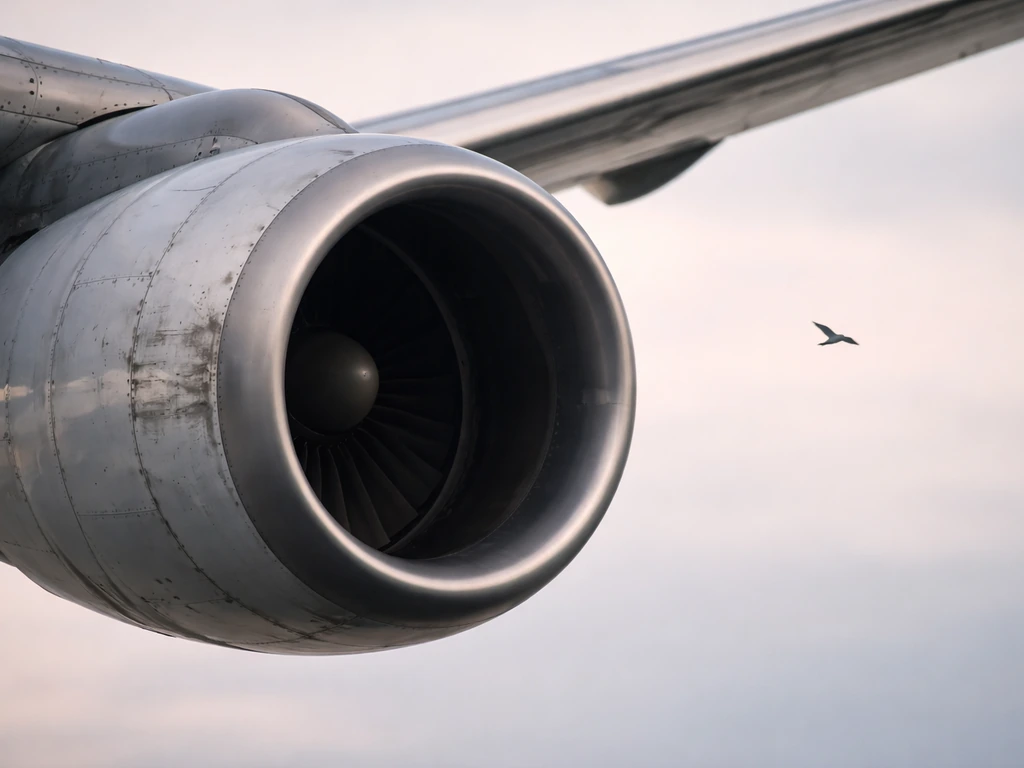
Yes, bird strikes can be dangerous for planes, but the real answer is more nuanced than a flat yes or no. Most bird strikes cause minor damage that leads to an inspection, not an emergency. Because bird strikes are not all the same, it helps to know when they can become dangerous to the aircraft is bird strike dangerous. A smaller number cause meaningful structural or engine damage. And a very small fraction involve the kind of catastrophic engine failure or windscreen penetration that puts a flight at serious risk. Understanding which category applies, and why, is what actually makes this topic useful to know about.
Are Bird Strikes Dangerous for Planes? Risks, Effects, and Mitigation

Maya Chen
20 Apr 2026
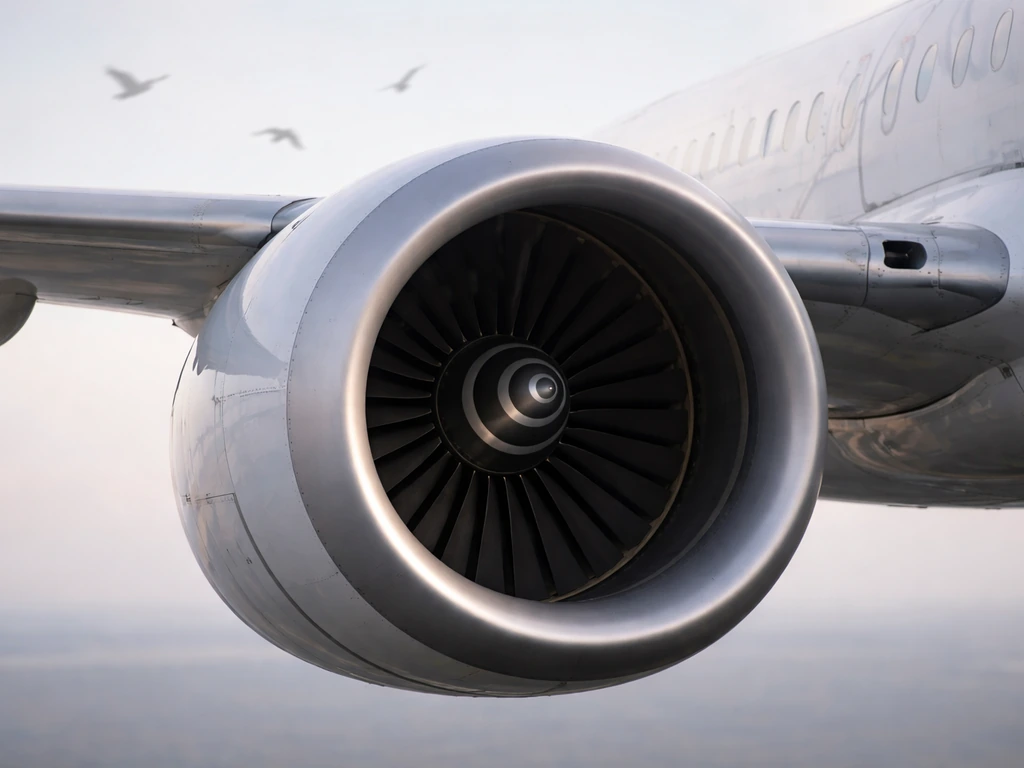
What counts as a bird strike on an aircraft
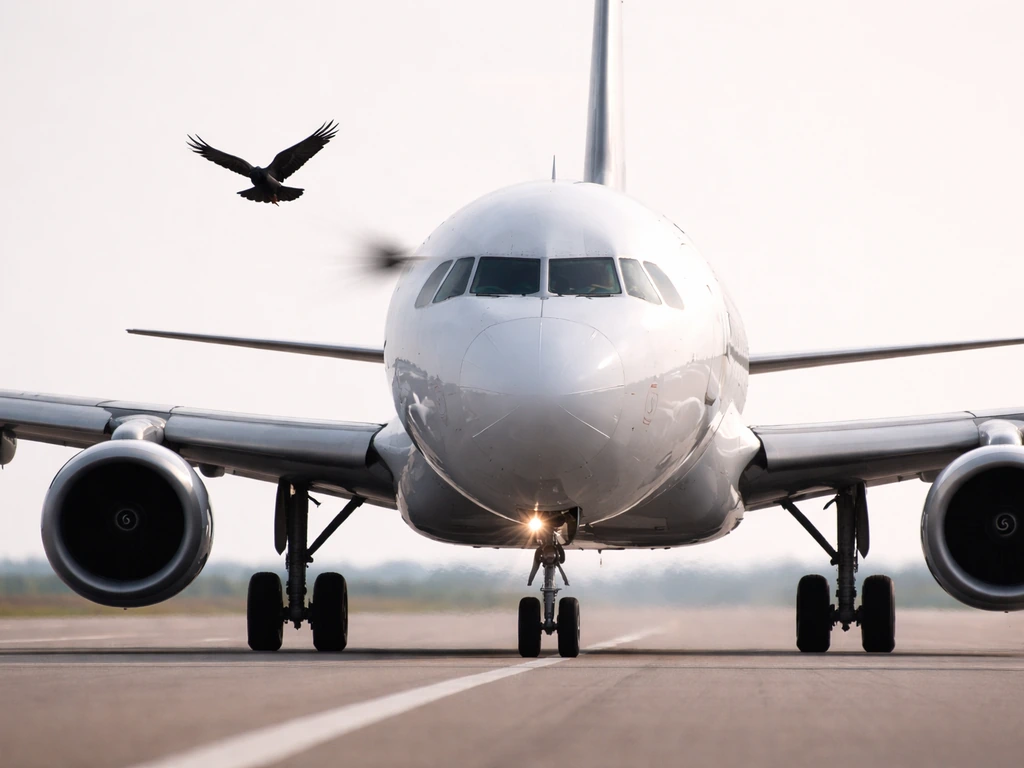
A bird strike is any collision between a bird and an aircraft, whether the aircraft is in flight, taking off, or landing. That includes impacts with the nose (radome), windshield, fuselage, wings, landing gear, and engines. It also includes ingestion, where a bird or bird parts are pulled into a jet engine's intake. Strikes can involve a single bird or an entire flock, and the same size aircraft can experience very different outcomes depending on exactly where the impact occurs.
The FAA tracks these events through a national wildlife strike database, and the numbers are substantial. FAA’s wildlife hazard mitigation materials note that the FAA and USDA established a National Wildlife Strike Database to centralize strike data collection FAA tracks these events through a national wildlife strike database. From 1990 through 2023, about 292,000 wildlife strikes with civil aircraft were reported in the United States alone. In 2023 there were roughly 19,700 strikes at 780 U.S. airports. That said, reporting is voluntary for most civil aviation, so the real number is almost certainly higher. The database is best understood as a floor, not a ceiling.
Why bird strikes can be dangerous
The danger depends almost entirely on where the bird hits and what it does when it gets there. There are three main pathways to serious harm: engine ingestion, windshield damage, and damage to control surfaces or other flight-critical components.
Engine ingestion
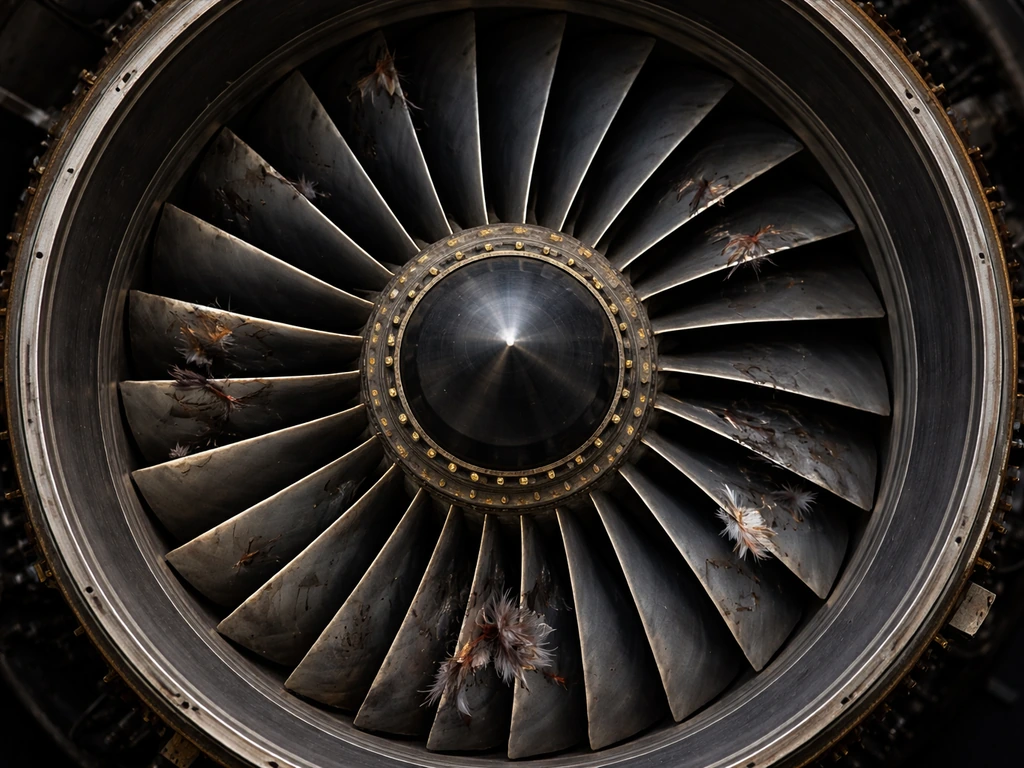
This is the most talked-about risk, and for good reason. When a bird is ingested into a jet engine, the rotating fan blades and compressor stages can be damaged or destroyed. A badly damaged engine can lose thrust, catch fire, or fail completely. The FAA's 1990–2022 data recorded 5,190 events involving engine damage from bird strikes, including 5,021 with one engine damaged and 167 events where two engines were damaged. That dual-engine figure matters because most commercial jets can fly on one engine, but losing both simultaneously, as nearly happened in the 2009 US Airways Flight 1549 Hudson River incident, is a different situation entirely.
Windshield damage
A large bird hitting a windshield at high speed carries enormous kinetic energy. If the windshield cracks or shatters, the flight crew can lose visibility or be physically incapacitated. Even if the windshield holds structurally, the impact can be violent enough to affect a pilot's ability to fly the aircraft safely. Aircraft windscreens are certified to withstand bird impacts at representative airspeeds, but a very large bird at high speed pushes the limits of that certification.
Control surfaces and other components
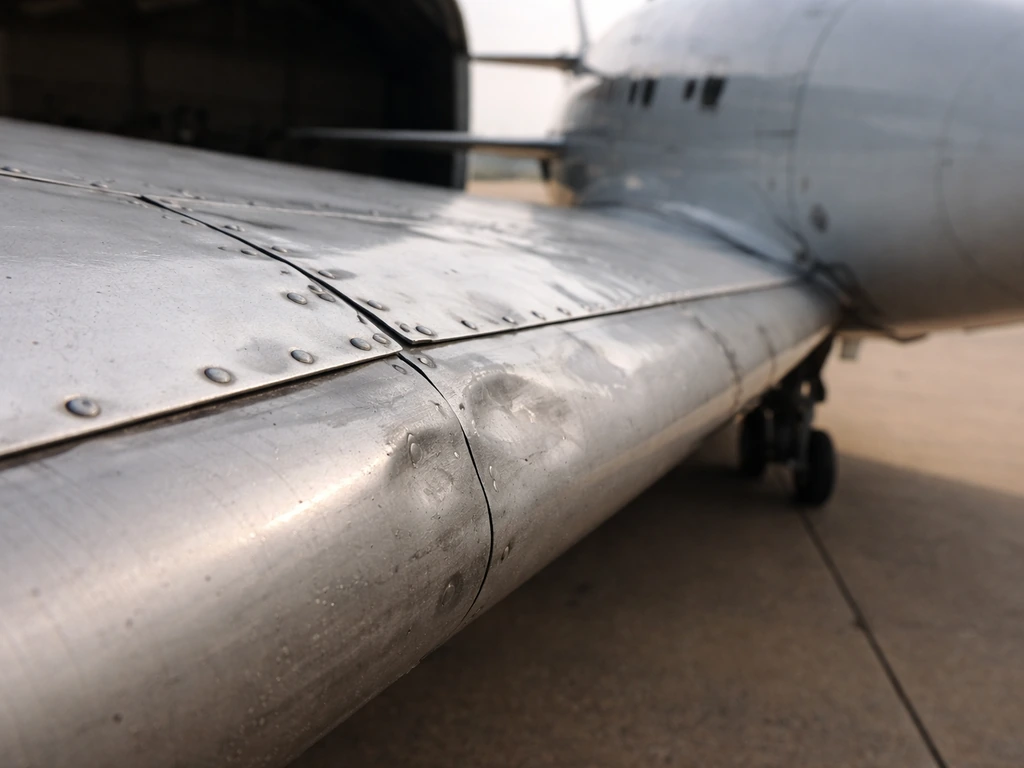
Strikes on the wing, tail, or control surfaces can deform panels, jam mechanisms, or damage sensors. The radome (the nose cone housing radar equipment) is also a common strike point, and damage there can affect navigation and weather-detection capability. In most cases these impacts cause inspection-level damage rather than in-flight emergencies, but they still take the aircraft out of service until assessed.
How often do bird strikes actually cause serious damage
The honest answer is that serious damage is the exception, not the rule. If you are wondering how common is bird strike specifically, the reported totals in major databases show that strikes are frequent, even when serious damage is uncommon. ICAO's analysis of global bird strike data found that aircraft parts were reported as damaged in only about 3 percent of total strike reports. Most strikes involve small birds, single impacts, and minimal structural consequences. The aircraft gets inspected, a report is filed, and it goes back into service.
Where things get disproportionate is with certain species. Mourning doves are the most commonly struck species in the U.S. by exact identification, making up about 11 percent of identified strikes from 1990 to 2023. But waterfowl, meaning ducks and geese, tell a different story: they represent only about 4 percent of strikes, yet account for 27 percent of strikes that cause damage to aircraft. Size matters enormously. A Canada goose can weigh 10 to 14 pounds. At takeoff or approach speeds, that impact can shatter a windshield, destroy a fan blade, or dent structural panels far beyond cosmetic damage.
So the split roughly looks like this: the vast majority of bird strikes are minor, a meaningful but smaller share cause real inspection-required damage, and a small fraction involve engine damage or other serious consequences. To put it in perspective, how often do bird strikes occur varies by reporting and region, but strikes are frequent overall even when serious damage is rare. Critical failures leading to accidents are rare but have happened, which is precisely why the industry takes every strike seriously.
What actually happens during and after a bird strike
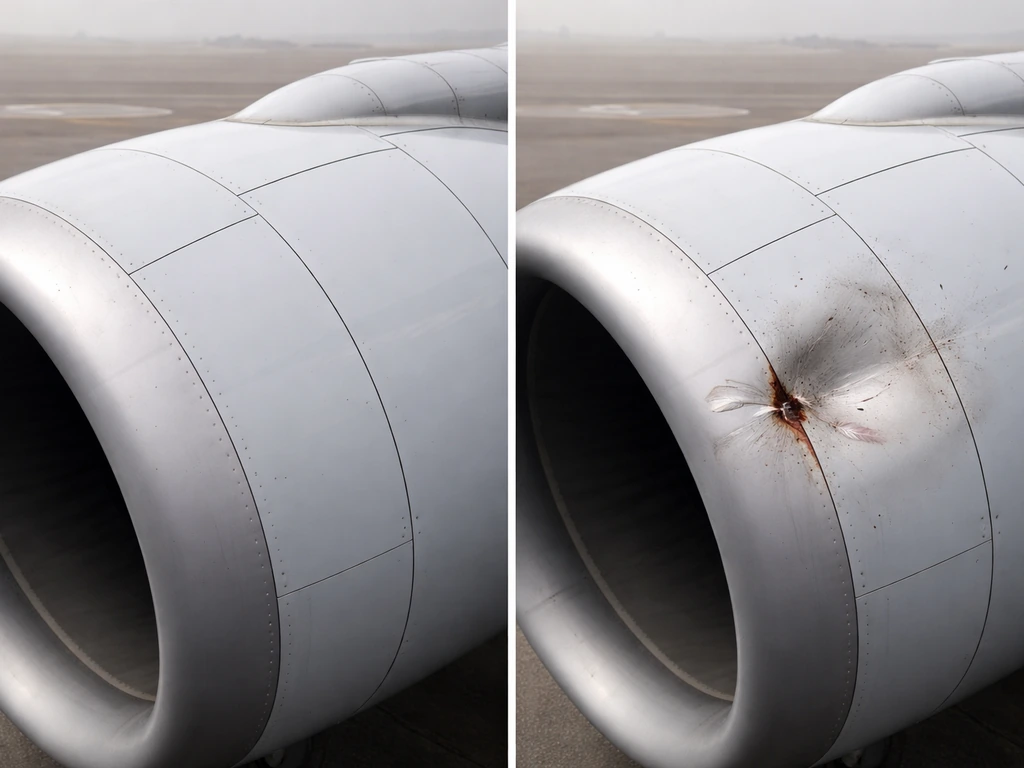
From the flight deck, a bird strike can range from a dull thud to a loud bang followed by engine vibration, fire warnings, or a drop in thrust. Pilots are trained to respond using established procedures: assess the situation, handle any immediate abnormalities (engine fire, loss of thrust, windshield damage), declare an emergency if needed, and decide whether to continue or divert. After a multi-bird ingestion that damages an engine, an emergency restart may be considered, though altitude, speed, and the nature of the damage all factor into that decision.
After landing, any aircraft that has experienced a bird strike must be inspected before returning to service. Maintenance crews check the engine intake and fan blades for damage, inspect the windshield and radome, look at the leading edges of the wings, and assess any component that might have been struck. Even a strike with no visible external damage can cause internal engine damage that only shows up under inspection.
Reporting is a required part of the process. The FAA's Advisory Circular 150/5200-32C governs wildlife strike reporting, and pilots are specifically directed by the AIM (Aeronautical Information Manual) to blank" rel="noopener noreferrer">file FAA Form 5200-7 after any bird or wildlife strike. The report captures species, size, number of birds, location of impact, and damage assessment. This data flows into the national database and informs wildlife hazard management decisions at airports across the country.
Risk factors that make a strike more likely to be serious
Not all strikes are equal. Several factors push a routine event toward a dangerous one.
- Bird size and species: Larger birds, especially waterfowl, vultures, and raptors, carry far more mass and cause far more damage. The FAA specifically identifies gulls, waterfowl, vultures, hawks, owls, egrets, blackbirds, and starlings as the species posing the greatest hazards due to their size, abundance, or tendency to fly in dense flocks.
- Number of birds: A single bird ingested into one engine is a very different event from a flock ingested into both engines simultaneously. Flocking species like starlings and blackbirds increase the odds of multiple strikes at once.
- Altitude: The risk of a bird strike drops significantly with altitude. According to NBAA guidance, above 500 feet AGL the risk declines roughly 32 percent for every additional 1,000 feet of altitude. The majority of strikes happen during takeoff, initial climb, approach, and landing, which is exactly when the aircraft is lowest and slowest.
- Airspeed: Higher speeds mean more kinetic energy at the point of impact. The same bird hitting a windshield at 150 knots versus 250 knots delivers a very different force.
- Time of day: Dawn and dusk are peak bird activity periods, and many strikes occur during these transitions. Night operations reduce visual acquisition of birds, limiting avoidance options.
- Season and migration: Bird strike risk spikes during spring migration (March through April) and fall migration (August through November). During these periods, huge volumes of birds are moving at altitudes that overlap with aircraft operating zones.
- Airport surroundings: Airports located near water bodies, wetlands, open fields, or landfills attract large concentrations of birds. The geography around an airport directly affects strike frequency.
How planes and airports are designed to reduce the risk
Aircraft certification standards
Jet engines sold in the U.S. must meet bird ingestion certification requirements under 14 CFR Part 33.76. These standards require manufacturers to demonstrate that an engine can survive ingesting birds of specified sizes and masses without causing unsafe conditions, or alternatively to show that birds of that size physically cannot enter the engine. European engines face equivalent requirements under EASA's CS-E 800 standards. Aircraft windshields and leading edges are also tested to withstand bird impacts at the airspeeds for which the aircraft is certified. None of this makes planes bird-proof, but it sets a meaningful engineering floor.
Airport wildlife management
Airports manage bird hazards through a combination of habitat modification, deterrence, and active removal. Grass around runways is kept at heights that discourage foraging. Standing water is managed to reduce attractiveness to waterfowl. Visual and audio deterrents, including pyrotechnics, distress calls, and trained birds of prey, are used to disperse flocks. USDA APHIS Wildlife Services provides wildlife hazard management support at airports when requested, staffed by Qualified Airport Wildlife Biologists (QAWB) trained to FAA standards. Larger airports with serious wildlife hazards are expected to develop formal Wildlife Hazard Management Plans under FAA guidance.
Operational and air traffic procedures
Air traffic controllers are trained to relay bird hazard information to pilots and to account for bird strike events when directing traffic. Pilots can request altitude adjustments or runway changes to avoid known bird activity. During high-risk migration periods, some airports issue bird hazard advisories (NOTAMs). Military aviation has formalized this further under the Bird Aircraft Strike Hazard (BASH) program, which uses bird activity conditions to trigger operational restrictions during peak risk windows.
Common myths about bird strikes, corrected
| Myth | Reality |
|---|---|
| Bird strikes are extremely rare and nothing to worry about. | There are roughly 19,700 reported strikes per year in the U.S. alone, and the true number is higher due to underreporting. They are common enough that formal management programs exist at nearly every major airport. |
| Any bird strike is a life-threatening emergency. | About 97 percent of strikes cause no reported damage or only minor damage. The vast majority result in inspection and paperwork, not emergencies. |
| Small birds are harmless to jets. | Small birds are usually harmless, but dense flocks of even small birds can cause multiple simultaneous ingestions. A flock of starlings can create real problems for a turbofan engine. |
| Modern jet engines can handle any bird strike. | Engines are certified to survive specific bird sizes and quantities, not unlimited impacts. A large goose or multiple birds ingested at once can exceed certification limits and cause serious damage. |
| Bird strikes only happen during flight. | Strikes also occur during ground roll, takeoff roll, and landing roll. Runway incursions by birds are a documented risk, and some propeller strikes happen at low taxi speeds. |
| Pilots can always see and avoid birds. | Many strikes happen at night, during dawn/dusk, or in poor visibility. Birds often do not appear on radar, making detection difficult until very close range. |
What you should actually do about this
If you're a passenger
You can reasonably assume that commercial aircraft you fly on have been designed, tested, and certified to survive the bird strikes most likely to occur. The pilots flying your aircraft are trained for bird strike emergencies, and the airports you use are actively managing wildlife hazards. If you hear or feel a thud during takeoff, stay calm, trust the crew, and follow their instructions. The overwhelming probability is that it was a routine strike that will be handled professionally.
If you are genuinely anxious about bird strike risk as a passenger, the practical reality is that it belongs in the same category as turbulence: real, managed, and rarely consequential. The industry's response to events like the Hudson River landing has made bird strike procedures sharper and more standardized than ever.
If you're a pilot or flight operator
- File FAA Form 5200-7 after every strike, even if there appears to be no damage. Your report directly feeds the national database and helps identify emerging hazards at specific airports.
- Treat migration seasons (March through April, August through November) as elevated risk windows. Brief accordingly and stay alert near airports with known wildlife activity.
- Gain altitude as soon as practical after departure. Risk drops roughly 32 percent per 1,000 feet above 500 feet AGL, so climbing efficiently is a direct risk-reduction action.
- If you suspect engine damage after a strike, follow your aircraft's abnormal procedures precisely. Do not attempt a restart in conditions where it may worsen the situation.
- Know your airport's wildlife hazard profile. If you operate regularly out of an airport near wetlands, coastlines, or agricultural land, ask about the airport's Wildlife Hazard Management Plan.
If you manage airport operations
- Ensure wildlife strike reports are being filed consistently by airport personnel and tenants. Underreporting leaves gaps in the hazard picture.
- Consult USDA APHIS Wildlife Services if your airport lacks a Qualified Airport Wildlife Biologist. They can conduct formal Wildlife Hazard Assessments and develop management plans.
- Review habitat around the airfield. Grass height, water drainage, and proximity to attractants like landfills or fish processing facilities are all controllable variables.
- During peak migration periods, increase the frequency of runway wildlife sweeps and issue bird hazard NOTAMs when significant activity is observed.
- Track strike trends by species and location over multiple seasons. Patterns in your own data often reveal specific problem areas that targeted interventions can address.
FAQ
If I don’t see damage after a bird strike, can it still be dangerous?
Yes, a strike can still be dangerous even when it does not look dramatic. Small external damage can hide internal engine issues, fan blade chips, or bird material in the intake that affects thrust later. That is why the return-to-service inspection is mandatory even after a seemingly minor “thud.”
Why can bird strikes during takeoff or landing feel more serious than those in cruise?
During takeoff and landing, the risk is managed, but the consequences are more immediate because the aircraft has less time and altitude to work through abnormalities. Also, strikes at higher speed or near the climb can expose the windshield, radome, and leading edges to more kinetic energy. Pilots will still follow procedures, but timing makes these events more time-critical.
Are bird strikes more dangerous for two-engine planes than for single-engine planes?
In multi-engine aircraft, a single engine ingestion is often manageable because many jets can continue on one engine and maintain safe flight. The danger rises when damage involves both engines, because the aircraft may lose thrust on more than one side and may need emergency actions, including potential restart attempts depending on altitude, speed, and damage severity.
Can the sound level of a bird strike tell me how dangerous it was?
The cockpit response depends on symptoms and confirmed indications, not on sound alone. A loud bang can be consistent with contained inspection-level damage, while a less dramatic impact can still produce dangerous vibration, thrust loss, or fire warnings. Crews treat any abnormal engine indications, fire alerts, or windshield effects as cues to follow emergency checklists.
If the windshield “doesn’t break,” can a bird strike near it still impair the crew?
Windscreen cracking is not the only way the windshield area can cause trouble. Even if the structure does not shatter, the impact can alter how the crew sees through the glass, and heavy impacts can physically affect the crew’s ability to fly normally. The key is whether the windshield shows damage and whether visibility or pilot control feel degraded.
What happens if the bird hits the nose or radome instead of the engine?
Yes. A radome hit (nose area) can matter because it houses weather and navigation sensors. While many radome strikes lead to repairs rather than immediate emergencies, sensor degradation can affect situational awareness, so inspections and system checks are still critical before flight release.
As a passenger, is there anything I can do to reduce my risk during a flight?
You can reduce risk by avoiding patterns known for birds, such as higher-probability migration windows or specific approach corridors, but you cannot eliminate it. Flight crews and ATC already use bird activity information when available, and passengers should focus on following crew instructions, not on trying to judge local risk from exterior scenery alone.
How does bird strike reporting affect real changes at airports?
Accurate reporting can influence later hazard planning, but not all reports are equally complete. The most useful entries include species (or best identification), approximate size, number of birds, impact location, and any observed damage or engine indications. Missing details can limit how airports or wildlife teams refine mitigation.
Do different jet engines handle bird strikes differently?
Engine types and their locations affect where damage shows up first, but the core pathway is still ingestion into the intake. Modern engine certifications create a baseline survivability, yet outcomes differ depending on bird mass, where it enters (fan face versus deeper), and how many birds are involved. That is why identical species can have different results.
Why do airports use multiple bird control methods instead of one strong deterrent?
Avoiding birds typically means reducing attraction and improving removal, not just adding deterrents. Grass height, water management, and habitat changes address why birds gather, while deterrence (including trained methods) helps disperse flocks when removal is not immediate. Airports often use multiple layers because any single tactic can fail when conditions change.
Next Article
How Common Are Bird Strikes on Planes and How Often They Cause Damage
How often bird strikes hit planes, when and where they happen, and how frequently they cause real damage or injuries.