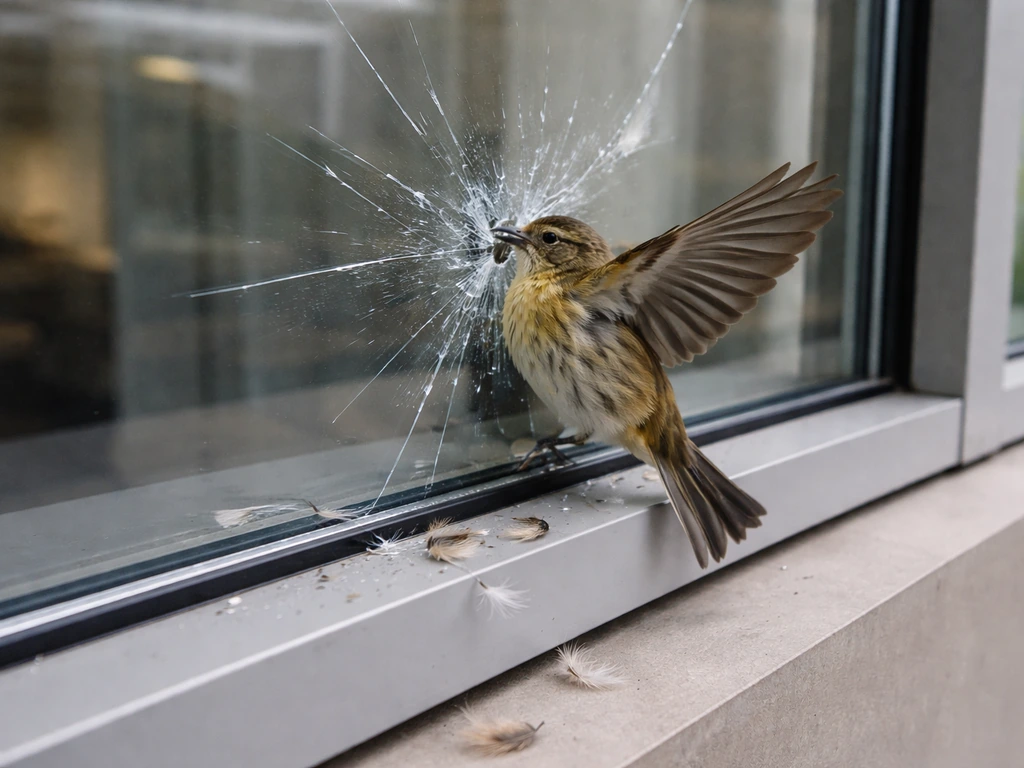
Bird strikes are extremely common, but the risk they pose depends heavily on what kind of strike you're talking about. In aviation, roughly 17,000 to 19,000 strikes are reported to the FAA each year in the U.S. alone. At your home windows, the numbers are staggering: estimates range from 365 million to nearly one billion birds killed annually in building collisions across the country. On roads, vehicle collisions kill somewhere between 89 million and 340 million birds per year. So yes, bird strikes happen all the time. The question is where they're happening and what the actual risk is to you, your property, or passengers on a plane.
How Common Is a Bird Strike? Real-World Risk by Setting

Maya Chen
5 Apr 2026
What counts as a bird strike (and what doesn't)
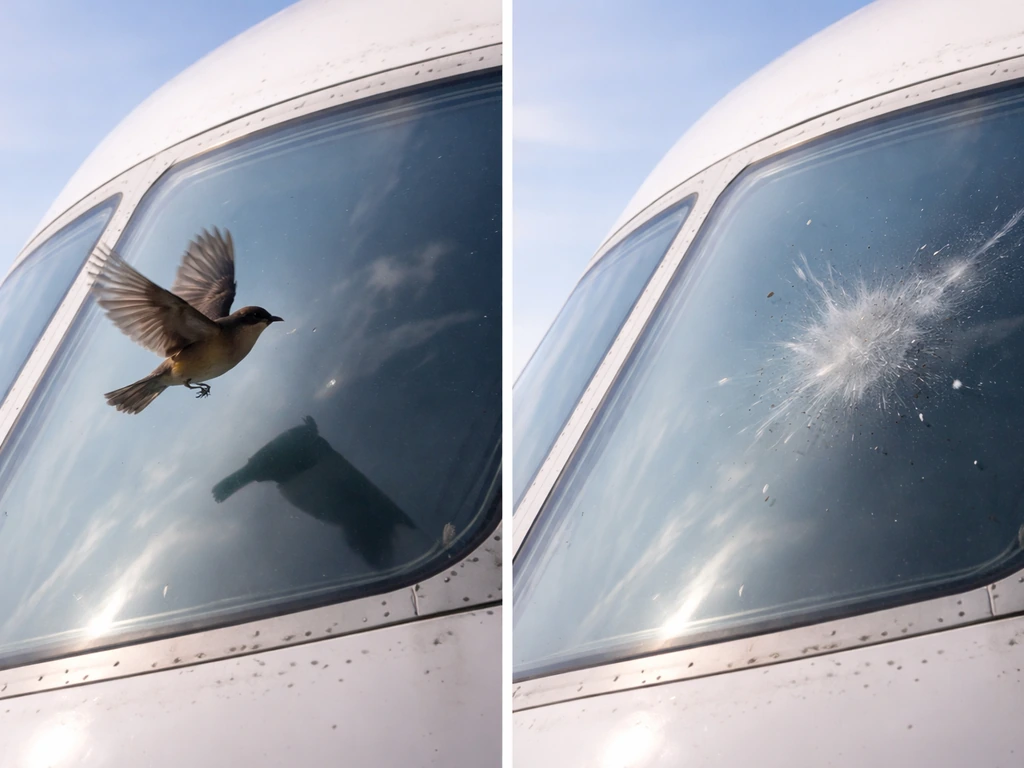
A bird strike is a direct collision between a bird and something it didn't mean to hit: an aircraft, a building, a vehicle, or a window. If you want to understand what a bird strike actually is in technical terms, the FAA defines it as a confirmed collision, not just a close call. A bird flying near a plane doesn't count. Neither does a bird that narrowly misses a car. ICAO specifically distinguishes between a "strike" (confirmed collision) and a "near miss" (potential strike where no collision occurred). This distinction matters because strike databases count only confirmed collisions, which means the real number of risk exposures is even higher than published figures suggest.
For aviation reporting, the FAA considers a strike to have occurred when it's witnessed, when bird remains are found, or when physical evidence on the aircraft (damage, impact marks, feathers) confirms a collision. Near-misses don't count. That means all those big statistics you'll see about bird strikes are, if anything, undercounts.
How common bird strikes are overall
The FAA's National Wildlife Strike Database contains 319,047 reported wildlife strikes over 35 years (1990 to 2024), and 97% of wildlife strikes in major datasets involve birds. The FAA’s wildlife strike FAQ reports about blank" rel="noopener noreferrer">292,000 reported wildlife strikes with civil aircraft in the USA between 1990 and 2023, and about 19,700 strikes at 780 U.S. airports in 2023. That works out to roughly 9,000 to 19,000 reported aviation bird strikes per year in the U.S., with numbers trending upward over time partly because reporting has improved. In 2023 alone, 19,628 strikes with damage were recorded.
But aviation is actually one of the smaller parts of this picture. How often bird strikes occur across all environments tells a much bigger story. Window and building collisions kill hundreds of millions of birds every year. Vehicle collisions kill tens to hundreds of millions more. Bird strikes as a category are one of the leading causes of direct bird mortality in the United States.
Where bird strikes happen most
Airports and aircraft
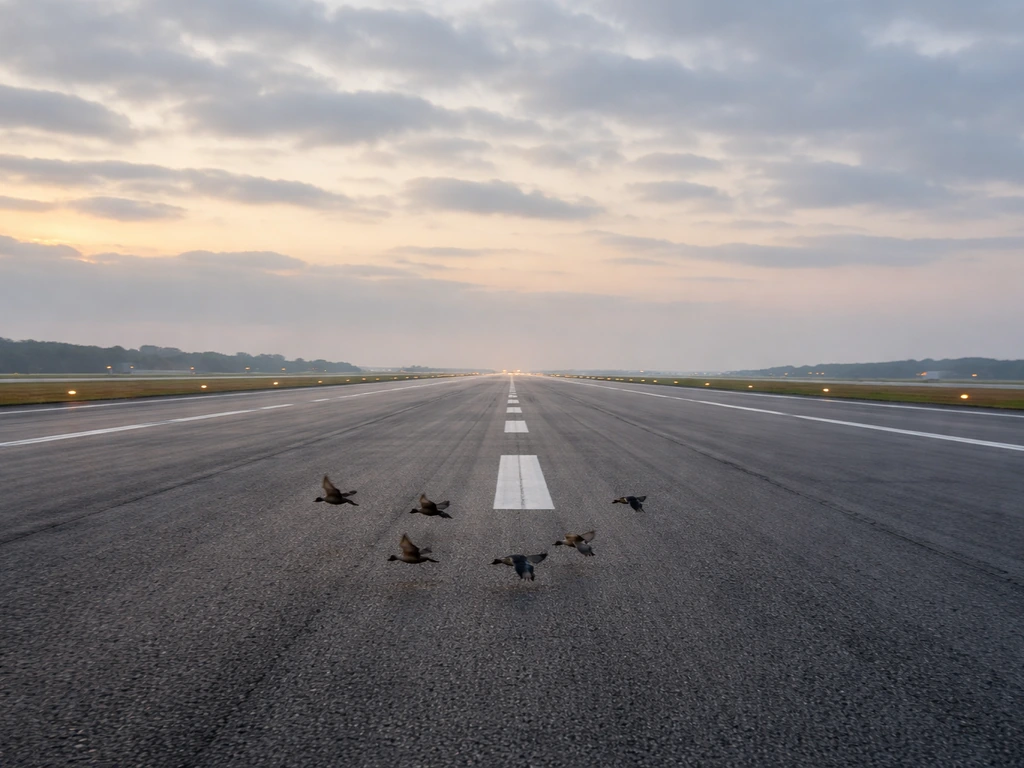
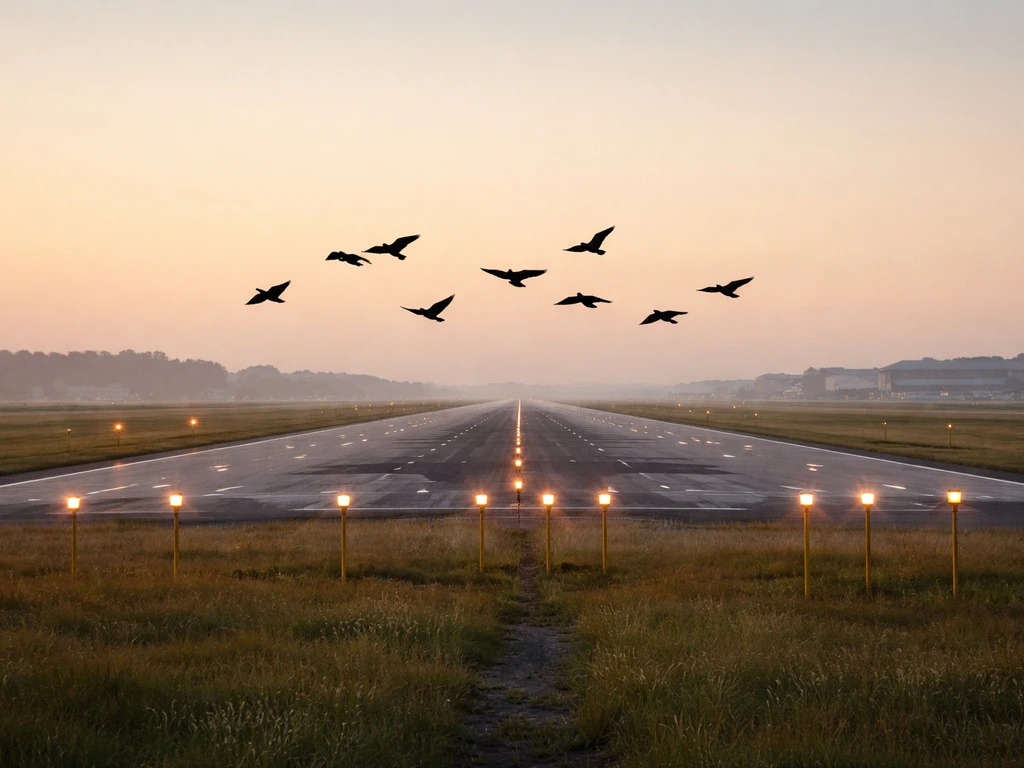
More than 90% of reported bird strikes in aviation occur at or below 3,000 feet above ground level. That means the vast majority happen during takeoff, climb, approach, and landing, not during cruise at altitude. The FAA confirms that landing phases account for about 61% of bird strikes with civil fixed-wing aircraft, and takeoff and climb account for about 36%. Strikes at higher altitudes do happen, but they're almost always linked to bird migration.
Airports near wetlands, open fields, or bodies of water face the highest risk because those habitats attract large flocks of birds. Airports implement layered mitigation strategies that include habitat management, dispersal techniques, and strict reporting requirements precisely because the strike risk is so predictable and location-specific.
Windows and buildings

This is where the numbers get genuinely alarming. Estimates put annual bird deaths from building collisions in the U.S. at 365 million to 988 million, with a median around 599 million. The USGS cites figures as high as two billion. Contrary to what most people assume, the problem isn't mostly skyscrapers. Low-rise buildings (one to four stories) account for 56% of collision mortality, and residential homes account for 44%. High-rises contribute less than 1% of total fatalities. Your house windows are far more dangerous to birds than a downtown office tower.
Roads and vehicles
Vehicle collisions are considered one of the top five direct causes of bird mortality in the U.S., killing between 89 million and 340 million birds annually. Birds that nest near roads are especially vulnerable, and certain species like pheasants, turkeys, grouse, and juvenile waterfowl are hit disproportionately often because of where and how they move.
Who's most at risk, and when
The timing and location of bird strikes follows predictable patterns. For window collisions at homes, strikes peak during spring and fall migration, and dawn and dusk are the highest-risk times of day. Migrating birds are disoriented and moving in unfamiliar territory, which makes reflective glass especially deadly. Homes surrounded by trees and vegetation that birds find attractive are at higher risk because the windows reflect exactly what birds are looking for.
For aviation, migration season also drives risk. Strikes at higher altitudes are almost entirely a migration phenomenon. At lower altitudes, the year-round presence of resident bird populations near airports keeps the baseline risk consistently elevated. Certain bird groups are disproportionately dangerous: waterfowl represent about 4% of reported strikes but account for roughly 27% of strikes that cause aircraft damage, largely because of their size and flocking behavior.
For vehicle collisions on roads, risk is higher on rural roads near wetlands, agricultural fields, and forest edges, particularly at dawn and dusk when birds are most active and visibility is lowest.
Bird strikes vs. other bird-related hazards: some perspective
People often fixate on aviation bird strikes because of high-profile incidents, but the actual fatality numbers in aviation are lower than you might expect. Between 1988 and October 2024, 499 human fatalities and 361 aircraft destroyed globally were attributed to wildlife strikes across both military and civil aviation. That's a serious number, but spread across 35-plus years and billions of flights, it represents a relatively small per-flight risk.
Meanwhile, understanding whether bird strikes are dangerous requires separating the type of strike from the outcome. The proportion of aviation strikes causing aircraft damage has actually fallen from 6% in 1996 to 3.7% in 2024, reflecting the impact of better mitigation. So the trend is improving even as raw strike counts increase.
If you're thinking about risk to birds themselves, window collisions dwarf every other human-caused threat except habitat loss. Hundreds of millions of birds die at windows and buildings every year in the U.S. That's a far larger mortality source than aviation strikes, power line electrocution, or most other hazards people commonly worry about.
Bird strikes in aviation: the real numbers at a glance
| Category | Figure | Context |
|---|---|---|
| Total reported strikes (1990–2024) | 319,047 | FAA National Wildlife Strike Database, U.S. and foreign aircraft in USA |
| Strikes per year (recent) | ~17,000–19,000 | Approximate annual rate based on database totals |
| Strikes causing damage (2024 rate) | 3.7% of reported strikes | Down from 6% in 1996 |
| Phase of flight: landing | ~61% of civil fixed-wing strikes | Approach and rollout phases |
| Phase of flight: takeoff/climb | ~36% of civil fixed-wing strikes | Most remaining strikes |
| Altitude: at or below 3,000 ft AGL | >90% of reported strikes | Higher-altitude strikes linked to migration |
| Waterfowl: share of damage strikes | ~27% of damage strikes | Despite being only ~4% of all strikes |
| Human fatalities attributed (1988–Oct 2024) | 499 globally | Military and civil aviation combined |
How these risks compare across settings
| Setting | Estimated annual bird deaths (U.S.) | Primary risk factor | Trend |
|---|---|---|---|
| Building/window collisions | 365 million to ~2 billion | Reflective glass, especially at residences and low-rises | Ongoing, largely unaddressed at residential level |
| Vehicle collisions | 89–340 million | Road proximity, dawn/dusk activity | Ongoing |
| Aviation strikes | ~17,000–19,000 reported per year (not mortality) | Airports near wetlands, migration corridors, takeoff/landing phases | Improving due to mitigation programs |
A note on that aviation row: those are reported strikes, not bird deaths. The actual number of birds killed in aviation is much smaller than the building or vehicle figures, which are bird mortality estimates. How common bird strikes are on planes is a separate question from how many birds die in them, since many reported aviation strikes cause no injury to the aircraft and involve small birds.
What you can actually do to reduce the risk
At home (windows and glass)
The most effective approach combines multiple strategies rather than relying on a single fix. The U.S. Fish and Wildlife Service is explicit about this: window treatments work best when combined with changes to lighting and reflection cues. Here's what actually helps:
- Apply window treatments that break up reflections: frosted film, UV-reflective tape, exterior screens, or closely spaced decals (spaced no more than 2 inches apart horizontally and 4 inches vertically)
- Move bird feeders either very close to windows (less than 3 feet) or far away (more than 30 feet) to reduce fatal approach speeds
- Turn off or dim interior lights at night, especially during spring and fall migration, to reduce light attraction for nocturnal migrants
- Point exterior lights downward and shield them to prevent light from drawing birds toward reflective surfaces
- Close blinds or curtains at night when interior lighting is on and migration is peaking
The Audubon Society's "Lights Out" program promotes turning off nonessential exterior lighting during migration periods, and the Bird Collision Prevention Alliance recommends angling outdoor lights away from windows and reducing landscape features that create reflected habitat cues. Reddit homeowners in r/Ornithology also trade practical approaches to window collisions, including blank" rel="noopener noreferrer">deterrent-dot or grid-spacing ideas tied to Audubon resources. Both of these are low-cost changes that make a real difference.
On the road
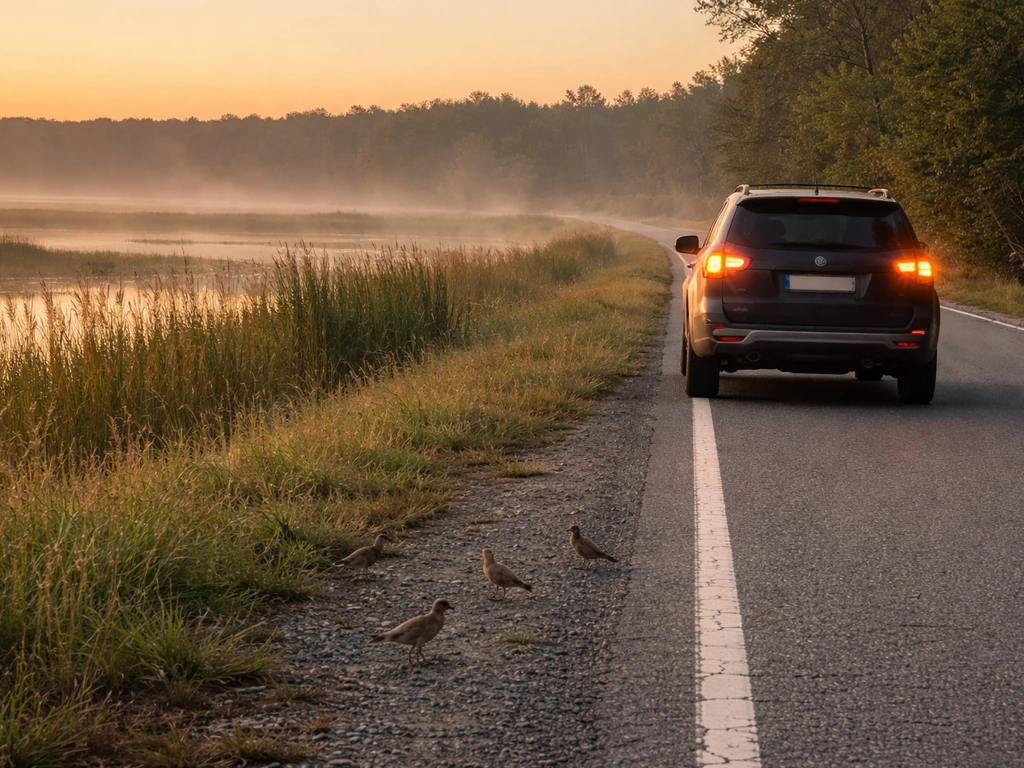
- Slow down near wetlands, open fields, and forest edges at dawn and dusk
- Be especially alert in fall and spring when juvenile birds are dispersing and migrants are moving through unfamiliar territory
- Avoid sudden speed increases when birds are feeding on or near the road surface
For aviation and airport environments
If you work in or around airports, the FAA and USDA APHIS Wildlife Services provide detailed guidance on layered mitigation: habitat management (removing standing water, tall grass, and food sources), active dispersal techniques, and rigorous strike reporting. Whether bird strikes are dangerous for planes depends significantly on whether the airport has a current wildlife hazard management plan in place. Reporting every confirmed strike is the foundation of the whole system, since that data drives what mitigation gets funded and where.
The bottom line
Bird strikes are not rare events. They happen millions of times a year across different environments in the U.S. The risk to human life in aviation is real but has been declining as mitigation improves. The risk to birds from windows and vehicles is enormous and largely under-addressed, especially at homes and low-rise buildings. If you're a homeowner, applying window treatments and reducing nighttime lighting during migration season are the two highest-impact steps you can take today. If you're a frequent flyer, the aviation system has made measurable progress, and your actual per-flight risk from a damaging strike remains very low.
FAQ
How common are bird strikes that actually damage an aircraft?
If you mean planes, the safest way to interpret “how common” is by outcome, not by alerts. Only a small share of bird strikes cause aircraft damage (about 3.7% in 2024 in the U.S. dataset trend you mentioned), so many strikes are recorded as confirmed events with no meaningful harm.
Why do my observations of “close calls” seem higher than the numbers I read?
Near misses are excluded from most strike databases because they are not confirmed collisions. So if you are comparing your own sightings to published statistics, your “it looked close” events are likely more frequent than the official strike counts.
When are bird strikes at home most likely to happen?
For home windows, the highest-risk windows tend to be dawn and dusk during spring and fall migration. If you want to target the most impactful timing, treat nighttime lighting during migration season as the first lever, because disoriented birds are strongly drawn to reflective cues.
What home layout factors make window strikes more common?
Reflective glass is a major driver, and risk rises when your windows “show” attractive habitat cues. Homes surrounded by trees or vegetation birds use, or where interior lights and exterior lighting create strong reflections, typically see more collisions than similar homes without those cues.
Are bird strikes common at cruising altitude or only near takeoff and landing?
Yes. Higher altitudes do see strikes, but those are overwhelmingly linked to migration rather than everyday resident birds around airports. If you are thinking about year-round risk, the baseline is lower-altitude, around takeoff, climb, approach, and landing.
Does the risk near airports vary by location, or is it basically the same everywhere?
The highest-reported risk concentration near airports is tied to habitat attraction, like wetlands, fields, and water. So “how common” is not uniform by region, it changes with the surrounding landscape within the airport’s wildlife attractant zone.
Are some birds more dangerous for planes than others?
Bird group matters. Waterfowl make up a small percentage of reported strikes but a much larger share of strikes that cause damage, mainly due to their size and flock behavior, so they change the odds of a more serious event.
How do I translate “bird strike frequency” into human risk on the ground or in my community?
If you’re looking for risk to people on the ground, the article’s aviation fatality numbers are not the right comparison. For human impact, the article’s “buildings and windows” and “roads” sections reflect bird mortality from collisions, which do not directly translate to aircraft-style passenger safety statistics.
What’s the most common mistake people make when trying to prevent bird-window collisions?
If you’re trying to reduce the number of collisions, don’t rely on one measure alone. The most effective approaches combine window treatment changes with lighting and reflection management, since removing only one risk cue often leaves other attractants in place.
Why do some airports seem to have better results than others, even when birds are present?
Whether an airport’s numbers improve depends heavily on ongoing reporting and whether there is a current wildlife hazard management plan. Without consistent confirmation and documentation of strikes, mitigation funding and priorities can lag behind the actual risk pattern.
When are bird-vehicle collisions most likely on rural roads?
On roads, risk tends to be higher where birds concentrate near wetlands, agricultural fields, or forest edges, and it is usually worse at dawn and dusk when birds are most active and visibility is lower. If you drive those routes then, expect more incidents than at midday.
Why do aviation bird strike numbers look big, but the bird deaths seem much smaller?
Yes, and it’s an easy source of confusion. Aviation statistics you see are based on reported confirmed strikes, not the total number of birds killed, which is far larger for buildings and vehicles in the U.S. context.
Next Article
What Is Bird Strike? What Happens and What to Do
Define bird strike, explain what happens on impact, likely outcomes, and immediate steps if you see one or an injured bi