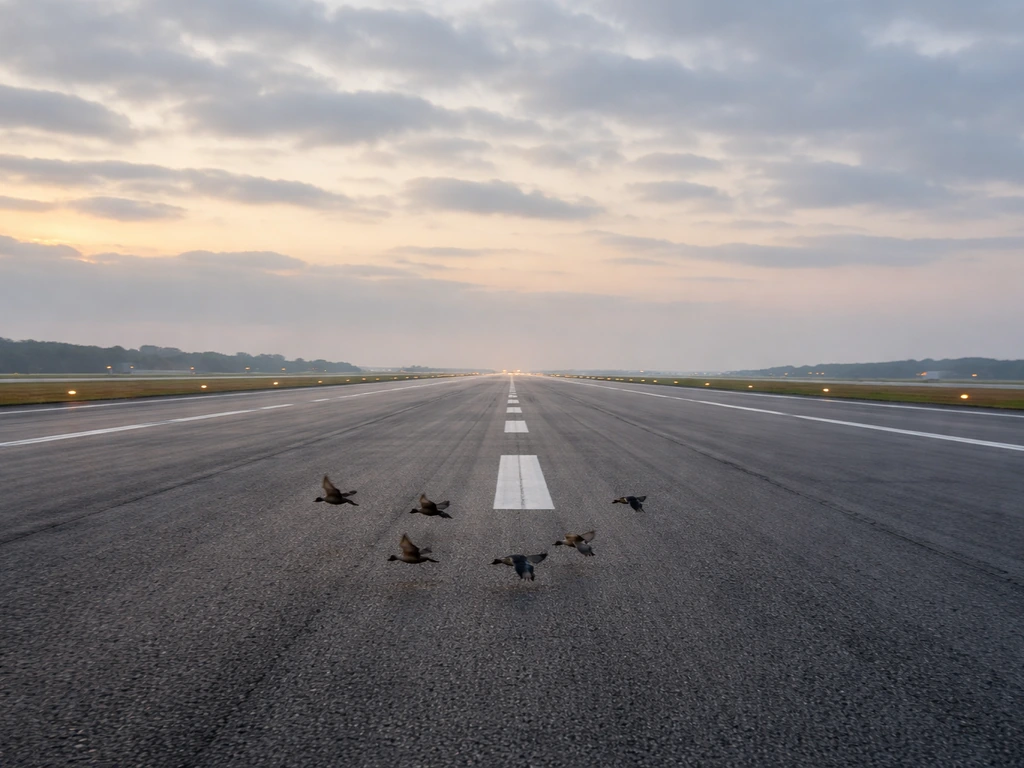
Bird strikes happen far more often than most people realize, but serious outcomes are much rarer than the frequency suggests. In the United States alone, tens of thousands of wildlife strike reports are filed with the FAA every year, and the numbers have climbed steadily since 1990 mostly because reporting has improved, not because the skies have suddenly become more dangerous. If you want the honest answer: bird strikes are a routine operational reality for aviation, not a freak event, but the vast majority cause little to no damage. Understanding that gap between frequency and severity is the whole ballgame.
How Often Do Bird Strikes Occur on Planes and Why

Maya Chen
8 Apr 2026
Bird strike basics: what qualifies and how it's measured

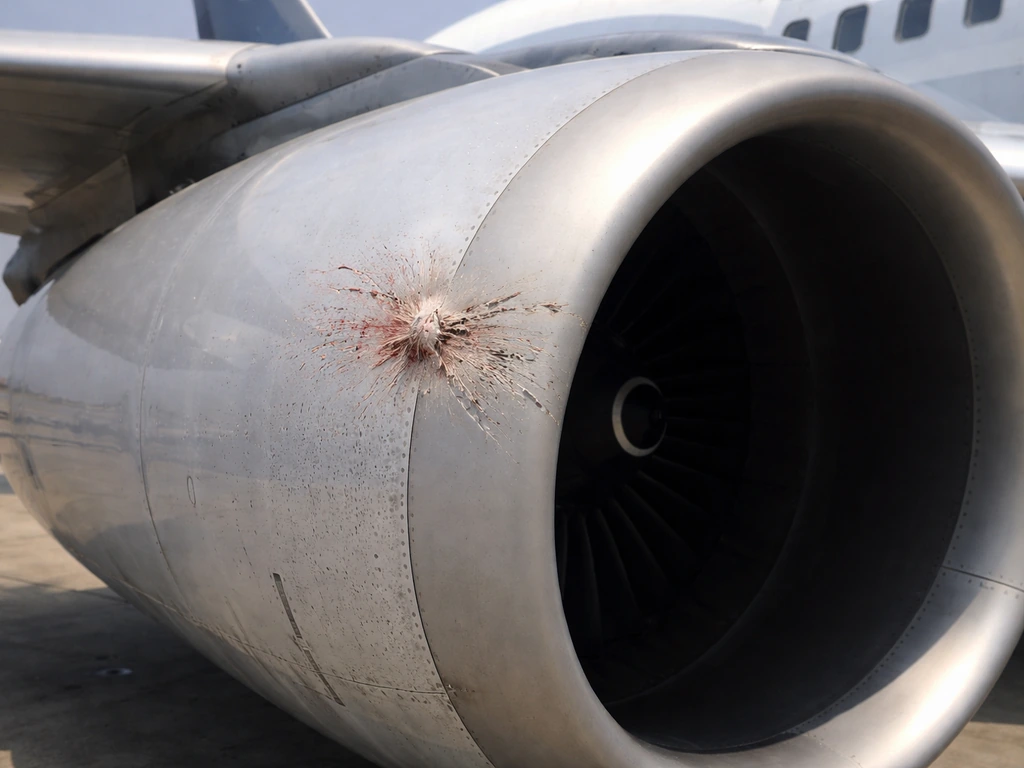
Before diving into numbers, it helps to know exactly what gets counted. If you want a thorough breakdown, the article on what is bird strike covers the definition in detail, but the short version is this: a bird strike is a collision between a bird (or other wildlife) and an aircraft. ICAO's guidance describes it simply as "a collision between wildlife and an aircraft," and confirms that evidence like carcasses, feathers, remains, or physical damage on the airframe can all be used to document the event.
In the US, pilots and airport personnel report strikes using FAA Form 5200-7, the Bird/Other Wildlife Strike Report, which feeds into the FAA Wildlife Strike Database. This database has been collecting reports since 1990 and now covers decades of data for civil aircraft. Reporting is voluntary for most civil aviation, which means the database almost certainly undercounts actual events. Some countries, including Australia through the ATSB, go further and treat birdstrikes as routine reportable occurrences, meaning pilots are expected to file whether or not damage occurred, and even near-miss avoidance situations can qualify.
It's also worth knowing that not every country defines or counts strikes the same way. ICAO guidance distinguishes between confirmed strikes and near-miss events, and different national databases use different thresholds for what gets logged. That matters when you're comparing strike statistics across regions. A "strike" in one dataset might be a confirmed collision with feather evidence on the aircraft; in another system it might include a suspected avoidance maneuver. Always look at what a dataset is actually measuring before drawing conclusions.
How often bird strikes happen overall
For a broader look at overall frequency, the piece on how common is bird strike explores the general landscape. The headline figure from FAA data is that bird and wildlife strikes with U. S. civil aircraft are reported in the tens of thousands annually, with the count growing each decade primarily because electronic reporting has made it easier to file.
The FAA's annual report "Wildlife Strikes to Civil Aircraft in the United States, 1990–2024" tracks the full time series and shows both raw counts and rate metrics tied to airport activity. The FAA publishes this time-series on its dedicated page titled “Wildlife Strikes to Civil Aircraft in the United States from 1990 to 2024 (August 2025). ” [Wildlife Strikes to Civil Aircraft in the United States, 1990–2024](https://www. faa.
gov/airports/airport_safety/wildlife/wildlife-strike-report-1990-2024).
The cost picture helps frame why this is taken seriously as an operational issue. Wildlife collisions with aircraft cost U.S. civil and military aviation roughly $1 billion per year according to USDA APHIS. That figure includes aircraft repairs, schedule disruptions, and associated operational costs. Even if most individual strikes are minor, they add up fast across a system as large as U.S. aviation.
Globally, the numbers are harder to pin down because reporting systems vary so widely. ICAO works to standardize reporting through its IBIS system, but participation and completeness differ by country. The safest generalization is that bird strikes are a daily operational occurrence worldwide, not a once-in-a-while anomaly.
How often bird strikes happen on planes, and what the rates actually mean
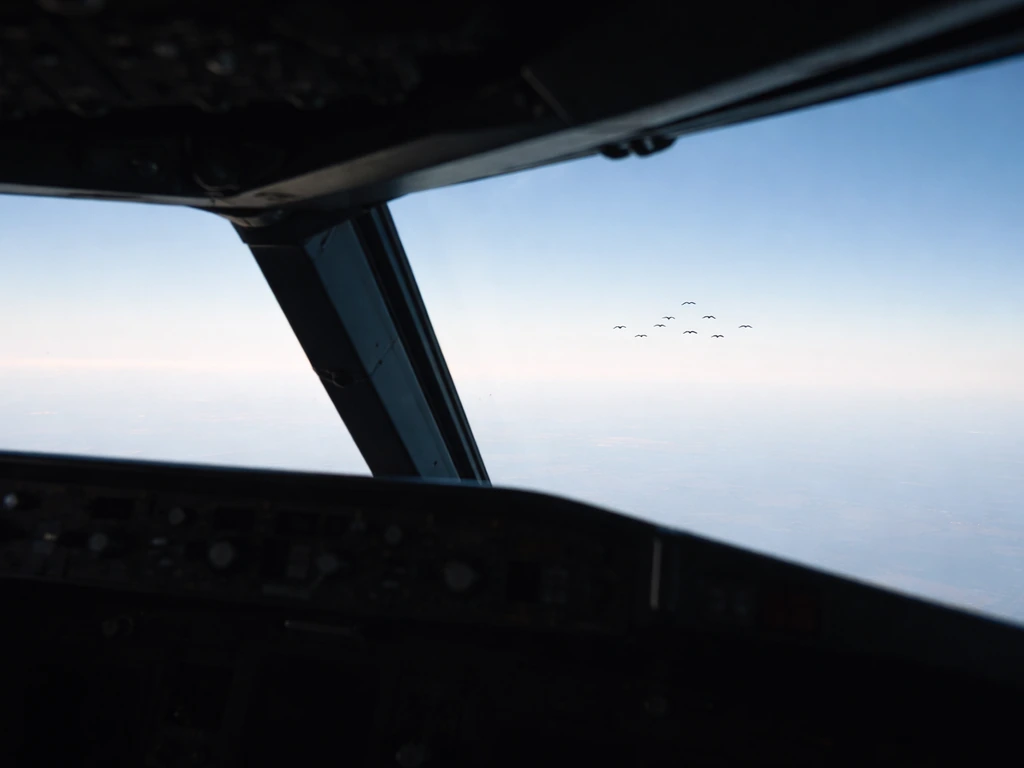
For commercial aviation specifically, the article on how common are bird strikes on planes goes deeper on the commercial side. Here's the practical framing: the FAA measures strike rates in the airport environment using aircraft movements as the denominator, not just raw annual counts. That gives you a per-flight or per-movement rate rather than a raw number, which is more useful for understanding actual likelihood.
What the FAA data consistently shows is that most reported strikes are non-damaging. In 2022, damaging strikes made up only about 4% of all reported strikes. By 2024, the fraction of reported strikes causing damage had dropped to approximately 3.7%, down from around 6% in 1996. So the rate of harm per strike has been falling even as total reported strikes have stayed high. That's a meaningful trend: more strikes are being detected and reported, but proportionally fewer of them are causing damage, which points to better aircraft design, better materials, and more effective mitigation.
The FAA's own framing is direct: strikes may happen every day across the national airspace, but damaging strikes remain rare relative to total strikes. If you're a passenger wondering about your personal exposure, the honest answer is that on any given flight you are extremely unlikely to experience a strike that affects the outcome of your flight in any meaningful way. The system is built to absorb the routine ones.
What changes the frequency: region, season, weather, time of day, and bird types
Bird strike frequency isn't uniform. Several factors push the numbers up or down, and understanding them explains why airports and airlines don't treat all flights equally from a wildlife risk standpoint.
Time of day

More bird strikes occur during the day than at night. DOI aviation safety data puts daytime strikes at roughly 63% of all reported events. That makes intuitive sense: most bird activity peaks in daylight hours, particularly in the early morning and late afternoon when birds are feeding. Night operations carry lower absolute strike risk, though migratory species that fly at night (and at higher altitudes) create a different risk profile.
Phase of flight
Where in the flight the strike happens matters enormously. FAA data for fixed-wing civil aircraft shows a consistent breakdown: about 61% of strikes occur during the landing phase (descent, approach, and landing roll), roughly 36% during takeoff run and initial climb, and only about 3% in the en-route phase. The reason is altitude: birds overwhelmingly occupy the low-altitude airspace around airports, not cruise altitudes. SKYbrary notes that bird strikes are most likely during take-off, initial climb, approach, and landing because birds are more concentrated at lower altitudes near the airfield birds overwhelmingly occupy the low-altitude airspace around airports. This concentration during takeoff and landing is why airport-level mitigation matters so much more than in-flight procedures.
Season and migration
Strike rates spike during spring and fall migration periods when bird populations in the air are at their highest. Large concentrations of birds passing through airport corridors during migration dramatically increase collision probability. FAA mitigation analysis accounts for migratory patterns explicitly, helping airports anticipate higher-risk windows and adjust deterrent strategies accordingly.
Region and local habitat
Airports near bodies of water, wetlands, agricultural fields, or landfills tend to see higher strike rates because these habitats attract large bird populations. Geography also shapes which species are present: coastal airports deal with gulls and waterfowl; inland airports may face more raptors or starlings. The local species mix matters because not all birds carry the same risk.
Bird species and size
Species type is one of the most important factors in whether a strike causes damage. Waterfowl are a prime example: they account for only about 4% of reported strikes but are responsible for approximately 27% of the strikes that cause aircraft damage. Their size and body density make them far more dangerous per impact than smaller birds like sparrows or starlings, even though smaller birds are struck more frequently. Raptors, geese, and large gulls fall into similar high-consequence categories despite their relatively lower strike frequency.
How risky is a bird strike in practice
The question of whether bird strikes are dangerous deserves its own honest answer, and the article on is bird strike dangerous addresses that directly. For planes specifically, the article on are bird strikes dangerous for planes gives the aviation-focused breakdown. The short version: most strikes are not dangerous in any practical sense, but a small subset can be.
The FAA tracks human injuries and fatalities separately from strike counts precisely because the severity distribution is so skewed. From 1990 through 2023, there were 357 human injuries attributed to wildlife strikes with U.S. civil aircraft. From 1988 through October 2024, there were 499 human fatalities and 361 aircraft destroyed globally across both military and civil aviation. Those are the cumulative totals across more than three decades and hundreds of thousands of reported strikes worldwide. The numbers confirm that catastrophic outcomes are real but genuinely rare.
The Flight Safety Foundation notes that for commercial aircraft, the greatest operational threat from bird strikes is concentrated in the takeoff and approach phases, consistent with where most strikes occur. Engine ingestion events involving large birds during these phases are the scenario that gets the most attention from safety engineers, and rightly so: a large waterfowl ingested by a jet engine at low altitude and low airspeed leaves the crew with limited options. But these high-consequence events are a small fraction of total reported strikes.
| Metric | Figure |
|---|---|
| Share of strikes occurring during landing phase | ~61% |
| Share of strikes occurring during takeoff/climb | ~36% |
| Share of strikes occurring en-route | ~3% |
| Share of strikes causing damage (2024) | ~3.7% |
| Waterfowl share of all strikes | ~4% |
| Waterfowl share of damage-causing strikes | ~27% |
| Daytime strikes (vs. night) | ~63% |
| Human injuries (US civil, 1990–2023) | 357 total |
| Global fatalities attributed to wildlife strikes (1988–Oct 2024) | 499 total |
| Annual cost to US civil and military aviation | ~$1 billion |
Common myths about bird strikes (and what the data actually shows)
There are two opposite myths about bird strikes, and both lead people to wrong conclusions. The first is that bird strikes are extremely rare, freak events that almost never happen. The data doesn't support that. Strikes are logged in the tens of thousands per year in the US alone, and they happen across airports of all sizes and types. They're a routine part of aviation operations, not an extraordinary occurrence.
The second myth is that any bird strike is a crisis. That's also wrong. The overwhelming majority of reported strikes cause no damage and have no effect on the flight. A small bird hitting the nose or fuselage at low speed may leave a smear of feathers but nothing more. Pilots often don't even know a strike occurred until a post-flight inspection. The drop in damage rates from 6% in 1996 to 3.7% in 2024 reflects real engineering and operational progress, not statistical noise.
A third misconception worth addressing: rising strike report counts don't necessarily mean birds are becoming more aggressive or airports are becoming less safe. Much of the increase in reported strikes over recent decades is attributable to better and more accessible reporting tools. The FAA now accepts electronic versions of Form 5200-7, and awareness of reporting requirements has grown. More reports in the database often means better data capture, not more actual collisions.
Finally, some people assume that because waterfowl are large and dangerous, they must dominate the strike statistics. They don't. Waterfowl make up only 4% of reported strikes. The danger they pose is disproportionate to their frequency, which is exactly why species-specific risk analysis matters more than raw strike counts.
What airports and airlines actually do to reduce risk
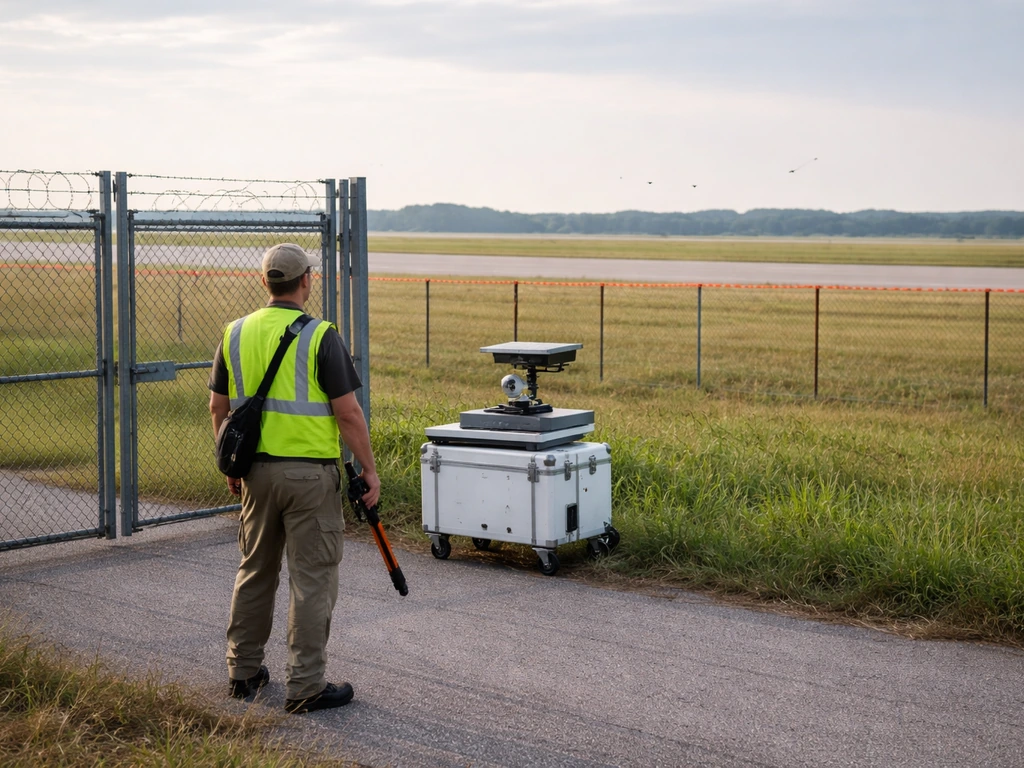
The good news is that aviation doesn't just accept bird strikes as unavoidable. There's a well-developed set of mitigation strategies that airports and operators apply, and the falling damage rate over time suggests they're working.
At the airport level, the primary tool is the Wildlife Hazard Management Plan, which airports develop using FAA guidance and local strike data from the FAA Wildlife Strike Database. These plans identify which species are present, when they're most active, and what habitats around the airport are attracting them. USDA Wildlife Services personnel often work directly with airports on deterrence and population management.
Habitat modification is one of the most effective long-term strategies. Reducing standing water, managing grass height, covering landfills, and eliminating food sources all make airport environments less attractive to birds. FAA AirportTech guidance describes a range of deterrent tools as well, including radar-based detection systems that can track wildlife activity on and around runways in real time, giving controllers and pilots advance warning.
Active deterrents include pyrotechnics, distress calls, trained falconry, and laser devices. These are most effective when combined with habitat management rather than used alone. The FAA's advisory circular AC-150/5200-32C outlines reporting requirements and supports the evidence-gathering process that makes hazard management plans more accurate over time.
For pilots and flight crews, the main practical tools are awareness of high-risk phases (takeoff and approach), knowing the local wildlife situation at destination airports during migration seasons, and reporting every suspected strike even when damage isn't obvious. That reporting feeds back into the database and improves future risk analysis. The U.S. Fish & Wildlife Service notes that airport personnel and USDA wildlife services teams play a key coordination role, and their involvement has helped make mitigation more systematic rather than reactive.
If you're a passenger, there isn't much you need to do differently. The system is designed to manage this risk without requiring passenger action. But if you're curious why you occasionally see airport vehicles driving along runways at odd hours, or why some airports have large open grass areas managed to a specific height, now you know: it's all part of keeping bird activity away from aircraft paths. The ordinary-looking operational details around airports often have very practical wildlife management logic behind them.
FAQ
How often do bird strikes occur on a typical flight, not just in annual statistics?
It’s more useful to think in “per day or per movement” terms than “per passenger.” Even in very bird-activity regions, most flights do not experience any bird impact that causes aircraft damage, and the highest-risk window is concentrated around takeoff and landing rather than cruise.
Do the numbers in FAA databases reflect only confirmed collisions?
In the US, the Wildlife Strike Database includes many reports even when there is no visible damage. Because reporting is voluntary for most civil aviation, the dataset reflects a mix of confirmed and suspected events and can miss some impacts that never get reported after the flight.
Why might bird strike counts be increasing even if aircraft are safer now?
Yes, but the trend is uneven because reporting practices changed over time. Report counts can rise due to better electronic submission and greater awareness, so you should compare rate metrics (like damage likelihood or per-movement rates) rather than raw totals when judging whether risk is truly increasing.
What role do weather and visibility play in how often bird strikes occur?
Weather and air traffic can shift risk. For example, fog or low visibility can concentrate operations around airports, and wind patterns during migration can funnel birds into approach and departure corridors, which increases encounter opportunities.
Do bird strike frequencies differ by aircraft type or size?
Different aircraft types can have different exposure and consequence profiles. Airports and runways where large aircraft frequently operate may see more strikes involving bigger birds, while smaller aircraft can still receive frequent non-damaging impacts, especially during dense approach traffic.
How much can bird strike frequency vary between airports and seasons?
Yes, airports that are near wetlands, water, or landfills often see higher rates, and the “when” is just as important as the “where.” During spring and fall migration, local deterrence and habitat controls need to be adjusted because the background bird population in approach paths changes rapidly.
Why can bird strike rates look different across countries or safety reports?
Not exactly. A “near miss” may involve a close encounter without evidence of a collision, but many systems treat these differently. If you’re comparing countries or databases, check whether the dataset logs only confirmed impacts, also includes suspected collisions, or counts avoidance events.
If most strikes happen near the airport, does night flying increase risk enough to matter?
For practical risk, the day-night pattern matters, but so does where the strike happens. A low-altitude runway environment, especially during approach and landing roll, tends to dominate encounters, so reducing bird activity near the surface can outperform relying on in-flight detection alone.
Why can one airport have “average” strike counts but higher repair costs?
Damage is not evenly distributed across bird types. Large, dense birds like waterfowl are less frequent but are responsible for a disproportionate share of damage, so two airports with similar strike counts can still have very different maintenance and engine-risk profiles.
What should pilots or crews do if they suspect a strike but see no clear damage?
Reporting matters, because a strike that goes unreported contributes to undercounting and weaker hazard planning. If there’s any possibility of a collision, even without obvious damage, report it so wildlife managers can refine species and timing assessments.
Next Article
How Common Is a Bird Strike? Real-World Risk by Setting
How common are bird strikes in real life? Breakdown by setting, season, who’s most at risk, plus prevention tips.