
Yes, bird strikes can be genuinely dangerous, but the level of risk depends heavily on the situation. Understanding how those risks show up in flight can help you see why bird strikes are dangerous for planes, especially at critical phases like takeoff and landing bird strikes dangerous for planes. If you want the basics first, start with what is bird strike and how it differs from other wildlife impacts.
Is Bird Strike Dangerous? Real Risks, What to Do Now

Maya Chen
25 Apr 2026
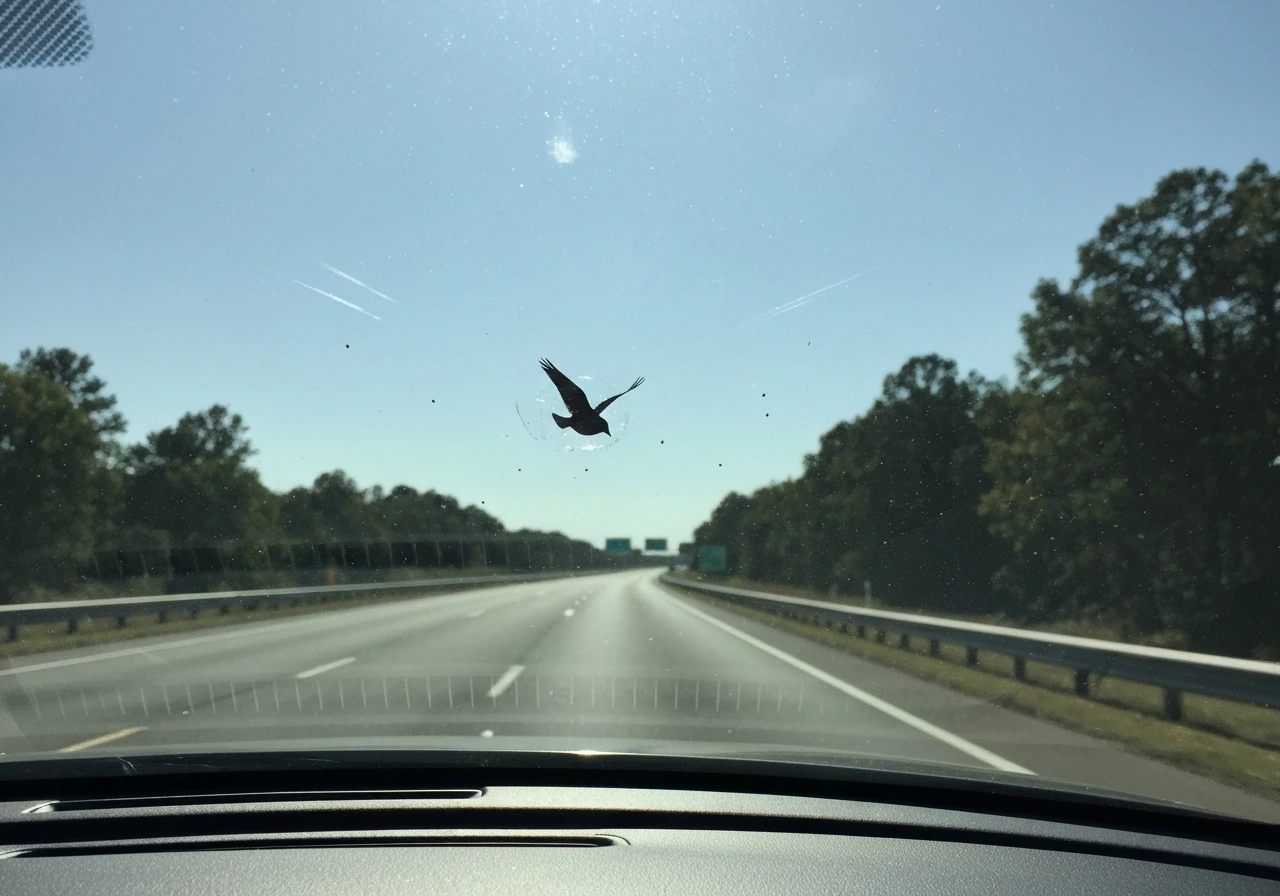
A bird hitting your car windshield at highway speed is a very different event from a bird being ingested into a jet engine on takeoff. In both cases, real hazards exist, but most people dramatically overestimate some risks (disease transmission from brief contact) while underestimating others (loss of vehicle control, structural damage). Here is what the evidence actually shows, and what you should do about it.
How dangerous is a bird strike, really?
The honest answer is: it depends on speed, context, and what gets hit. In aviation, the FAA's records show that from 1988 through October 2024, wildlife strikes globally were linked to 499 human fatalities and 361 aircraft destroyed. That sounds alarming until you consider that tens of thousands of flights operate every day. The same data shows 357 human injuries attributable to wildlife strikes with U.
S. civil aircraft from 1990 to 2023. Serious outcomes happen, but they are not the norm for the volume of strikes that occur. If you want the bigger picture on how common is bird strike across time and places, see the section on how often they occur and why frequency varies.
How common are bird strikes on planes? It varies by airport and season, but you can think of it as a frequent enough risk that airlines and regulators plan around it. In other words, bird strike frequency varies a lot by setting, but understanding how often they occur helps you judge when to be extra cautious how often do bird strikes occur.
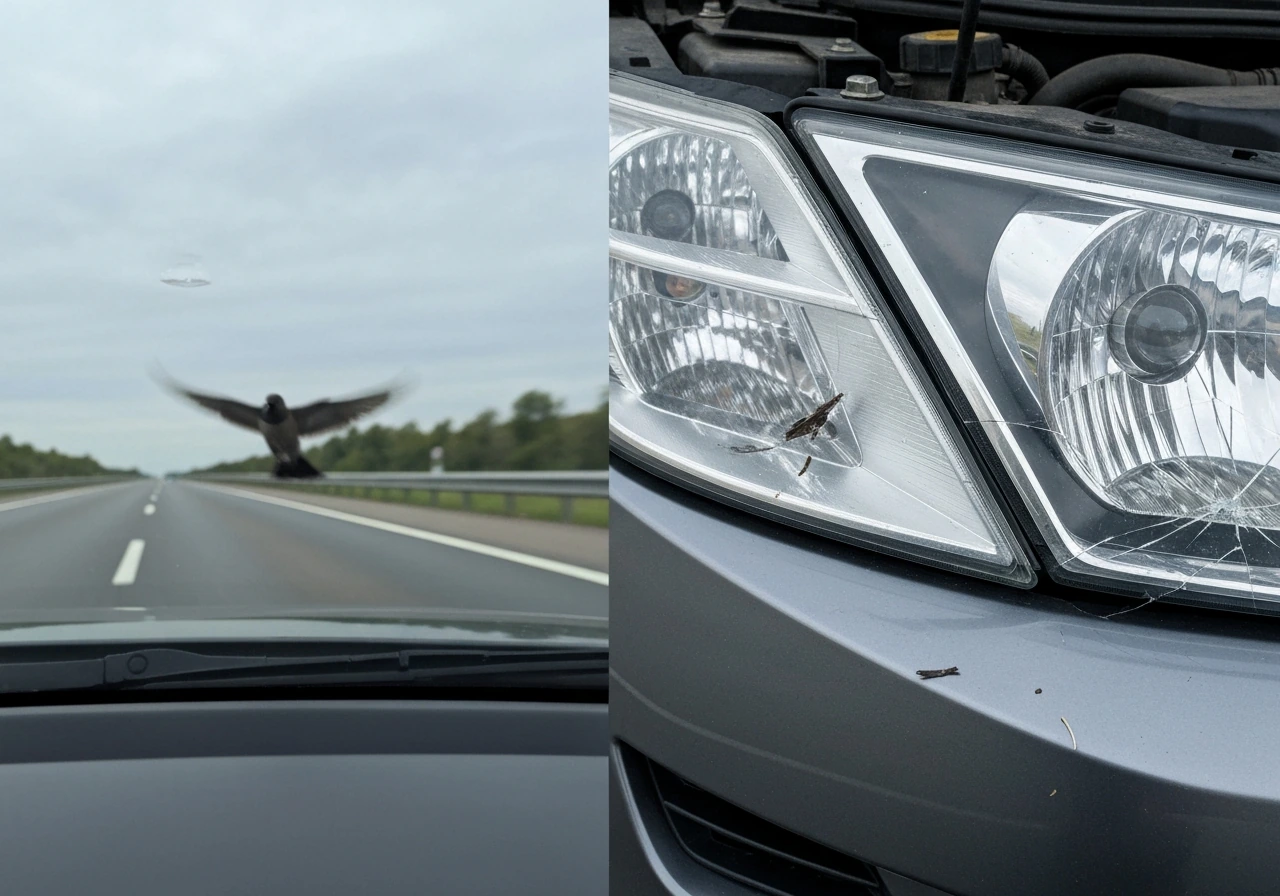
On the road, the danger is more about driver reaction than direct impact. A bird hitting a windshield at 70 mph can crack or shatter it, momentarily startle a driver badly enough to swerve, and cause a secondary crash. The bird itself rarely penetrates a car windshield, but the shock of impact and the debris from a broken windshield absolutely can injure the people inside.
At home or in a yard, a bird colliding with a window rarely poses any physical danger to the person inside. The main concern in that scenario shifts to the bird's welfare and, to a much lesser degree, hygiene if you handle the bird afterward.
Real risks: injury, crash outcomes, and secondary hazards
The physical dangers from a bird strike fall into three main categories: direct impact injury, loss of control or structural compromise, and secondary hazards from debris.
Direct impact injury is most relevant in aviation. A bird hitting an aircraft windshield can destroy it entirely, injuring the pilot with glass fragments or the bird carcass itself. EASA guidance specifically lists destroyed windshields, clogged air intakes, broken pitot tubes, and damaged brake lines as documented outcomes. These are not hypothetical. Engine ingestion can cause partial or total thrust loss, which is catastrophic during takeoff or climb.
In a car, the windshield is the main vulnerability. Laminated automotive glass is designed to hold together on impact, but a large bird at highway speed can still crack it severely or, in some cases, partially push it inward. Flying glass fragments and a panicked steering input are the real injury mechanisms for drivers and passengers.
Secondary hazards are easy to underestimate. A strike that leaves no obvious damage can still affect aircraft systems in ways that are not immediately visible, which is why aviation authorities treat any strike as a reportable safety event worth investigating. On the road, the urge to swerve or brake hard is itself a hazard to other vehicles.
Why some strikes are much worse than others
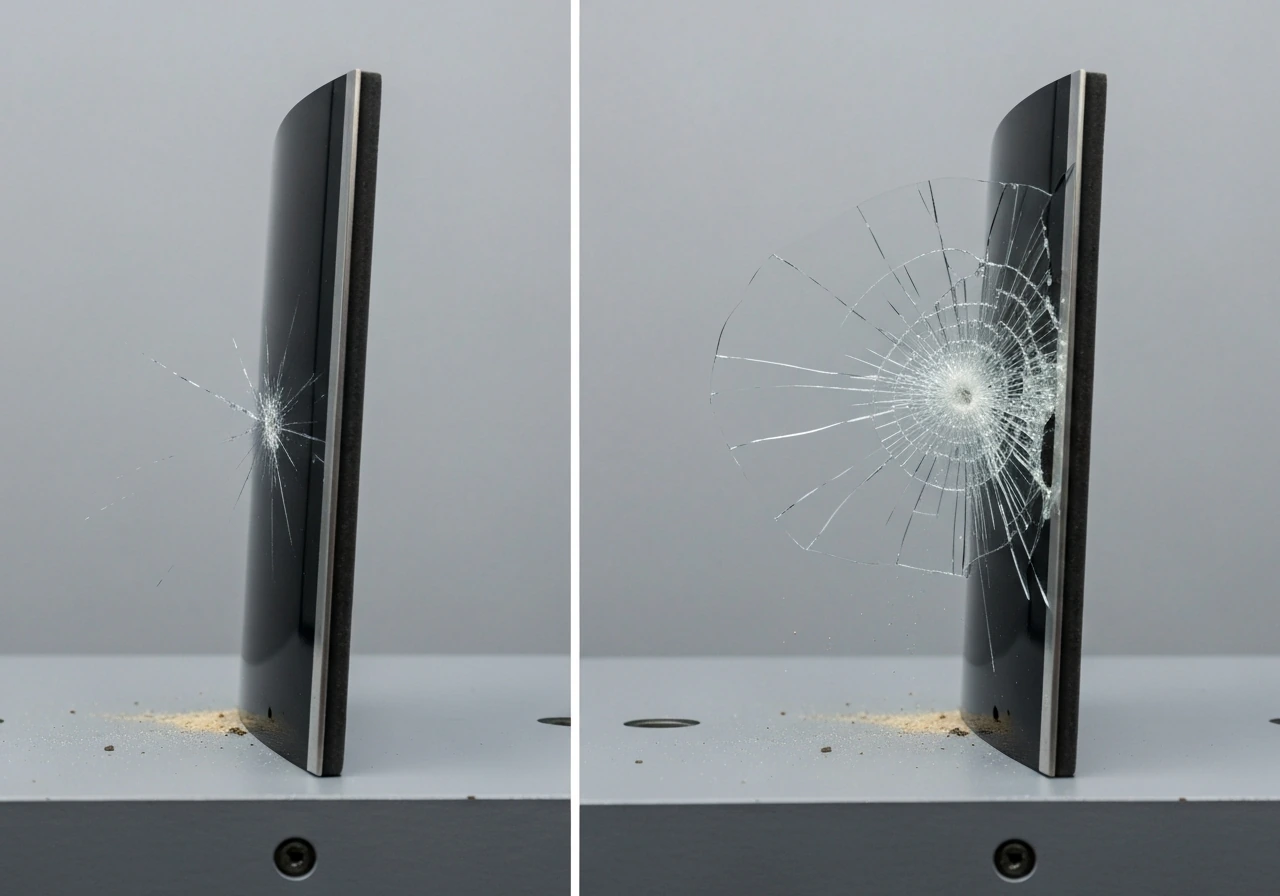
Several factors push a bird strike from a startling nuisance into a serious safety event.
Speed
Speed is the biggest variable. The kinetic energy transferred in a collision increases with the square of velocity. A bird hit at 200 knots carries roughly four times the destructive force of the same bird hit at 100 knots. This is why takeoff and climb phases are so critical: the FAA estimates that about 36% of bird strikes with fixed-wing civil aircraft occur during takeoff run and climb, and 61% occur during landing phases. Even though landing involves lower speeds than cruise, the aircraft is close to the ground with almost no altitude margin for error.
Aircraft vs. road vehicles
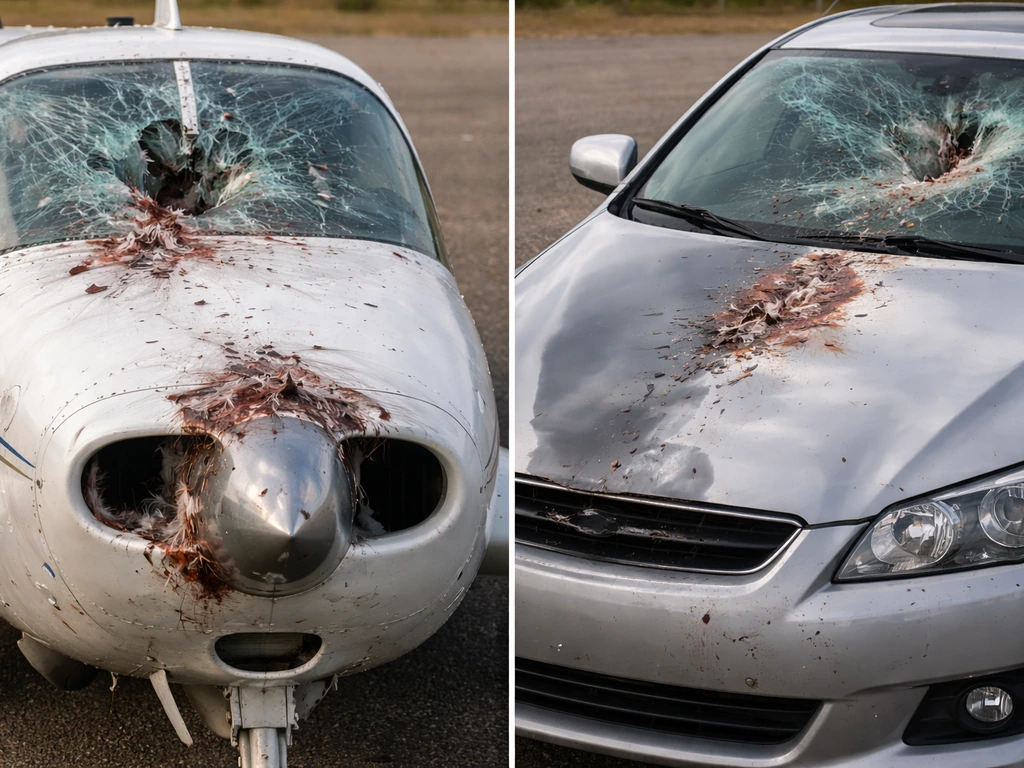
Aircraft are far more vulnerable than cars, for obvious structural reasons. A car can absorb a bird hit on the hood or roof and keep moving. An aircraft has critical systems (engines, pitot tubes, windshields, control surfaces) that can be compromised by a single bird of modest size. Even a "soft-feathered" bird can cause serious damage to these systems, which is why aviation certification standards specifically test windshields against bird impact.
Bird size and species
Larger birds like Canada geese, vultures, and pelicans carry far more mass and cause proportionally more damage. Flocking species (starlings, blackbirds) are dangerous not because each individual bird is large, but because a flock can cause multiple simultaneous impacts, including engine ingestion. Species identification from remains is actually difficult enough that ICAO flags it as a reporting challenge.
Time of year and location
Migration seasons in spring and fall push large numbers of birds through flight corridors at the same altitudes used by low-flying aircraft on approach and departure. Dawn and dusk are peak movement times for many species. Airports near wetlands, agricultural fields, or waste disposal sites face elevated strike risk because those environments attract large concentrations of birds.
Infection and disease risk after bird contact
This is where a lot of fear outpaces the actual evidence. Touching a bird that hit your window or car does not reliably transmit disease. The real risk depends on the bird's health status, the pathogen in question, and how closely you handle it.
Avian influenza (bird flu) is the pathogen people are most worried about in 2026, and reasonably so. OSHA also provides occupational prevention guidance for avian influenza, including avoiding unprotected contact with birds and bird secretions or excrement and using appropriate respiratory protection as part of a respiratory protection program avian influenza (bird flu).
The CDC confirms that human infection is possible after direct or close exposure to sick or dead birds or their contaminated environments. However, "possible" is not the same as "likely from a brief accidental encounter. " The practical advice from the CDC is to monitor yourself for illness for 10 days after the last exposure and contact your state or local health department if symptoms develop.
Brief, incidental contact with a dead bird, followed by proper handwashing, is a very different exposure level than working with infected poultry daily.
West Nile virus is transmitted by mosquitoes that have fed on infected birds, not by direct bird contact. Handling a dead crow or other bird will not give you West Nile, though the CDC recommends gloves anyway as a general hygiene precaution.
The practical hygiene rules are consistent across these pathogens: wear gloves when handling a dead or injured bird, avoid touching your face, do not stir up feathers or dry droppings (which can aerosolize particles), and wash your hands thoroughly with soap and water afterward. Do not use a pressure washer to clean up feathers or carcass material because the CDC specifically flags pressurized water as a potential way to aerosolize viral particles.
Myths vs. facts
| Common fear or belief | What the evidence actually shows |
|---|---|
| Touching a dead bird will give you bird flu | Possible but unlikely from brief incidental contact; risk is managed by gloves and handwashing |
| Bird strikes rarely damage aircraft | Even small birds can destroy a windshield, clog an intake, or break a pitot tube |
| Bird strikes only matter on takeoff | About 61% of strikes with civil aircraft occur during descent, approach, and landing roll |
| You can pressure-wash away bird remains safely | The CDC advises against pressure washing; it can aerosolize virus particles |
| Only large birds are dangerous | Flocking small birds and even individual medium-sized birds cause documented aircraft losses |
| A car is too solid for a bird to cause real damage | At highway speed, a large bird can crack a windshield and trigger a secondary crash from driver startle |
| West Nile can spread from handling a dead bird | West Nile spreads via mosquito bite, not direct bird contact |
What to do right now after a bird strike
If it happened at home or in your yard

- Do not pick up the bird with bare hands. Use disposable gloves, a plastic bag turned inside out, or a doubled paper bag.
- If the bird is stunned and alive, place it in a cardboard box with air holes, in a quiet dark spot, and leave it alone for an hour before checking. Many birds recover and fly off.
- If it is dead, double-bag the carcass and place it in the trash. Check with your local health department if you are in an area with active H5N1 detections, as some jurisdictions have reporting or testing programs.
- Wash your hands thoroughly with soap and water after any contact.
- Do not stir up feathers or use pressurized water to clean the area.
If you hit a bird while driving
- Keep both hands on the wheel and do not swerve. The instinct to avoid the bird is more dangerous than the impact itself at most speeds.
- Pull over safely as soon as you can and check for windshield damage, damage to mirrors, hood, or any visible fluid leaks.
- If the windshield is cracked, do not drive it far. Even a small crack reduces structural integrity and can spread rapidly.
- If the bird is lodged in the grille or under the hood, use gloves to remove it. Wash your hands afterward.
- Document the damage with photos for insurance purposes.
If you are a pilot or on an aircraft
- Treat any suspected strike as a real event even if no immediate damage is obvious. Declare to ATC if it affects aircraft handling or systems.
- Follow your aircraft checklist and Pilot Operating Handbook procedures for engine anomalies, windshield damage, or loss of instruments.
- After landing, have the aircraft inspected before the next flight. Systems like pitot tubes, brake lines, and intakes can be damaged in ways that are not visible from the cockpit.
- File a report using FAA Form 5200-7. Reporting is not just a formality: it feeds the national wildlife strike database that helps protect other pilots by identifying high-risk locations and species.
How to prevent bird strikes (and reduce their severity when they happen)
At home
Window collisions are one of the top five direct causes of bird mortality in the United States, with estimates ranging from 89 million to 340 million birds killed by vehicle and building collisions annually. The best prevention is breaking up the reflection that makes glass look like open sky. Apply window collision tape, decals spaced no more than 2 inches apart vertically or 4 inches horizontally, or use exterior screens and films. Moving feeders either within 3 feet of a window (so birds cannot gain enough speed to hurt themselves if they do hit) or more than 30 feet away (so they approach from a different angle) also reduces strikes significantly.
On the road
You cannot eliminate the risk of hitting a bird while driving, but you can reduce it. Slow down near fields, wetlands, and wooded corridors at dawn and dusk, when bird activity peaks. If you see a flock feeding on the road ahead, slow down well before you reach them. Birds usually flush away from an approaching vehicle, but reaction times vary by species. Keep your windshield clean so your own visibility is as good as possible.
At and around airports
Airport wildlife management is a formal, regulated discipline. FAA regulations under 14 CFR §139.337 require certificated airports to have wildlife hazard management plans. These plans focus on removing attractants like standing water, tall grass, and food sources near runways. The FAA Advisory Circular 150/5200-33B sets distance-based guidance for incompatible land uses near airports, such as waste disposal facilities and wetlands, that draw bird populations. USDA Wildlife Services works with airport managers to deploy deterrents and identify the specific species creating the highest local risk.
If you fly general aviation, you can apply similar logic personally: check NOTAMS for wildlife advisories at your destination, be especially alert during takeoff and initial climb (when you have the least altitude to work with), and report every strike you experience. For guidance on how to report wildlife aircraft strikes, blank" rel="noopener noreferrer">FAA Advisory Circular AC 150/5200-32A directs reporters to use FAA Form 5200-7. The reporting data is what allows the FAA to target interventions at the most dangerous locations.
The bottom line is that bird strikes are a real and documented hazard, not a myth, but they are also a manageable one. The worst outcomes happen when the combination of high speed, critical systems, and low altitude or reaction time all line up at once. Understanding which situations carry genuine risk, and having a clear response plan before you need it, is most of what separates a frightening moment from a serious outcome.
FAQ
Is bird strike dangerous for a passenger on a commercial flight?
In aviation, the highest danger is not the bird itself, it is whether the bird affects safety-critical systems at a moment when there is little margin. If you are a pilot, treat any possible impact as potentially affecting the windshield, engine (ingestion or compressor damage), pitot tubes, brakes, or flight controls, then run the applicable checklist and report immediately. Even if damage looks minor on the ground, the effect on sensors, icing systems, or engine performance may not be obvious right away.
If a bird hits my windshield while driving, should I treat it like a serious accident risk?
On the road, the “danger” is usually indirect, the crash risk from startle response and secondary collisions. If a bird hits your windshield, avoid hard swerves, check mirrors and brake lights to maintain spacing, and pull over safely only when you can do so without endangering other traffic. A windshield crack can impair visibility later due to spreading, so get the vehicle inspected promptly rather than driving on once you are pulled off the roadway.
What should I do if a bird hits a window and seems injured, but I am not sure how badly?
Not every collision with glass needs emergency handling. For window strikes involving a bird, the safest default is to keep people and pets away, use gloves if you pick the bird up, and contact a local wildlife rehabilitator for the right containment and care. If the bird is bleeding heavily, moving poorly, or you suspect head trauma, do not attempt to “feed” or force water, and focus on gentle, minimal handling and rapid professional guidance.
Is bird strike more dangerous during takeoff and climb than at cruise?
Aircraft engines are designed to ingest small debris, but bird ingestion can still cause partial or total thrust loss, compressor damage, or vibration that degrades controllability. That is why procedures emphasize immediate assessment and conservative decision-making, especially during takeoff, climb, and go-arounds when power margins are critical. A bird strike that happens at high power or low altitude should never be treated as “probably fine” because small injuries at the wrong time can become catastrophic.
Can a bird strike still be dangerous even if the aircraft does not sound or feel damaged?
Yes, in a different way. A strike at low altitude can be dangerous even if the damage is limited, because you may have minimal time to recognize the issue, troubleshoot, and recover before terrain or obstacles. Also, at low altitude the aircraft may be near configuration changes (landing gear, flaps, brakes), so even “non-engine” hits like broken pitot tubes can quickly affect airspeed indication and throttle management.
Does touching a dead bird at home mean I will catch bird flu or other diseases?
If you touch a dead or injured bird, the disease risk is usually low for brief incidental contact, but it is not zero. The practical approach is to minimize exposure (gloves, avoid touching your face, do not disturb feathers or droppings), wash hands thoroughly after removal, and monitor for symptoms if you had close contact. Avoid cleaning methods that aerosolize particles, such as pressurized spraying, and keep the area contained if feathers and droppings are disturbed.
If I handle a dead crow, is West Nile virus transmitted by direct contact?
For West Nile virus, the key pathway is mosquitoes that fed on infected birds, not direct bird handling. Handling a dead bird will not typically transmit West Nile, but gloves and handwashing are still sensible because other pathogens are theoretically possible through contact with contaminated material. In other words, the hygiene steps are mainly about reducing general exposure, not because West Nile spreads by touch.
How should I think about symptoms like vibration or warning lights after a bird strike in a flight or training context?
Yes. If you have any reason to think an engine was hit, or if you notice abnormal indications (vibration, thrust changes, warning messages, odd engine sounds), assume there is a meaningful safety impact until checked. Pilots should report and follow the appropriate post-strike procedures, because some damage is delayed or not immediately visible externally. For non-pilots, the equivalent “next step” is to report the event so the responsible aviation team can evaluate it.
Why can a flock of smaller birds be as dangerous as one large bird?
Flocks increase risk disproportionately, because multiple birds can strike in the same event, raising the chance of engine ingestion and multiple system impacts. That means risk is not linear with bird size, and a “small flock” can be more hazardous than a single bird. If you are an operator, risk management should treat flocking behavior and seasonal timing as red flags for where to expect higher strike rates.
What is the best practical way for general aviation pilots or travelers to adjust around seasonal bird activity?
If you are an airport user or frequent flyer, “extra cautious” does not mean avoiding flying, it means preparing for likely higher-risk periods and ensuring reporting. For general aviation and operators, checking wildlife advisories or NOTAMS helps you anticipate when wildlife management is active or when bird activity is high, particularly during peak dawn and dusk movement seasons. For passengers, the practical action is simply to remain attentive to crew instructions if a bird strike is reported during a flight.
What details should be included when reporting a bird strike to make the data actually useful?
A proper report should include the time, location (runway or approach segment when possible), aircraft phase (takeoff, climb, en route, descent, landing, ground operations), estimated bird size or species if known, and whether there was any observed damage or operational effect. Without this, investigators cannot correlate hazards to habitats or wildlife species and cannot target countermeasures effectively. If you experienced a strike, reporting promptly while details are fresh improves usefulness.