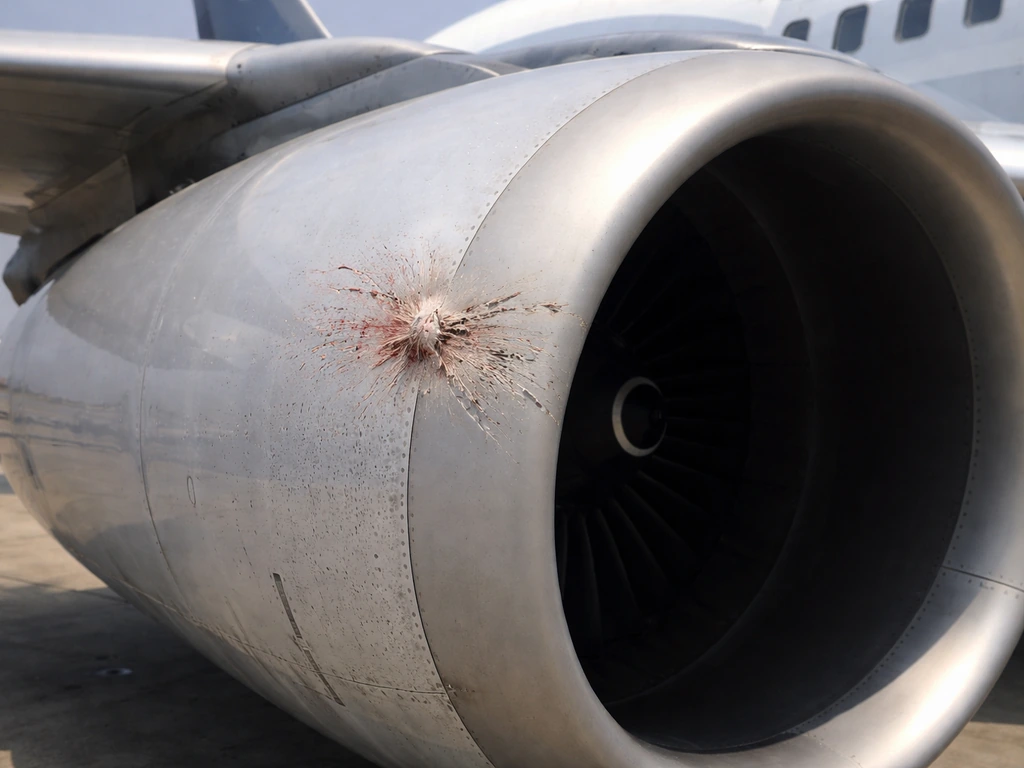
Bird strikes on planes are genuinely common. The FAA recorded 22,372 reported wildlife strikes involving U.S. civil aircraft in 2024 alone, and the number has been climbing for years as bird populations and air traffic both grow. That works out to roughly 60 strikes every single day across the country. But before that number triggers alarm, it helps to understand what it actually means in practice, because frequency and danger are very different things.
How Common Are Bird Strikes on Planes and How Often They Cause Damage

Maya Chen
13 Apr 2026
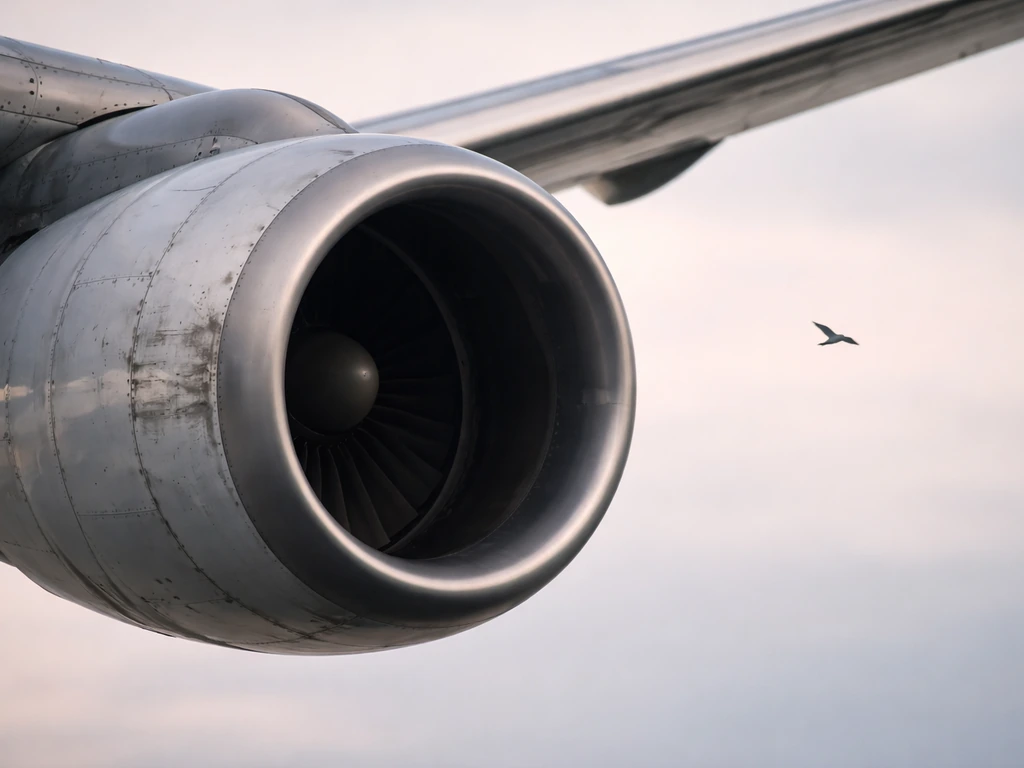
How often bird strikes happen to commercial aircraft

The FAA's National Wildlife Strike Database, established in 1994, has now collected more than 300,000 strike submissions over its lifetime. In 2023 alone there were about 19,700 reported strikes across 780 U.S. airports. By 2024 that number climbed to 22,372. These figures cover all civil aircraft, not just commercial passenger jets, but airliners make up a large share of total air traffic and therefore a large share of the encounters.
To put the rate in perspective, the FAA also normalizes strike data against aircraft movements, expressing results as strikes per 100,000 movements. That framing matters because raw totals alone don't tell you how likely any single flight is to encounter a bird. The per-movement rate has been rising gradually, driven partly by increased reporting awareness and partly by real growth in bird populations near airports. In its normalized analysis, the FAA’s historical report expresses the damaging strike rate as strikes per 100,000 aircraft movements The per-movement rate has been rising gradually. But even at current rates, the overwhelming majority of flights never encounter a bird.
It's also worth knowing that how common bird strike is looks different depending on whether you're measuring reported incidents or true exposure. Reporting is voluntary in the U.S., which means the database almost certainly undercounts the real number. Some strikes leave no visible evidence, especially small impacts on the airframe that crews never notice. The official numbers are the best available data, but they represent a floor, not a ceiling.
Bird-strike rates by aircraft phase and flight context
The vast majority of strikes happen very close to the ground. About 61% of reported strikes with fixed-wing civil aircraft occur during landing phases, meaning descent, approach, and the landing roll. Another 36% happen during the takeoff run and initial climb. Only about 3% happen en route at cruise altitude. That distribution makes sense: birds live near the ground, and airports are often surrounded by the open fields, water features, and food sources that birds gravitate toward.
Altitude matters in another important way too. Strikes occurring above 500 feet are actually more likely to cause damage than strikes at or below that height. Higher-altitude encounters tend to involve larger soaring birds or migrating flocks, and the closing speed between aircraft and bird is greater. So even though en-route strikes are rare, they carry a higher damage probability per event when they do happen.
Seasonality plays a real role as well. Fall and spring migration seasons push more birds through airspace near airports, and the late summer period when juvenile birds are newly fledged and less experienced tends to spike strike numbers. Airports in migratory flyways or near wetlands see higher rates year-round.
Which birds are most often involved and why that matters for frequency
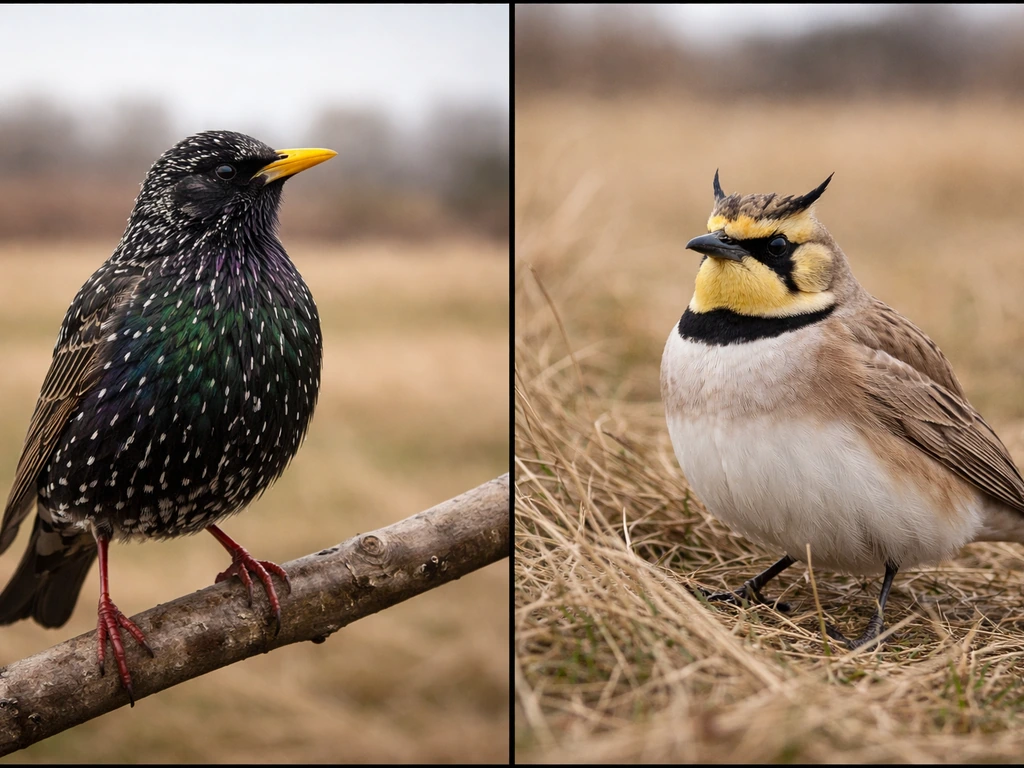
Not all birds contribute equally to strike totals. Small species like European starlings and horned larks appear frequently in the raw counts simply because they're abundant near airports and tend to flock in large numbers. A single encounter with a starling murmuration can produce multiple strikes in one event.
But frequency of occurrence and severity of outcome don't track together. Raptors account for roughly 11% of total strikes when species are identified, but they show up in about 17% of damaging strikes, meaning they punch above their weight in terms of harm caused. Gulls are the leading cause of serious damage overall, responsible for about 32% of serious-damage incidents in compiled FAA-based data. Waterfowl follow at around 20% of serious-damage cases. These are bigger, denser birds, and that mass is what makes them disproportionately dangerous compared with smaller species.
The Smithsonian Institution's feather identification lab plays a direct role here: when a strike leaves feather or tissue remains on an aircraft, specialists can identify the species. That identification feeds back into the database and helps airports understand which species are actually causing problems locally, which shapes habitat management and deterrent programs.
Impact and severity: how common damage actually is versus rare outcomes
This is where the numbers get genuinely reassuring. The share of strikes that cause any reportable damage has been falling for decades. In 1996, about 6% of reported strikes caused damage. By 2024, that figure had dropped to 3.7%. So today, roughly 96% of reported strikes cause no damage at all to the aircraft.
ICAO's globally compiled statistics tell a similar story: about 11% of strikes cause some damage at the global level (a higher figure than the current U.S. number, partly reflecting differences in aircraft age and fleet mix across countries), and only a very small fraction of those endanger safety. The question of whether bird strikes are dangerous has a nuanced answer: most of the time, no, but the exceptions are real.
Human injury is rare in absolute terms. From 1990 to 2023, there were 357 human injuries attributed to wildlife strikes with U.S. civil aircraft across the entire 33-year period. Globally, from 1988 to October 2024, 499 human fatalities and 361 aircraft destroyed have been attributed to wildlife strikes, covering both military and civil aviation. Those numbers are sobering, but spread across billions of flights and decades, they underscore that catastrophic outcomes are the extreme exception rather than the rule.
The most famous example, US Airways Flight 1549 in 2009 (the "Miracle on the Hudson"), involved a Canada goose strike that took out both engines on climb-out. It resulted in a controlled water landing with no fatalities. That event is memorable precisely because outcomes that severe are so unusual. For a deeper look at what a strike actually involves mechanically and procedurally, what a bird strike is covers the mechanics of impact and aircraft response.
How the risk compares to other everyday and aviation hazards
Commercial aviation is already the safest mode of long-distance travel by a wide margin. Bird strikes sit within that context. Even though strikes occur tens of thousands of times a year, the translation to serious safety events is extremely rare. For comparison, runway incursions, maintenance errors, and weather-related events each account for more aviation accidents and incidents than bird strikes do.
On a per-trip basis, a passenger's risk of being involved in a strike that causes any damage is extremely low, and the risk of a strike causing injury is orders of magnitude lower still. Driving to the airport is genuinely more dangerous than the bird-strike risk during the flight itself. That's not dismissive of the hazard: aviation safety professionals take bird strikes very seriously precisely because they've been managed down to these low levels through decades of active mitigation. The question of whether bird strikes are dangerous for planes is best answered as: potentially yes, routinely managed, and rarely catastrophic.
Trends and reporting: what the data actually measures
The long-term trend shows reported strike counts rising steadily since the database began in 1990. That increase reflects two things: more actual strikes as bird populations and air traffic grew, and better reporting as awareness and the reporting culture improved among pilots, airlines, and airports. The FAA uses Form 5200-7 (the Bird and Other Wildlife Strike Report) as the standard submission mechanism, and the Aeronautical Information Manual actively encourages pilots to file reports after any encounter.
Because reporting is voluntary in the U.S., the database captures an unknown fraction of actual events. Studies have estimated that real strike totals could be several times higher than what's reported, particularly for minor strikes that cause no damage and are easy to overlook. This means the damage-rate percentage (3.7% of reported strikes) is probably a reasonable proxy for actual damage rates, but the total occurrence count is almost certainly an undercount.
Outside the U.S., ICAO aggregates data through its Bird Strike Information System (IBIS), and European operators report through EASA's occurrence-reporting framework. The global picture is broadly consistent with U.S. findings: strikes are frequent near airports, damage is uncommon, and catastrophic outcomes are rare. The FAA's wildlife strike database remains the most comprehensive single-country resource in the world, covering the full period from 1990 through the present. For a broader look at how often bird strikes occur across different reporting frameworks, the FAA and ICAO datasets together give the clearest global picture.
Putting the numbers together: a quick comparison
| Metric | Figure | Context |
|---|---|---|
| U.S. reported wildlife strikes (2024) | 22,372 | All civil aircraft; voluntary reporting |
| U.S. reported strikes (2023) | ~19,700 | Across 780 U.S. airports |
| Strikes causing damage (2024) | ~3.7% of all strikes | Down from 6% in 1996 |
| Phase of flight: landing | ~61% of strikes | Descent, approach, landing roll |
| Phase of flight: takeoff/climb | ~36% of strikes | Takeoff run and initial climb |
| Phase of flight: en route | ~3% of strikes | Cruise altitude; rarer but higher damage risk per event |
| U.S. human injuries (1990–2023) | 357 total | 33-year period, all civil wildlife strikes |
| Global fatalities (1988–Oct 2024) | 499 total | Military and civil aviation combined |
| Gulls: share of serious-damage incidents | ~32% | Leading species group for serious damage |
| Raptors: share of damaging strikes vs. total strikes | 17% vs. 11% | Overrepresented in damaging strikes |
What to do if you're concerned: passengers, pilots, and airports
For passengers
If you hear a loud thump or bang during takeoff or landing, it could be a bird strike. Crews are trained to handle this, and modern jet engines are certified to ingest birds up to a certain size without catastrophic failure. The flight crew will assess the situation and follow established procedures. Your job is to stay calm and follow crew instructions. The overwhelming statistical reality is that the flight will continue normally or land safely at the nearest suitable airport as a precaution.
There is nothing a passenger can do to prevent bird strikes, and worrying about them is not warranted given the actual risk numbers. If you want to understand the topic more deeply before flying, reviewing what aviation authorities publish on wildlife strike management is the most grounding thing you can do.
For pilots
If you experience a strike, report it. The FAA's voluntary reporting system works only when pilots and operators submit data, and every report improves the database that airports and airlines use to target mitigation efforts. Use FAA Form 5200-7 or submit through the FAA's online wildlife strike reporting portal. General aviation pilots should pay particular attention during low-altitude operations near wetlands, agricultural fields, and landfill sites, all of which are high bird-activity zones.
For airports and communities near airports
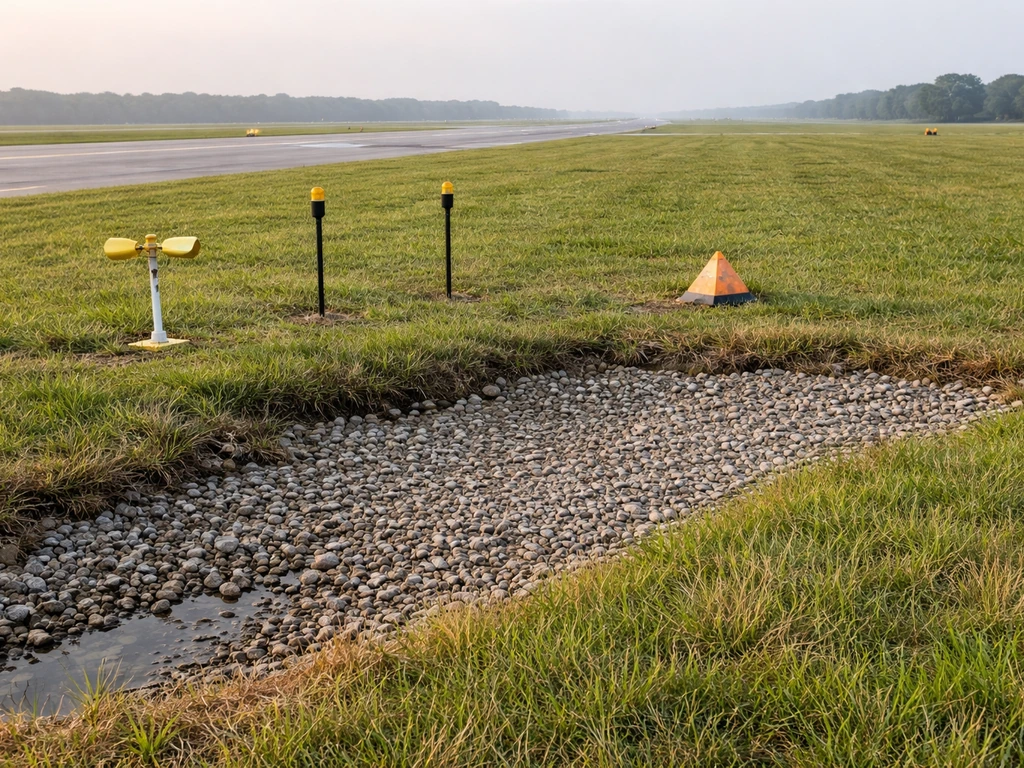
Airports manage bird strike risk through habitat modification (removing standing water, mowing grass to non-attractive heights, eliminating food sources), active deterrence (pyrotechnics, trained raptors, lasers, distress calls), and coordination with the USDA's Wildlife Services program. FAA guidance recommends wildlife hazard management planning for airports within a certain distance of bird-attracting land uses, generally up to 5 miles from the airport boundary.
- If you operate or work at a small airport without a formal wildlife management plan, the FAA's Wildlife Strike Database and guidance documents are freely available and offer a practical starting point.
- Community members near airports can support strike reduction by reporting unusual concentrations of birds near runways to airport management.
- Municipalities should be aware that zoning decisions about landfills, stormwater ponds, and agriculture within a few miles of airports directly affect bird strike risk.
- Airlines review strike data by route and airport to adjust maintenance inspection schedules and engine checks after operations in high-risk areas.
- For the most current strike data and trends, the FAA's wildlife strike database page is updated regularly and is publicly accessible.
Bird strikes happen every day in U.S. airspace. They are a routine hazard that aviation has learned to manage extremely well, not a hidden crisis. The data shows frequency going up over time while the proportion of damaging strikes keeps falling. That combination is actually a success story for aviation safety engineering and airport wildlife management, even if the raw headline number of 22,000-plus strikes per year sounds alarming at first glance.
FAQ
If there are about 60 bird strikes per day, does that mean a passenger is likely to experience one?
Not really. Passenger-level exposure depends far more on when you fly (migration periods, late summer) and where you depart or arrive (wetlands, water features, landfills, agricultural fields), while the aircraft type matters less than you might assume. Even with the per-day totals, most flights never have a strike, and most strikes cause no reportable damage.
If I do not hear anything, can I assume there was no bird strike on my flight?
Yes. A passenger can notice a strike mainly when it produces an audible impact or vibration, but the absence of a sound does not mean no strike occurred. Many impacts are small or occur in moments crews do not treat as significant, which is one reason the official database is treated as an undercount.
Which statistic tells me how dangerous bird strikes are, the total strikes or the damage percentage?
The number you should compare is “damage probability per encounter,” not the raw total of reported strikes. The article’s key proxy for damage likelihood is the reported share that caused damage (3.7% in the latest U.S. figure), but real damage can be slightly mis-estimated because minor events are more likely to be missed in voluntary reporting.
Are high-altitude bird strikes more dangerous than runway strikes?
Roughly, higher-altitude strikes above about 500 feet are less common but more likely to cause damage when they do happen. That said, cruise-altitude encounters are still rare compared with landing and takeoff phases, so the overall risk remains dominated by low-altitude operations near the airport environment.
Why do some airports have lots of strikes but fewer serious damages?
Not necessarily. The most frequent species are often smaller and abundant, but larger birds and water-associated species tend to drive a bigger share of serious damage. This means two airports with similar total strike counts can have different “risk profiles” based on which birds dominate locally.
How reliable are the official numbers if reporting is voluntary?
Gaps are possible. Since reporting is voluntary for many operators, the database misses some minor strikes and may also misclassify certain events if damage is not obvious. Because of that, the damage rate from reported data is useful as a proxy, but it is not a perfect measure of true real-world rates.
Does risk vary by runway or airport traffic pattern?
Most birds are likely to be encountered during approach, landing, takeoff roll, and initial climb, but the “where” can change by airport layout. Runways near water, wetlands, or open-field habitat increase exposure, and the specific runway in use that day can shift risk substantially.
As a passenger, what should I do if there is a loud bang during takeoff or landing?
If you hear an impact, the safest assumption is that the crew will follow standard procedures, which may include assessing engine indications, requesting checklists, and diverting if needed. Your role is to stay seated, follow crew instructions, and avoid creating distractions during any abnormal or precautionary actions.
What details make a bird-strike report more useful for reducing future risk?
Yes, especially if you are a pilot or cabin crew member. For operational value, reports are most helpful when they include exact time, flight phase (takeoff, approach, cruise), aircraft altitude, engine data if relevant, location, and whether there was damage or bird remains for identification.
How can aircraft safely ingest birds if strikes are still a hazard?
Jet engines are designed and certified to tolerate ingestion up to certain bird sizes, which is why many strikes do not escalate into damage or safety events. Still, the relevant risk factor is the combination of bird size, strike location on the engine, number of birds, and whether the strike leads to secondary effects like unbalance or control issues.
Next Article
How Often Do Bird Strikes Occur on Planes and Why
Learn how often bird strikes occur on planes, typical frequency by flight and factors, plus outcomes, myths, and prevent