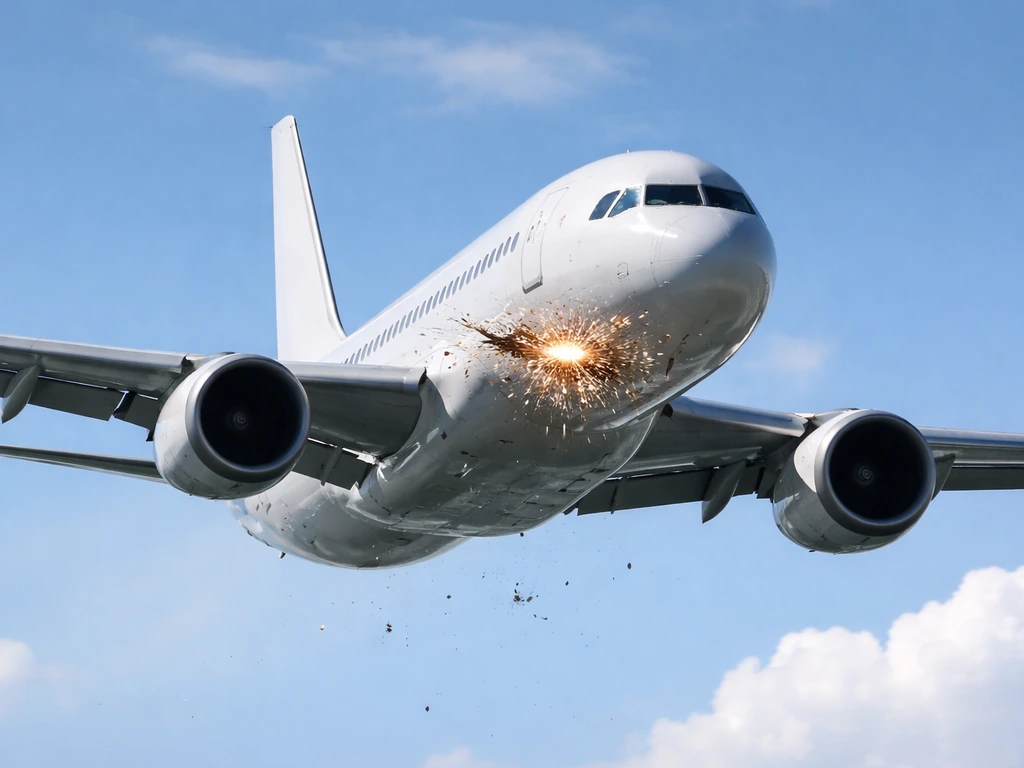
A bird strike is what happens when a bird collides with a human-made object, most often a window, a vehicle, or an aircraft. The term is straightforward: a bird hits something, or something hits a bird. Depending on the speed and size involved, the outcomes range from a stunned bird sitting on your patio to a cracked aircraft windshield to, in rare cases, serious aviation incidents. Most bird strikes people personally witness involve windows and cars, not planes, and most result in an injured or dazed bird rather than any meaningful damage to the object.
What Is Bird Strike? What Happens and What to Do

Maya Chen
2 Apr 2026
What the term actually means
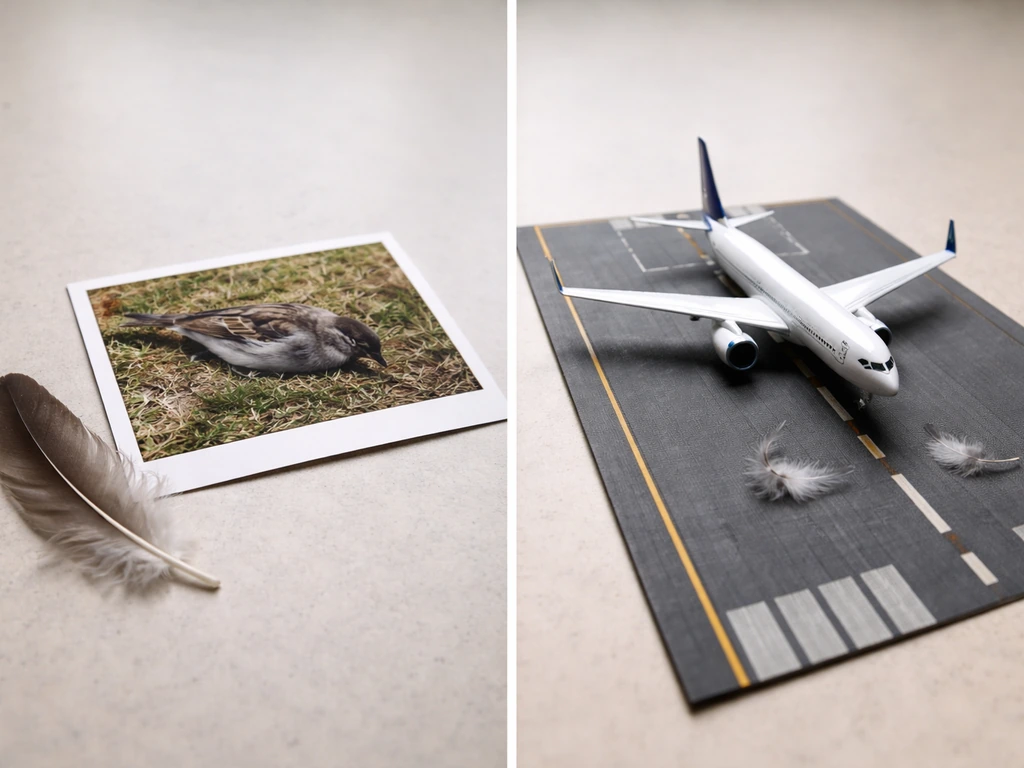
In its strictest technical sense, an ICAO definition frames a bird strike as "a collision between a bird and an aircraft. Wikipedia also describes bird strikes in this collision sense and notes it references the ICAO Bird Strike Information System (IBIS) for global data collection [an ICAO definition frames a bird strike as "a collision between a bird and an aircraft. ](https://en. wikipedia.
org/wiki/Bird_strike). " In everyday use, though, the phrase has expanded to cover any collision between a bird and a solid object moving through its environment, or an object the bird flies into. You'll hear it used for window collisions at homes, impacts with cars on highways, and, most famously, the aviation context where the stakes are highest.
The underlying physics are the same in every case: a bird's body, moving through space, makes unintended contact with a surface at enough velocity to cause an impact event.
The aviation definition gets the most formal attention because the consequences there can be serious. From 1988 through October 2024, wildlife strikes (the FAA's broader term that includes birds, deer, and other animals near runways) have been linked to 499 human fatalities and 361 aircraft destroyed worldwide. That number spans decades and covers military and civil aviation globally, so it's worth keeping in perspective, but it's also why airports, pilots, and regulators treat bird strikes as a genuine safety issue rather than a nuisance.
Where bird strikes actually happen
Most people never witness an aviation bird strike. What they do encounter, often without calling it by that name, are window collisions and vehicle strikes. Here's a quick look at the common settings.
Windows and buildings
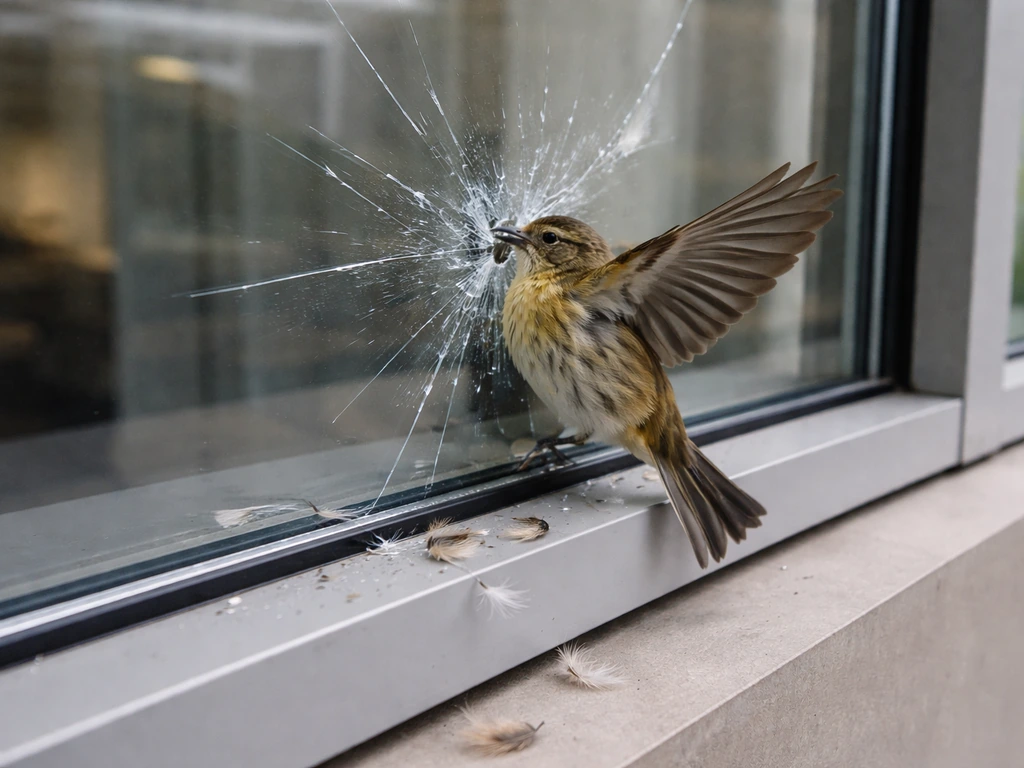
This is by far the most common type of bird strike most people will see in their lifetime. Birds don't recognize glass as a solid barrier. According to USGS research, they often fly toward windows because the glass reflects sky or nearby vegetation, making it look like open space. The bird sees a route that doesn't exist and hits the glass at full flight speed. The result is usually a stunned bird that drops to the ground below the window, and less often a bird killed on impact.
Vehicles
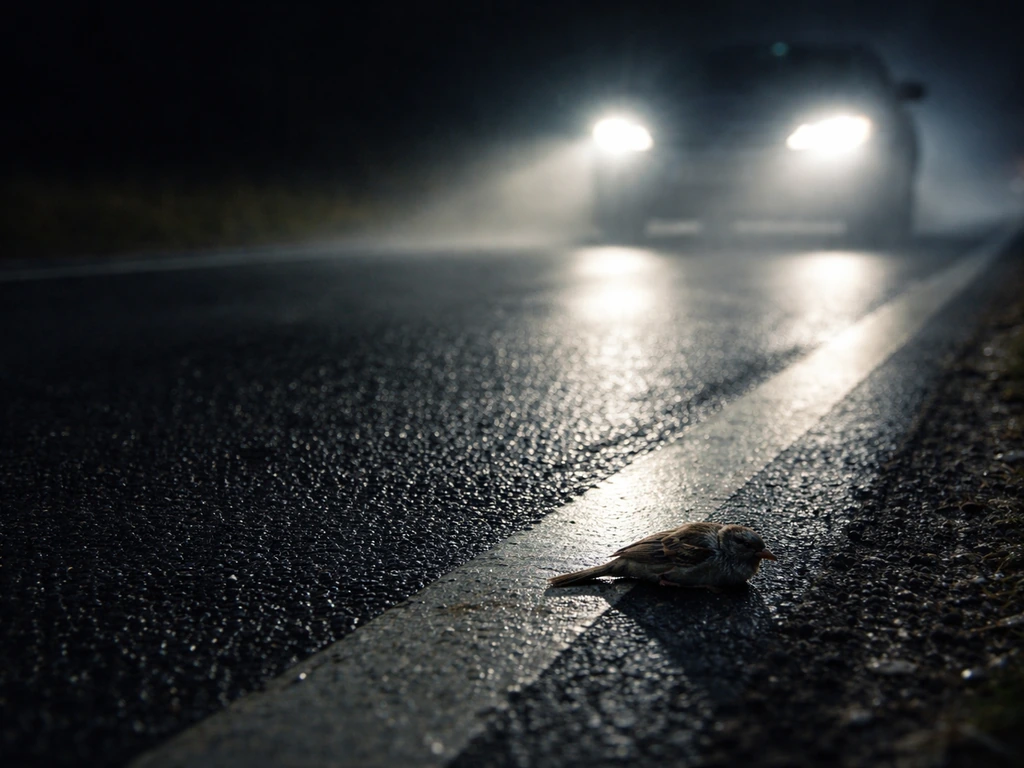
Cars, trucks, and trains strike birds regularly. Birds perching low near roads, diving after prey, or misjudging a vehicle's speed are all common scenarios. At highway speeds, the impact is usually fatal for the bird. Damage to the vehicle is rare except in cases involving larger species like geese, raptors, or vultures.
Aircraft
Aviation bird strikes are the most studied and documented type. How often do bird strikes occur in aviation? The FAA's data shows they're more common than most passengers realize, but the vast majority don't cause flight-threatening damage. The timing matters: about 61% of bird strikes with fixed-wing civil aircraft happen during landing phases (descent, approach, and landing roll), while 36% occur during takeoff and initial climb. Only about 3% happen en-route at cruise altitude, which makes sense because most birds fly low.
What physically happens during the impact
The physics of a bird strike depend on two things: the mass of the bird and the relative speed at the moment of collision. At low speeds, like a bird gliding into a window, the force is limited. At aircraft speeds, even a small bird carries enormous kinetic energy. This is why aircraft certification standards take bird strikes seriously: under 14 CFR § 25.775, windshields and windows installed in front of pilots must withstand the impact of a four-pound bird at the aircraft's design cruise velocity without penetrating the cockpit. That's a specific engineering requirement, not a guess.
For the bird, the outcome during any strike is almost always worse than for the object. At window speeds, common injuries include concussion, broken beaks, neck injuries, and internal trauma. Many birds are killed outright. Others are stunned and appear dead but recover within minutes to an hour. At vehicle or aircraft speeds, survival for the bird is unlikely.
For the struck object, outcomes vary widely. A home window usually survives intact. An aircraft engine ingesting a large bird can suffer blade damage, power loss, or in serious cases, engine failure. If you're curious about whether bird strikes are dangerous for planes, the honest answer is: it depends heavily on the bird's size, the phase of flight, and how many engines are affected.
What to expect after a strike: what you'll find and what to look for
If you hear a thud against your window or see a bird fall near a building, here's what you're likely to encounter. The bird may be lying still with its eyes closed. It may be upright but not moving, or it may be twitching. Don't assume it's dead right away. Window-collision birds are often in a stunned state that can last anywhere from a few minutes to an hour.
Signs that a bird is injured rather than just stunned include: an obviously broken wing hanging at an unnatural angle, bleeding, an inability to hold its head upright, or labored breathing. A bird that's simply stunned will often show normal posture and clear eyes. If it rights itself and flies away within an hour, it likely recovered on its own. If it can't stand, can't hold its head up, or is still immobile after an hour, it needs help.
One important thing to watch for: predators. A stunned bird on the ground is easy prey for cats, dogs, and raptors. If you see a bird down after a window strike, moving it temporarily to a safer spot (using the handling steps below) protects it while it recovers.
What to do right now if you find an injured bird
The core principle from every wildlife organization is the same: contain, calm, and contact. Here's how to do that safely.
- Protect yourself first. Before handling any wild bird, put on rubber or disposable latex gloves. This matters for your hygiene as much as anything else, and it's the recommendation from both the U.S. Fish & Wildlife Service and CDC guidelines for handling birds.
- Contain the bird gently. Pick it up carefully using a towel or cloth if possible, minimizing direct hand contact. Place it in a cardboard box or similar container with air holes. The NYC Bird Alliance recommends using a container that prevents the bird from seeing out, which helps reduce stress.
- Keep it dark, quiet, and warm. Multiple wildlife organizations, including the American Bird Conservancy and SPCA Monterey County, give the same advice: put the box in a quiet, dark location away from pets and household activity. Darkness calms birds significantly.
- Do not feed or water it. This one surprises people, but it's consistent advice from every reputable source. Forcing food or water on an injured bird can cause aspiration or other harm. Leave feeding to the professionals.
- Give it an hour for window strikes. The American Bird Conservancy suggests keeping the bird in the dark, quiet container for about an hour. Many window-strike birds recover fully in that time and can be released.
- Contact a wildlife rehabilitator. If the bird isn't recovering, or if it has visible injuries, call a licensed wildlife rehabilitation organization in your area. The AWARE Wildlife Center, Think Wild, and similar groups have phone or online help desks specifically for this. They can walk you through what to do next and arrange care.
If the bird is dead, the NPS recommends common-sense handling: use gloves, double-bag the carcass, and dispose of it properly. Keep pets away from dead birds as a general precaution.
Myths, risks, and what people get wrong
"Bird strikes are almost always catastrophic in aviation"
Not true. The FAA maintains an extensive strike database precisely because most reported strikes do not cause catastrophic outcomes. Most result in minor damage or no damage at all. Whether a bird strike is truly dangerous depends heavily on the aircraft type, the bird's size, and where the bird impacts. Engines and windshields are the high-risk zones; wing leading edges and fuselage hits are far less likely to affect flight safety.
"You'll get sick just from touching a bird"
The risk of disease transmission from handling a bird briefly with gloves is low, not zero. The main concern that gets attention is H5N1 avian influenza. CDC guidance for reducing infection risk emphasizes protective measures like gloves and washing hands thoroughly with soap and water after any contact with sick or dead birds. Basic precautions are enough for the vast majority of situations. You don't need to panic, but you shouldn't handle a bird barehanded and then eat lunch without washing up.
"If a bird hits your window, it's a bad omen"
This one comes up surprisingly often. Window strikes happen because glass reflects sky and plants, not because of anything meaningful about your home or life. It's a geometry and optics problem, not a message. The most useful response to a window strike is to check on the bird, and then consider adding window treatments (like tape, decals, or screens on the outside) that break up the reflection.
"A bird that looks okay after a window strike is fine"
Not necessarily. The American Bird Conservancy specifically flags this: even birds that appear to be recovering or look capable of flying may have internal injuries or concussion effects that make immediate release a bad idea. A period of quiet containment is always the safer call before letting a window-strike bird go.
How common are bird strikes, really?
In aviation, how common bird strikes are is often surprising to people outside the industry. Thousands are reported in the U.S. alone each year, and the FAA encourages reporting of any wildlife strike using FAA Form 5200-7 so that data can inform airport habitat management and safety standards. The reporting system exists because understanding where and when strikes cluster helps airports reduce them.
For window strikes at homes and buildings, the numbers are even larger on a global scale. It's one of the leading causes of bird mortality in North America. Most of those incidents go unrecorded, but that doesn't make them rare. If you've heard a thud against a window and found a stunned bird below, you've witnessed one of the most common bird-strike scenarios there is.
If you want a more detailed breakdown of how common bird strikes on planes specifically are, the FAA's publicly available strike database gives a comprehensive picture. The short version: they happen far more often than aviation incidents make the news, but serious outcomes are a small fraction of total reported strikes.
Quick comparison: bird strike types at a glance
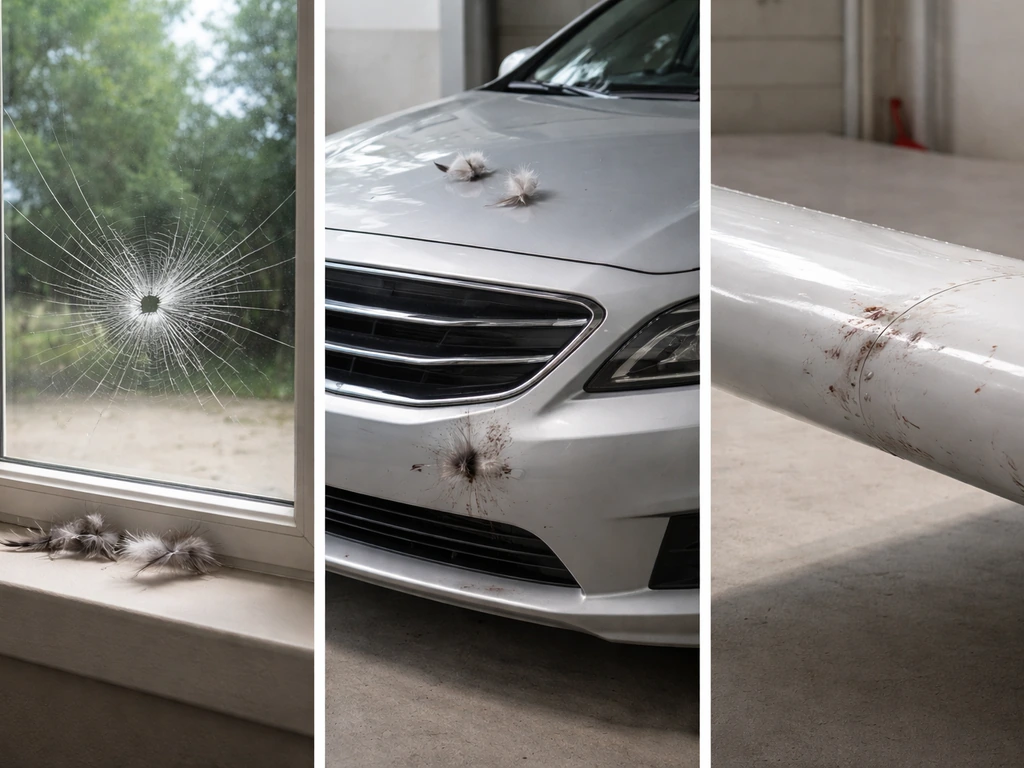
| Setting | Typical bird outcome | Typical object damage | What you should do |
|---|---|---|---|
| Home window | Stunned or killed | Rarely any damage | Contain, monitor, contact rehabilitator if needed |
| Vehicle (car/truck) | Usually fatal | Rare unless large bird | Pull over safely, check for damage, avoid barehanded contact |
| Commercial aircraft | Usually fatal | Ranges from none to significant | Pilots follow protocols; passengers report anything unusual to crew |
| Small/general aviation | Usually fatal | Can be significant | Pilot reports strike using FAA Form 5200-7 |
The bottom line on bird strikes: they're a real, documented phenomenon that happens across a wide range of settings. For most people, the encounter involves a window and a stunned bird. The right response is calm, protective handling, a period of quiet recovery time for the bird, and a call to a wildlife rehabilitator if things don't improve. For aviation, the systems and certification standards are built specifically around managing this risk. Either way, understanding what's actually happening, and what the evidence says about outcomes, is more useful than either dismissing the event or overreacting to it.
FAQ
How long should I wait before deciding a window-strike bird needs a wildlife rehabilitator?
If the bird is alive but unable to stand, has a visible wing injury, or is still immobile after about an hour, treat it as injured and contact a licensed wildlife rehabilitator. In the meantime, keep it contained in a quiet, dark, well-ventilated box at room temperature, away from pets and children.
What’s the safest way to contain a stunned bird before I contact help?
Use a covered box or carrier rather than a loose blanket on the floor. Avoid giving food or water, and do not force flight. For ventilation, poke small air holes in the container lid, and place the box in a calm indoor spot until you can assess whether it can right itself.
What should I do differently if the bird seems to be actively struggling versus just stunned?
If the bird is still moving or appears responsive, you can typically wait without intervening beyond containment. If it is bleeding heavily, choking, or showing severe distress (for example, labored breathing), prioritize getting professional help quickly rather than continuing to wait for improvement.
What common mistakes increase the chance of injury to me or the bird during cleanup?
Do not try to reopen the bird’s mouth or give any medication. If you must move it, wear gloves, minimize handling time, and wash hands thoroughly after removing gloves. Keep the bird away from your face and avoid touching your phone, clothes, or kitchen surfaces during cleanup.
How can I tell if an apparently recovered bird is actually safe to release?
Even if it looks like it can fly, do a quick check for neurologic signs like inability to maintain an upright posture, repeated circling or stumbling, or a head tilt that does not improve. Internal concussion can prevent safe takeoff, so a short additional quiet containment period is often safer than immediate release.
Should I worry about my cat or dog if a bird is down near the window?
For pets, the main risk is predation. Bring pets indoors immediately, then keep the bird in a contained box if you need to move it. For cats and dogs, avoid any direct contact with bird carcasses, and wash hands after handling anything the animal touched.
When should I report a bird strike, and who should receive the report?
Report it if you know the location and date, especially for aviation contexts. Airports and aircraft operators use strike records to identify risk hotspots and improve wildlife habitat controls. For home window strikes, reporting is less standardized, but calling a local wildlife group can help track patterns in your area.
What’s the safest approach if the bird appears dead under the window?
If you find a bird that is dead, handle it only with gloves, double-bag it, and keep it away from pets. Avoid rinsing the carcass in a way that spreads contamination, and clean any surfaces the bird touched using standard household disinfectants appropriate for biological contamination.
If an aircraft seems to have had a bird strike, how serious should it be treated in practice?
For aircraft or airport situations, any suspected engine ingestion, cracked windshield, or warning indication should be treated as operationally serious and handled through the appropriate aircraft maintenance and flight safety reporting process. Do not assume it was “just a small bird” if there are abnormal noises, vibrations, or cockpit indications.
What window changes actually reduce window collisions most effectively?
For window protection, focus on reducing the reflection birds mistake for open space. Practical add-ons include exterior decals/tape applied to break up reflections, or screens installed on the outside to block the view. Interior treatments can help, but exterior options generally work better because they stop the reflectivity birds see.
Next Article
Bird Causes Plane Crash? Risk, Mechanisms, Myths, Prevention
Whether bird strikes can cause plane crashes, how they happen, real risk data, debunked myths, and prevention steps