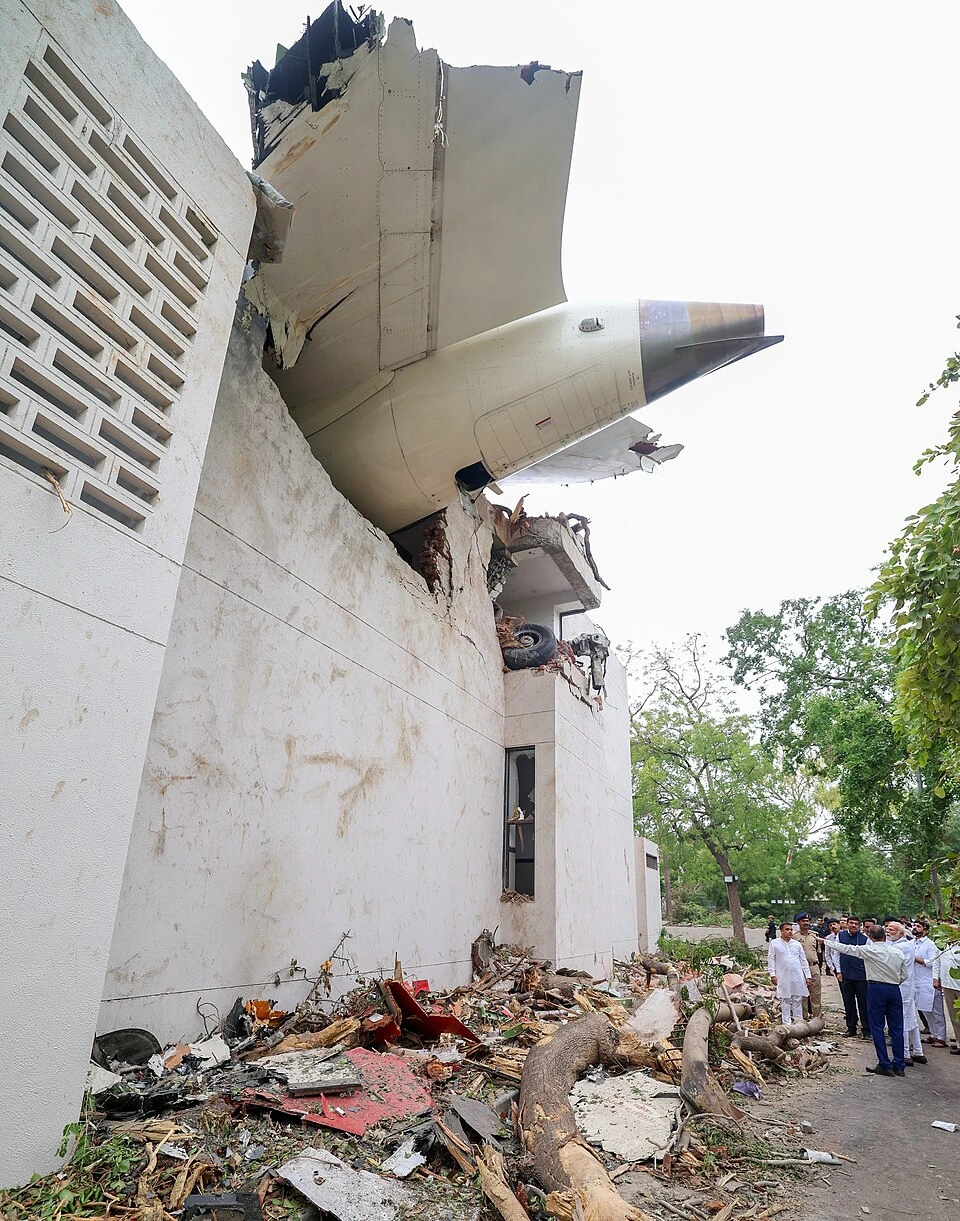
When you search 'T-45 crash bird strike,' you're almost certainly looking for information about a T-45 Goshawk (the Navy's carrier-capable jet trainer) that went down after ingesting a bird into its engine. A Military Times investigation confirmed exactly that scenario: a bird strike caused a T-45 Goshawk crash at Naval Air Station Kingsville, Texas, where the local migratory corridor makes bird ingestion a documented hazard. In the same way, bird-related aviation incidents can lead to serious outcomes, including the Jeju air crash bird case. Whether you're trying to understand what happened, figure out what to do next, or prevent it from happening again, this guide walks through all of it.
T-45 Crash Bird Strike: What to Do Now and How to Verify

Maya Chen
13 May 2026
What 'T-45 crash bird strike' actually means (and why the phrasing trips people up)
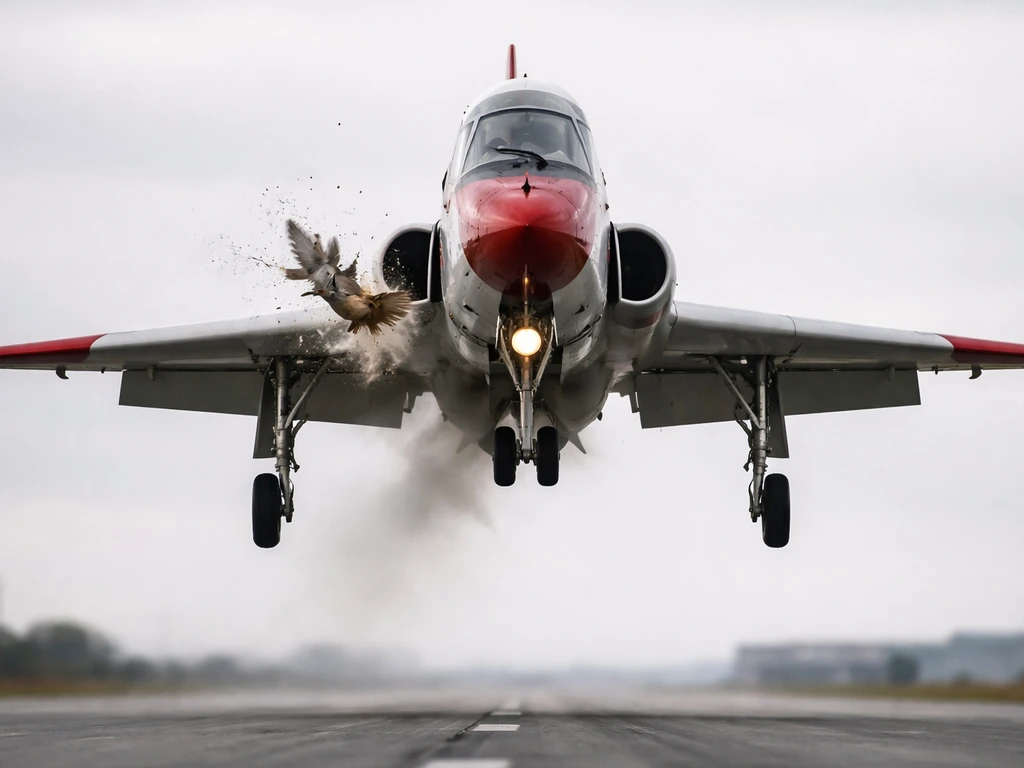
The confusion usually comes from the way the phrase gets strung together. 'T-45' is a military aircraft designation, not a crash type or incident code. The T-45 Goshawk is a two-seat, single-engine jet trainer used by the U.S. Navy and Marines to train student naval aviators. When people search 'T-45 crash bird strike,' they're typically trying to understand a specific incident where a T-45 crashed following a bird strike, or they want general guidance on how bird strikes cause military jet crashes.
Bird strikes are not rare events. The FAA's National Wildlife Strike Database has logged over 280,000 wildlife strikes since 1990, and military aircraft face comparable hazards, particularly trainers that fly lower, slower training profiles near airports surrounded by open farmland, wetlands, or coastal corridors. NAS Kingsville sits in South Texas, directly in a major migratory flyway, which is exactly the kind of environment where bird ingestion risk is highest. That context matters when you're trying to make sense of any crash report that involves a bird.
What a bird strike actually does to an aircraft
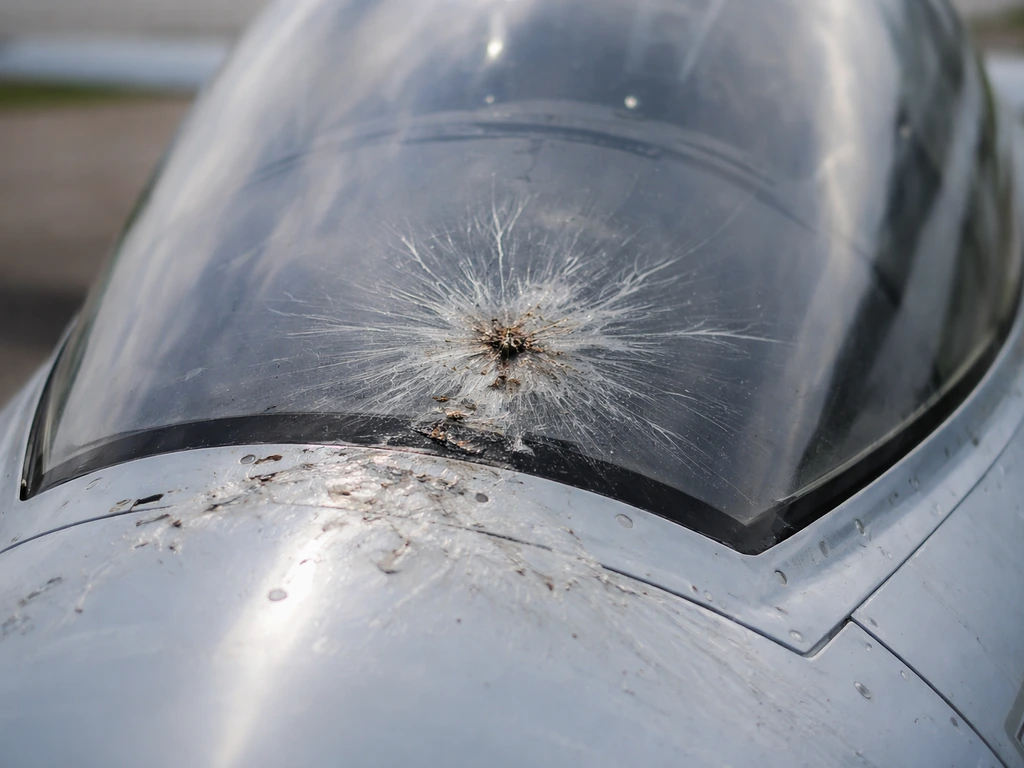
The damage depends on three things: where the bird hits, how big it is, and how fast the aircraft is going. A small songbird hitting a canopy at low speed is a nuisance. A large gull or duck ingested into a single-engine military trainer at 300 knots is a potential emergency. Here's how damage breaks down by location:
Engine ingestion
This is the most dangerous scenario, and it's what the T-45 Goshawk crash investigation pointed to. A bird sucked into a jet engine can shatter fan blades, cause compressor stalls, and in serious cases trigger fire or complete loss of thrust. Post-accident inspections consistently find feathers, blood, and tissue on fan blades, the fan spinner, and internal inlet components. In the 'Miracle on the Hudson' A320 incident, the FAA's probable cause determination cited ingestion of large birds into both engines causing near-total loss of thrust. A single-engine aircraft like the T-45 has no backup if the engine fails.
Airframe hits
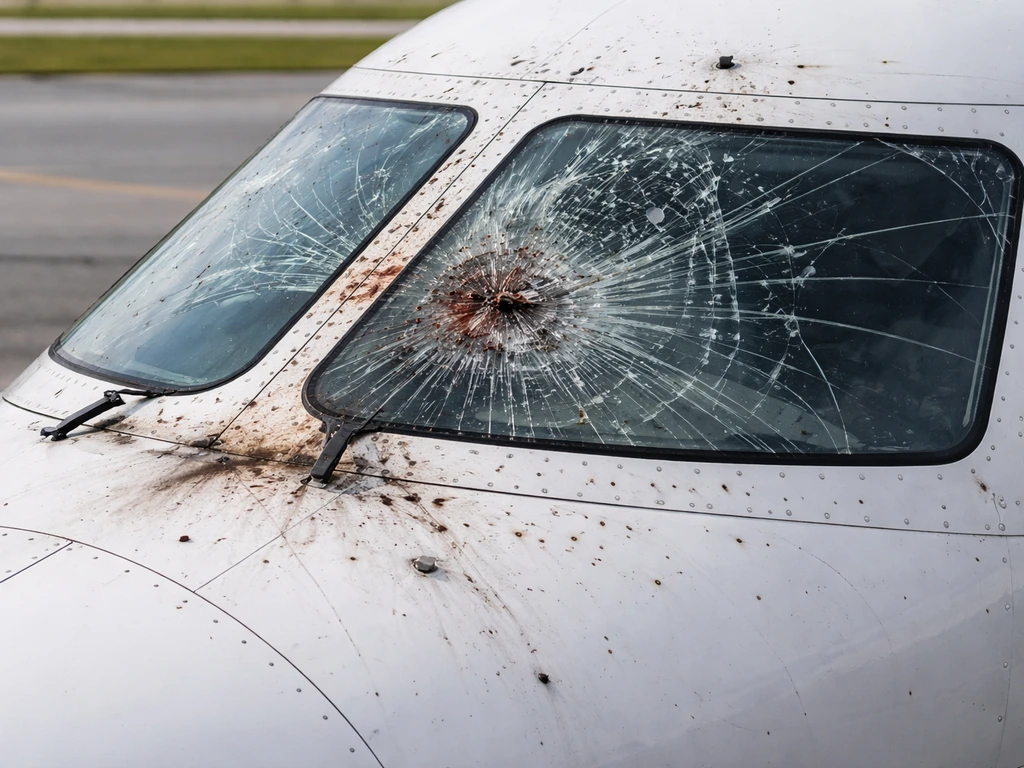
A bird that strikes the nose, windscreen, or fuselage can crack or shatter the canopy, injure or incapacitate the pilot, and cause structural damage. Windscreen strikes at high speed are particularly violent. Even if the aircraft stays flyable, pilot incapacitation is a real secondary risk.
Control surfaces
Strikes to leading edges, flaps, or tail surfaces can deform or dent control surfaces enough to affect handling. These hits are less immediately catastrophic than engine ingestion but can still limit the pilot's ability to control the aircraft, especially at critical phases like approach and landing.
Immediate steps after a suspected bird strike
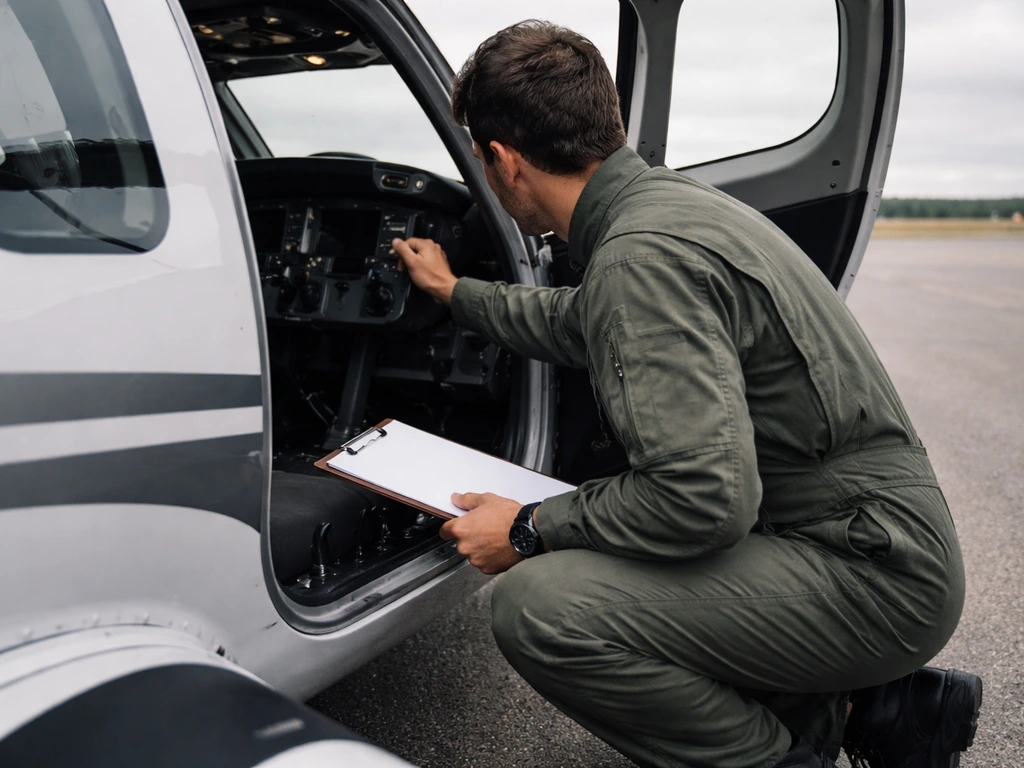
If you're the pilot or crew member and you've just had a bird strike, the priority sequence is: maintain aircraft control, assess the situation, declare if necessary, and land as soon as practical. Here's what that looks like in practice:
- Maintain aircraft control first. A bird strike can be startling, but your immediate job is to keep flying the aircraft.
- Check engine instruments immediately. Look for N1/N2 RPM loss, EGT spikes, vibration, or abnormal oil pressure. Any of those after a strike means you may have ingestion damage.
- Declare your emergency. Use 'MAYDAY MAYDAY MAYDAY' for a distress situation (engine failure, imminent crash) or 'PAN-PAN PAN-PAN PAN-PAN' for an urgency situation (aircraft flyable but you have a problem). This is standard AIM phraseology and gets you immediate ATC priority.
- Follow your aircraft's emergency checklist. For the T-45, that means executing the appropriate single-engine or engine-failure emergency procedures from memory.
- Land at the nearest suitable airfield. Do not try to complete a training mission after a confirmed or suspected bird ingestion.
- Report the strike. After landing safely, use FAA Form 5200-7 (Bird/Other Wildlife Strike Report) to document the incident. For military aircraft, also follow your squadron's BASH (Bird Aircraft Strike Hazard) reporting chain.
If you're an observer on the ground watching a T-45 go down, call 911 immediately and give your location. Do not approach a downed military aircraft until emergency personnel clear the scene. Ejection seats, fuel, and ordnance are all serious hazards.
How to tell if a bird strike caused the crash (versus other factors)
Bird strikes don't always announce themselves clearly. Here's what investigators look for, and what you can use to assess plausibility if you're reviewing a report or eyewitness account:
| Evidence Type | Suggests Bird Strike | Suggests Other Cause |
|---|---|---|
| Engine indications | Sudden RPM loss, EGT spike, vibration immediately after low-altitude flight | Gradual performance degradation, pre-existing maintenance flags |
| Physical remains | Feathers, blood, tissue on fan blades, inlet, or airframe | No biological material found after thorough inspection |
| Pilot report | Visual/auditory impact followed by engine anomaly | No impact described; symptoms developed gradually |
| Timing and location | Takeoff, approach, or low-altitude flight in known bird corridor or migration season | High-altitude cruise, no known bird activity |
| Maintenance history | No pre-existing engine issues documented | Recurring mechanical faults in maintenance logs |
| Damage pattern | FOD-type fan blade damage, asymmetric engine damage | Uniform wear, fuel system or electrical anomaly |
Investigators will also look at weather data for bird activity, radar returns showing flocks, and records from the wildlife hazard management program at the base. No single piece of evidence proves a bird strike caused a crash. The NTSB builds a probable cause determination from multiple evidence streams, including flight logs, maintenance records, eyewitness interviews, and physical wreckage analysis. Don't assume cause from one indicator alone.
A common myth worth busting here: bird strikes are often dismissed as 'minor' compared to mechanical failures, but the Hudson River ditching shows that even large, modern commercial aircraft are not immune to catastrophic thrust loss from bird ingestion. For a single-engine trainer like the T-45, the margin is even thinner.
Ground and recovery: cleanup, injuries, and biohazards
If you're part of a recovery or ground crew dealing with the aftermath of a bird-strike crash, there are real biohazard considerations. Bird remains after a high-speed ingestion are often not intact birds. You're dealing with fragments, feathers, tissue smears, and biological debris mixed with jet fuel, hydraulic fluid, and composite airframe materials. Treat all of it as a hazard. CDC disaster cleanup guidance also recommends practical steps for safely disposing of dead animal remains while minimizing biohazard risk, such as bagging remains and following appropriate cleanup procedures Treat all of it as a hazard.
- Wear gloves, eye protection, and a mask when handling any biological material. If full PPE is available, use it.
- Use a shovel or tongs, not bare hands, to collect bird remains or biological debris. Double-bag material in heavy plastic bags before disposal, following CDC disaster cleanup guidance for dead animals.
- Do not eat, drink, or touch your face while working in the recovery area.
- Preserve biological material for identification if an investigation is expected. The FAA works with the Smithsonian Feather Identification Lab, and in major incidents, DNA-based identification is used when only tissue fragments remain. Remains submitted through the FAA's wildlife strike reporting system feed directly into species identification and prevention research.
- For jet fuel or composite material contamination, follow your unit's HAZMAT protocols. These are separate from biological hazards but often present simultaneously at a crash site.
- Personnel who handle remains should wash hands thoroughly and monitor for any symptoms. Wild birds can carry avian influenza, salmonella, and other pathogens, though the risk from brief, protected contact is generally low.
Another myth that comes up: people sometimes assume that because bird strikes happen at high speed and the bird is essentially destroyed, there's no real biohazard from the remains. That's not accurate. Even fragmented tissue and feather debris can carry pathogens, and jet engine heat does not reliably sterilize all material.
How these incidents get investigated and what evidence matters
For a military aircraft crash like a T-45, the investigation is typically led by a military aviation accident investigation board, with NTSB and FAA potentially involved depending on the circumstances. For civilian aircraft, NTSB leads. Either way, the investigation framework is similar.
Investigators collect evidence in categories. Physical wreckage and engine components come first: fan blades, the inlet, the fan spinner, and any biological material on those surfaces. A DC-10 bird ingestion case documented in FAA Lessons Learned showed feathers and tissue on multiple engine fan components, which became central to establishing cause. Flight data and voice recorder information (where available) fills in the timeline. Maintenance records are reviewed for any pre-existing conditions that might have contributed. Eyewitness accounts, ATC audio, and radar data round out the picture.
The Smithsonian Feather Identification Lab and DNA analysis are used when remains are too fragmented to identify visually. Knowing the species matters because it informs prevention: different species have different behavioral patterns, habitat preferences, and seasonal timing that drive mitigation strategies.
NTSB's mandate under 49 CFR § 831.4 is to determine probable cause and issue safety recommendations. That means the investigation isn't just about accountability. It's specifically designed to generate actionable prevention guidance. If you're involved in a post-incident review at your base or airport, those NTSB recommendations are the most evidence-grounded source of next steps you'll find.
Preventing bird strikes: what actually works
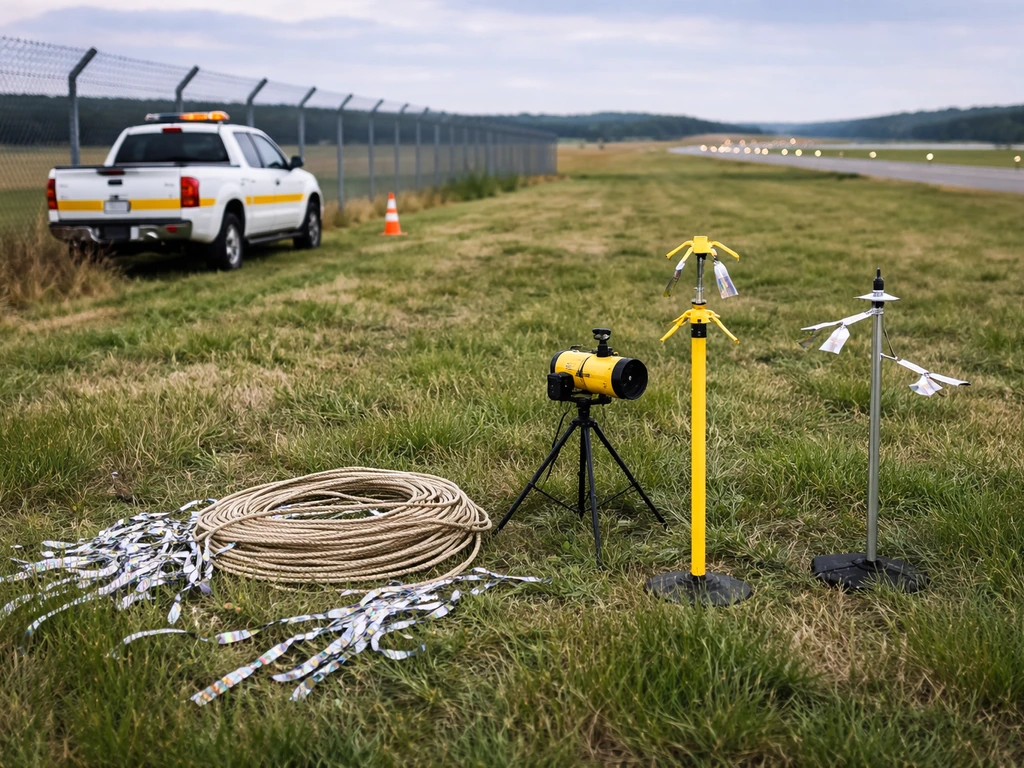
Prevention is where most of the actionable work happens, especially after an incident. The FAA's wildlife hazard management framework gives airports and military airfields a structured toolkit. Here's what the evidence supports:
Habitat management
Birds are drawn to airports by food, water, and shelter. Controlling grass height in the operations area (keeping it between 7 and 14 inches discourages most foraging birds), eliminating standing water, and removing food waste sources directly reduces bird activity on and near the airfield. FAA's wildlife hazard management manual is specific: prohibit bird feeding, use bird-proof waste containers, and manage vegetation to reduce attractiveness to flocking species.
Land use buffers
FAA Advisory Circular 150/5200-33C establishes recommended separation distances for land uses that attract birds. Turbine aircraft operations (which includes the T-45) call for a 10,000-foot separation from bird-attracting land uses such as landfills, wetland mitigation sites, and certain agricultural operations. Any attractants that draw birds into approach or departure corridors should be evaluated within 5 statute miles of the airport.
Active wildlife control
USDA APHIS Wildlife Services provides on-request wildlife hazard management at airports, led by Qualified Airport Wildlife Biologists. The Air Force BASH program operates a parallel structure for military installations. Both programs use a combination of dispersal techniques (pyrotechnics, laser systems, trained raptors), trapping, and lethal control when necessary. These aren't ad hoc measures. They're coordinated, documented programs that feed data back into the national wildlife strike database.
Pilot awareness and operational timing
Dawn and dusk are peak bird activity windows. Migration seasons (spring and fall) dramatically increase bird density at low altitudes. Training missions in known migratory corridors like South Texas should account for seasonal risk, and NOTAM/BASH advisories should be checked before every flight. South Korea plane crash bird strike cases are often evaluated using the same evidence streams, including wildlife hazard records and physical damage patterns consistent with engine or airframe ingestion. A good example of what that risk can look like in real life is an albatross bird crash landing scenario, where a large bird can overwhelm a jet during engine ingestion. The FAA's strike database analysis is available to airport wildlife hazard program managers for exactly this kind of risk-informed scheduling.
What to do right now: your next steps
If you're dealing with or responding to a T-45 bird strike incident today, here's the short version of what matters: If you are looking for airplane bird strike today updates, the same reporting and wildlife hazard guidance in this article can help you interpret what you are seeing.
- If the aircraft is down and people are involved, call emergency services first. Nothing else matters until life safety is addressed.
- Preserve the scene and any biological material for investigators. Don't clean up engine components or remove debris until cleared by the investigation authority.
- Report the strike using FAA Form 5200-7 (available on the FAA website) and through your unit or base BASH reporting chain. Accurate reporting directly funds better prevention data.
- Document everything you observed: time, location, altitude, number of birds, species if identifiable, what the pilot reported, and what engine indications followed the strike.
- If you're handling remains, use PPE. Double-bag biological material and follow your unit or local HAZMAT protocols.
- After the immediate incident is handled, contact USDA APHIS Wildlife Services or your base wildlife biologist to review the habitat and land use conditions that contributed to the strike. Don't wait for the next incident to start that conversation.
Bird strikes at military training fields are not freak accidents. They're a predictable hazard in predictable environments, which means they're also preventable with the right combination of reporting, habitat management, and operational awareness. The T-45 Goshawk crash at Kingsville is one data point in a well-documented pattern. If you're looking for Southwest Airlines bird strike updates today, check the latest reports and advisories from official sources. The investigation findings, the prevention guidance, and the reporting infrastructure all exist to make sure that data point doesn't repeat.
FAQ
I’m a bystander, how close can I get after a T-45 crash bird strike?.
If you are not the pilot, the safest rule is to treat any downed aircraft as a hazardous scene (fuel, ordnance, pressurized systems). Do not attempt to retrieve objects, photograph close-up wreckage, or move debris until responders declare the area safe. If you are trained and part of an authorized response team, follow the base or airport incident plan and use appropriate protective equipment for biological material.
If there are feathers found near the engine, does that automatically prove the bird strike caused the crash?.
A “bird strike” can contribute to a crash without being the sole cause. Investigators typically evaluate whether bird ingestion led to thrust loss or structural damage, and they also check for other contributing factors like mechanical defects, maintenance discrepancies, weather, and pilot workload. That is why eyewitness reports or a single clue (like feathers) are not enough to conclude cause by themselves.
What should the pilot or ground crew report immediately after a suspected t45 crash bird strike event?.
After any suspected bird strike, the key data to preserve are the time, location, flight phase (takeoff, climb, approach), any engine indications, and any crew callouts. If you have access to official channels, report immediately to the unit’s safety office or maintenance control so they can log the event in the hazard reporting process. Delayed reporting makes it harder to match the incident to wildlife hazard records and bird activity patterns.
How can I tell whether an online “t45 crash bird strike” report is confirmed or just speculation?.
When you see a “t45 crash bird strike” claim online, verify it by cross-checking official or primary evidence categories such as the aircraft serial/flight number, confirmed wreckage location, engine inspection findings, and the formal investigation outcome. If the post lacks these specifics or uses generic phrases like “likely” or “reports say” without details, treat it as unconfirmed.
Why is bird ingestion into the engine considered more dangerous than a bird hitting the fuselage or canopy?.
Not all engine ingestion leads to a full loss of thrust, and not all airframes remain flyable. Investigators and trainers assume outcomes depend on bird size, hit location (engine inlet versus canopy or leading edge), and airspeed at impact. For practical interpretation, treat engine ingestion as the highest-risk scenario because there is generally no alternative thrust path on a single-engine trainer.
Is there really a biohazard from bird remains after an engine ingestion event?.
Yes. Even if the bird is destroyed on impact, fragments can still contaminate the scene. Treat remains as potentially biohazardous, including feathers and tissue mixed with fuels and oils. Engine heat may not sterilize all materials, and pathogens can still be present in biological debris, so disposal and cleanup should follow the site’s hazardous materials procedures.
Why does investigators’ species identification matter for preventing future t45 crash bird strike incidents?.
Different bird species matter because their habits affect when and where strikes occur. For example, migratory timing can drive sudden spikes in bird density, and species that forage near wetlands or open fields create different exposure patterns across training routes. That is why species identification, sometimes via lab or DNA testing when fragments are too small, can directly influence scheduling and mitigation.
What are common mistakes when people interpret damage location in a t45 crash bird strike story?.
For a bird strike, the likely “damage signature” can be misleading if you do not consider flight phase. A canopy or windscreen hit might cause immediate pilot incapacitation or visibility loss, while leading-edge or tail hits can show up as reduced controllability at approach. If a report focuses only on where the bird was “seen” without matching it to flight phase and observed damage, interpret it cautiously.
Besides mitigation projects, what day-of-flight step most reduces bird strike risk during t45 training operations?.
Many bases use formal wildlife hazard management, but the operational step that reduces risk most consistently is to check advisories and align training profiles with known peak windows, especially dawn and dusk and migration seasons. That means verifying any NOTAM or BASH-related guidance before missions, not just relying on general awareness or past experience.
What should I look for in an official investigation’s safety recommendations to understand what changes next?.
If you are reviewing a crash summary, look for whether recommendations are prevention-focused (habitat management, separation from bird attractants, vegetation and waste controls) and whether they reference the evidence base. The most useful “next steps” usually include measurable actions like grass height targets, standing water elimination, and where to evaluate land-use attractants within a defined radius.
Next Article
Air India Plane Crash Bird Strike: What to Know and Do
Learn if an Air India crash could involve a bird strike, plus immediate safety steps, health guidance, and airport preve