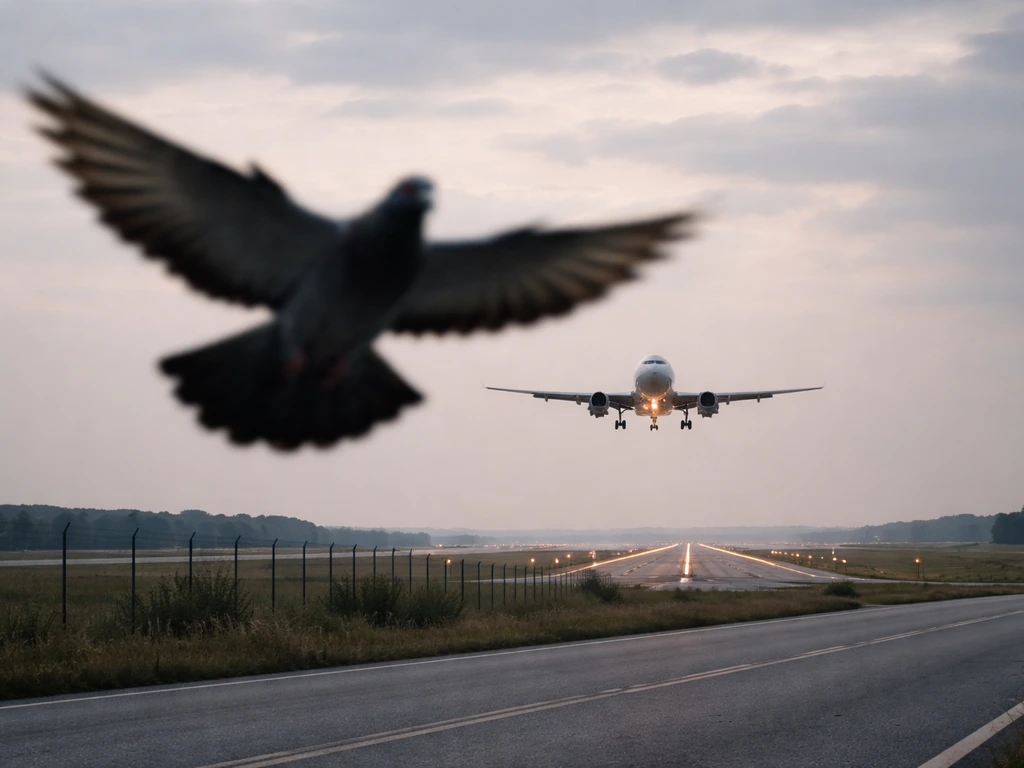
On any given commercial flight in the U.S., the chance of a bird strike is roughly 1 in 10,000 flights, though that figure shifts significantly depending on where you're flying, what time of year it is, and what phase of flight you're in. Bird strikes are common enough that the FAA has recorded well over 280,000 wildlife strike reports since 1990, but the vast majority cause no damage at all. Only about 3.blank" rel="noopener noreferrer">7% of reported strikes result in actual aircraft damage. So while a bird hitting a plane is a real, documented event that happens thousands of times per year, a strike that threatens passenger safety is genuinely rare.
What Are the Chances of a Bird Hitting a Plane?

Maya Chen
30 May 2026
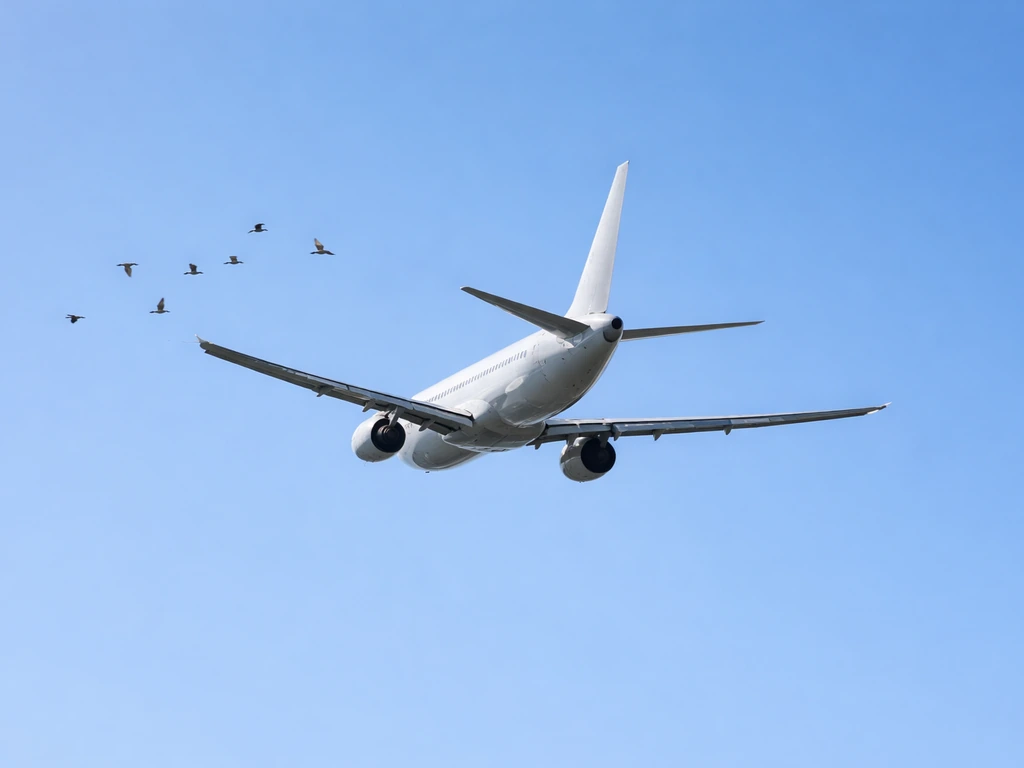
How often bird strikes actually happen
The FAA's wildlife strike database covering 1990 to 2024 is the most detailed record we have for the U.S. In recent years, reported strikes have climbed past 17,000 annually for civil aviation alone. That sounds alarming until you put it against the number of flights operating every day. The U.S. sees roughly 45,000 commercial flights per day, which works out to over 16 million per year. With around 17,000 strikes per year, the raw rate is about 1 strike per 1,000 flights, though underreporting means the real number is likely higher.
Here's the important context: most of those strikes are minor. A bird hits the fuselage, leaves a dent or feather smear, and the aircraft continues its journey. Only 3.7% of reported strikes cause damage. Strikes serious enough to force an emergency diversion, engine shutdown, or precautionary landing represent a small fraction of that already small percentage. Crashes attributable to bird strikes are extraordinarily rare. The FAA notes that from 1988 to October 2024, 499 human fatalities and 361 aircraft destroyed have been attributed to wildlife strikes globally, across both civil and military aviation combined, over a span of more than 35 years.
What actually changes the odds
The average strike rate is useful as a starting point, but the probability swings considerably based on a handful of specific factors. Understanding these makes the statistics much more meaningful.
Time of year and migration

Migration seasons in spring (March through May) and fall (August through November) are when strike rates spike sharply. Billions of birds move through North American airspace during these windows, many of them flying at night when air traffic control has no visual on them. Airports near major flyways, like those along the Atlantic and Mississippi corridors, see the biggest seasonal surges.
Time of day
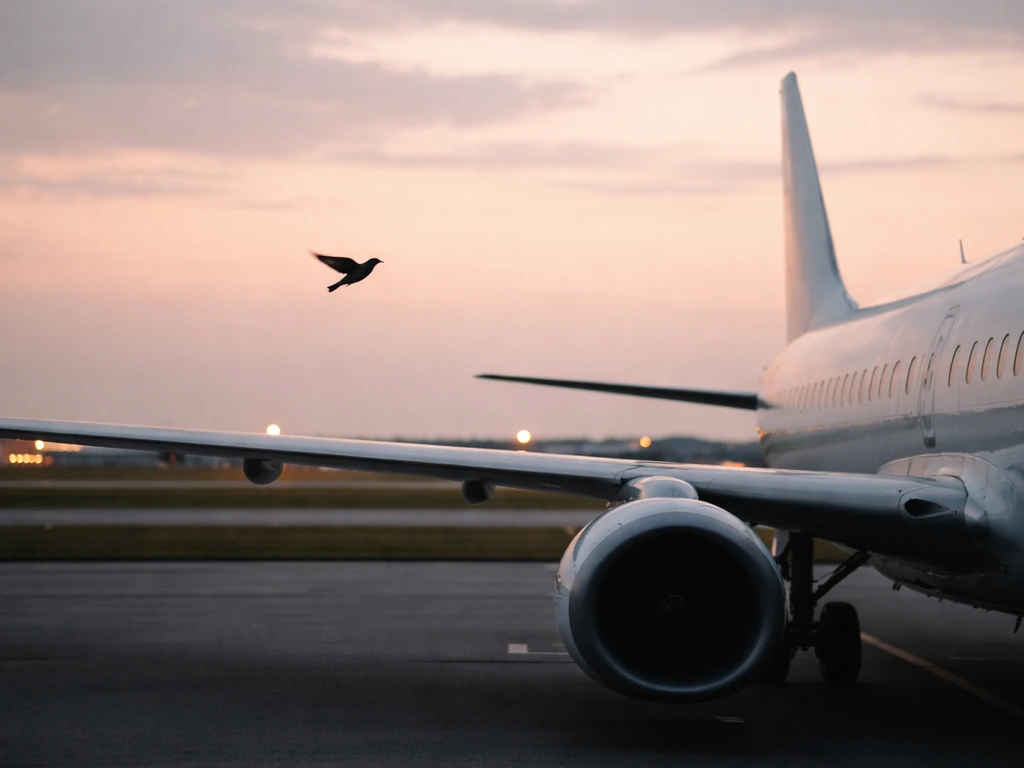
Dawn and dusk are higher-risk periods because bird activity peaks at those times and visibility for both pilots and birds is reduced. Nocturnal migrants add another layer of risk after dark. Midday flights during non-migration periods carry the lowest baseline risk from birds.
Airport location and habitat
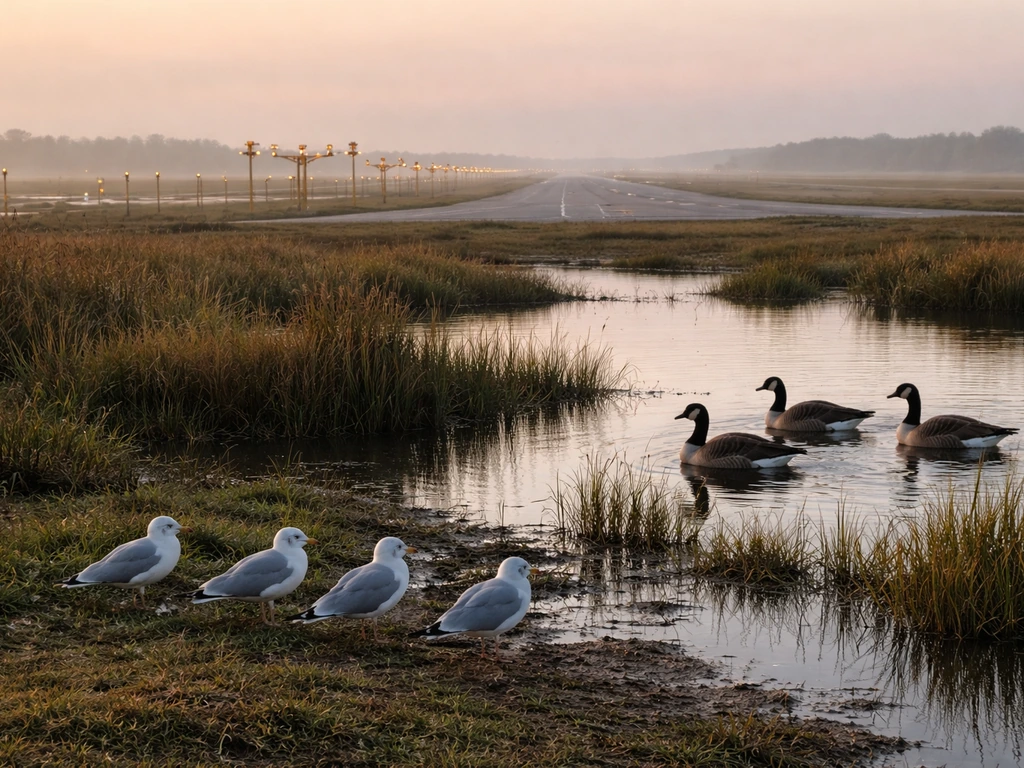
Airports near bodies of water, wetlands, open farmland, or landfills tend to attract large bird populations year-round. Gulls, starlings, Canada geese, and raptors are responsible for a disproportionate share of damaging strikes. An airport surrounded by urban development with few green corridors will generally see lower bird activity than one carved out of coastal marsh.
Flight phase
This is the most critical variable. The FAA's data from 1988 to October 2024 shows that about 61% of fixed-wing civil aircraft bird strikes happen during landing phases (descent, approach, and landing roll), and another 36% happen during takeoff run and initial climb. Only 3% occur en route at cruise altitude. Birds simply don't live at 35,000 feet. The risk is almost entirely concentrated in the first and last few minutes of flight, when the aircraft is closest to the ground and moving through the airspace birds actually occupy.
Aircraft type
Larger aircraft with bigger, more powerful engines are generally better able to tolerate a bird ingestion without catastrophic failure. Smaller regional jets and turboprops are more vulnerable because their engines have less redundancy in terms of thrust and blade tolerance. Military aircraft, particularly fast-movers flying at low altitude on training routes, face a distinct risk profile compared to commercial jets on standard approach paths.
| Factor | Lower Risk | Higher Risk |
|---|---|---|
| Season | Winter, summer | Spring/fall migration |
| Time of day | Midday | Dawn, dusk, night |
| Airport habitat | Urban/industrial surroundings | Near water, farmland, landfills |
| Flight phase | En route (cruise) | Takeoff, climb, approach, landing |
| Aircraft size | Large widebody jets | Small regional aircraft, turboprops |
What happens when a bird hits a plane

The outcome of a bird strike depends heavily on where the bird hits, how big the bird is, and the speed of the aircraft at impact. What happens if a plane hits a bird can change dramatically depending on where the bird hits and how fast the aircraft is at impact. Most strikes are low-consequence: a small songbird hitting the nose or fuselage at landing speed leaves a dent at worst. The scenarios that matter for safety involve birds entering jet engines or striking windshields and control surfaces at high speed.
Engine ingestion is the highest-stakes outcome. A large bird, or a flock of smaller birds, pulled into a jet engine can damage or destroy fan blades, cause compressor stalls, and in serious cases force an engine shutdown. The 2009 US Airways Flight 1549 incident, where both engines were disabled by Canada geese on climb out of LaGuardia, is the most famous example.
That event ended with a successful water landing and no fatalities, but it illustrates how quickly a flock encounter can escalate. Windshield strikes are another serious category, though modern aircraft windshields are certified to withstand impact from a 4-pound bird at cruise speed. Strikes to landing gear, flaps, or the tail are usually less critical but still get inspected before the aircraft flies again.
A good follow-up is to compare this with what happens when bird strike plane incidents force the flight crew to manage emergency actions and passenger safety steps.
For context on severity, the FAA separates strikes into categories: no effect, minor damage, substantial damage, and destroyed. The 96.3% of reported strikes that don't damage the aircraft represent the everyday reality. Substantial damage and destroyed events are the ones that make headlines, and they're a small tail of a large distribution.
What this means for your safety as a passenger
The honest answer is that bird strikes pose very little direct risk to passengers on commercial flights. Over 35-plus years of global data, 499 fatalities have been attributed to wildlife strikes across all of civil and military aviation. For context, global commercial aviation alone carries over 4 billion passengers per year. The fatality risk from a bird strike on a commercial flight is not zero, but it is extremely small relative to other risks people accept without thinking about them.
The risk is somewhat higher on smaller aircraft, particularly general aviation planes and turboprops on regional routes. A small Cessna hitting a large bird at low altitude has far less structural and mechanical margin than a Boeing 737. Pilots of light aircraft, especially those flying near wetlands or during migration season, take bird strike risk more seriously than most commercial airline passengers ever need to.
Crew members face a slightly elevated concern because they're operationally responsible for responding to a strike event, including assessing damage, following checklists for engine anomalies, and deciding whether to divert. For passengers, the practical guidance is simple: if you feel or hear an unusual impact during takeoff or approach and the crew initiates an abnormal procedure, stay calm and follow crew instructions.
How airlines and airports manage bird strike risk
Aviation authorities and airports take bird strike prevention seriously because even low-probability, high-consequence events are worth managing aggressively. The toolkit is well-developed and genuinely effective.
- Wildlife hazard assessments: Airports near known bird habitat are required to conduct formal assessments and develop Wildlife Hazard Management Plans under FAA Advisory Circular 150/5200-36.
- Habitat modification: Removing or managing vegetation, water features, and food sources that attract birds near runways. This includes mowing grass to specific heights that discourage loafing birds and filling in standing water.
- Active dispersal: Using pyrotechnics (bird bangers and screamers), trained falconry, laser devices, and recorded distress calls to move birds away from active runway areas.
- Radar and detection systems: Some major airports use dedicated bird radar systems (like Accipiter or Robin radar) that track bird movement in real time and alert controllers to high-risk concentrations.
- Strike reporting systems: The FAA's voluntary wildlife strike database, and mandatory reporting for air carriers under certain conditions, builds the data needed to identify high-risk airports, species, and seasons.
- Engine certification standards: FAA and EASA require turbine engines to pass bird ingestion tests (single large bird and multiple smaller birds) before certification, setting a baseline safety margin built into every commercial engine.
Airlines also train crews on bird strike recognition and response procedures. Pilots practice engine failure on takeoff scenarios that cover bird ingestion events, and there are specific checklists for suspected or confirmed strikes depending on flight phase.
What to do if you're crew or witness a strike
If you're a flight crew member and you experience a suspected bird strike, the immediate priorities are aircraft control and assessment. Follow your airline's specific abnormal procedures for the relevant phase of flight, assess engine parameters for any anomaly, and declare an emergency if warranted. After landing, report the strike through your airline's safety reporting system and, in the U.S., submit a report to the FAA's wildlife strike database. Reporting is critical because the data feeds directly into risk analysis and prevention planning.
If you're airport operations personnel or ground crew and you observe bird activity near active runways, the protocol is to notify the tower immediately so controllers can issue wildlife advisories to aircraft. Document the species if possible (or at least the size and flock density), the location on or near the field, and the time. This feeds into the airport's wildlife management records and can trigger a dispersal response.
As a passenger, your role is limited but clear: if the flight crew announces a diversion or emergency landing following an unusual event on takeoff or approach, assume the brace position if instructed and follow all crew directions without delay. Do not try to gather belongings. A bird strike that forces an emergency landing is survivable in the vast majority of cases when passengers respond correctly to crew instructions.
- Flight crew: Follow abnormal/emergency checklist for the relevant flight phase.
- Flight crew: Report strike to ATC, assess damage, decide whether to continue or divert.
- Flight crew: File an FAA wildlife strike report after landing (FAA Form 5200-7).
- Airport ops: Notify tower immediately of bird activity near runways.
- Airport ops: Document species, location, flock size, and time.
- Airport ops: Initiate dispersal per the Wildlife Hazard Management Plan.
- Passengers: Follow crew instructions; brace if directed; leave belongings behind.
Myths worth clearing up
The biggest misconception about bird strikes is that they routinely cause crashes. They don't. The overwhelming majority of the thousands of strikes per year result in no damage and no operational disruption. Even damaging strikes rarely escalate to the point of threatening the aircraft. Events like the Miracle on the Hudson are remarkable precisely because they are exceptional, not because they represent typical outcomes.
A related myth is that any bird can bring down a plane. In reality, bird mass matters enormously. A 1-ounce warbler hitting a windshield at 150 knots is a very different physics problem from a 12-pound Canada goose entering an engine at the same speed. The FAA and EASA use specific bird weight categories in engine certification testing because mass is the primary driver of damage potential. Small birds, which make up the majority of strikes by volume, rarely cause significant damage to large aircraft.
Some people conflate bird-window collisions (a major cause of bird mortality documented in the hundreds of millions annually in North America) with aircraft bird strikes. These are distinct phenomena. The bird-window problem is primarily a conservation issue affecting wild birds flying into glass buildings. Aircraft bird strikes are an aviation safety issue with different species, different settings, and a completely different risk framework.
Another misconception is that bird strikes only happen at takeoff. The data says otherwise: 61% of reported strikes occur during descent, approach, and landing roll. Approach and landing are actually the higher-frequency phase for strikes, though climb strikes tend to be higher energy and therefore potentially more damaging. And separately, the idea that en-route cruise altitude is risky from birds is essentially wrong. Only 3% of strikes happen en route, and most of those occur at lower altitudes, not at typical cruise levels of 30,000 to 40,000 feet.
Finally, some passengers worry that modern aircraft aren't designed with bird strikes in mind. The opposite is true. Bird ingestion certification requirements are built into engine design standards, windshields are tested against bird impact, and airports maintain active wildlife management programs specifically to reduce strike frequency. The aviation system treats bird strikes as a managed, ongoing risk, not an afterthought.
FAQ
How do I interpret “1 in 10,000 flights” if airlines fly thousands of times a year?
That number is a probability estimate, not a promise for any single journey. With millions of flights operating annually, you will see many strikes each year even if the chance per flight is low, especially during spring and fall migration and during approach and landing.
Does the risk apply equally to every airport and route?
No. Airports near wetlands, coasts, open farmland, or landfill areas usually have more birds, while dense urban areas with fewer open habitats tend to have fewer. The time of day and season can matter as much as the route itself.
If only 3.7% of strikes cause damage, can a “no damage” strike still lead to delays or inspections?
Yes. Even when a strike causes little or no visible damage, the aircraft is typically inspected if the crew suspects impact, heard a sound consistent with ingestion, or saw unusual engine indications. Inspections can lead to delays without the event being treated as a safety emergency.
Do bird strikes happen more during takeoff, or during landing and approach?
Approach and landing phases usually account for the larger share of reported strikes (descent, approach, and landing roll). Climb and takeoff run can be higher stakes because engine power is high and the aircraft is accelerating, but they happen less often than the approach and landing window.
Are passengers ever at risk if a strike doesn’t affect the engines or windshield?
Direct passenger danger is uncommon, but any abnormal impact can still require operational changes such as speed adjustments, additional checks, or a precautionary diversion. The key safety driver is whether the strike affects critical systems, especially engines, windshields, control surfaces, or landing gear.
What matters more for severity, bird size or the aircraft speed?
Both matter, but aircraft speed at impact strongly influences energy and potential damage, while bird mass drives how forcefully the bird can be ingested or impact structures. High-speed strikes at vulnerable points (like engines or windshields) are the more serious combination.
Is there a meaningful difference between commercial jets and small regional aircraft for bird strikes?
Yes. Smaller aircraft and many turboprops can have less mechanical and thrust margin, so the same bird ingestion could be harder to absorb. That’s why pilots flying general aviation and regional routes near bird-heavy areas often think about the risk more directly.
If a flight announces an “abnormal procedure” after an impact, what should I do immediately?
Stay calm, keep your seatbelt on, and follow crew instructions without trying to stand or retrieve belongings. The actions you’re likely to be asked to take are limited, but delayed compliance can interfere with cabin safety procedures.
How are airport teams supposed to respond when birds are seen near runways?
They generally notify air traffic control right away so wildlife advisories can be issued, and they may document species, approximate size or flock density, location, and timing. That information helps the airport refine runway-specific wildlife management and reduces repeat exposure.
Why does reporting bird strikes matter if they often cause no damage?
Because patterns are what prevention programs rely on. Accurate reports help identify hotspots by species, season, and flight phase, which then informs operational changes like dispersal actions, habitat management, and more targeted risk assessments.
Can birds hitting aircraft windows be confused with bird strikes into engines?
They are different event types. Window strikes are primarily a conservation and building-glass issue in the broader “bird-window collision” context, while aviation bird strikes involve aviation-specific certified tolerances and usually become a maintenance or safety inspection issue only when aircraft systems are affected.
Next Article
What Happens When a Bird Strikes a Plane
Learn what happens in a bird strike, likely damage, safety inspections, and real health risks vs myths.