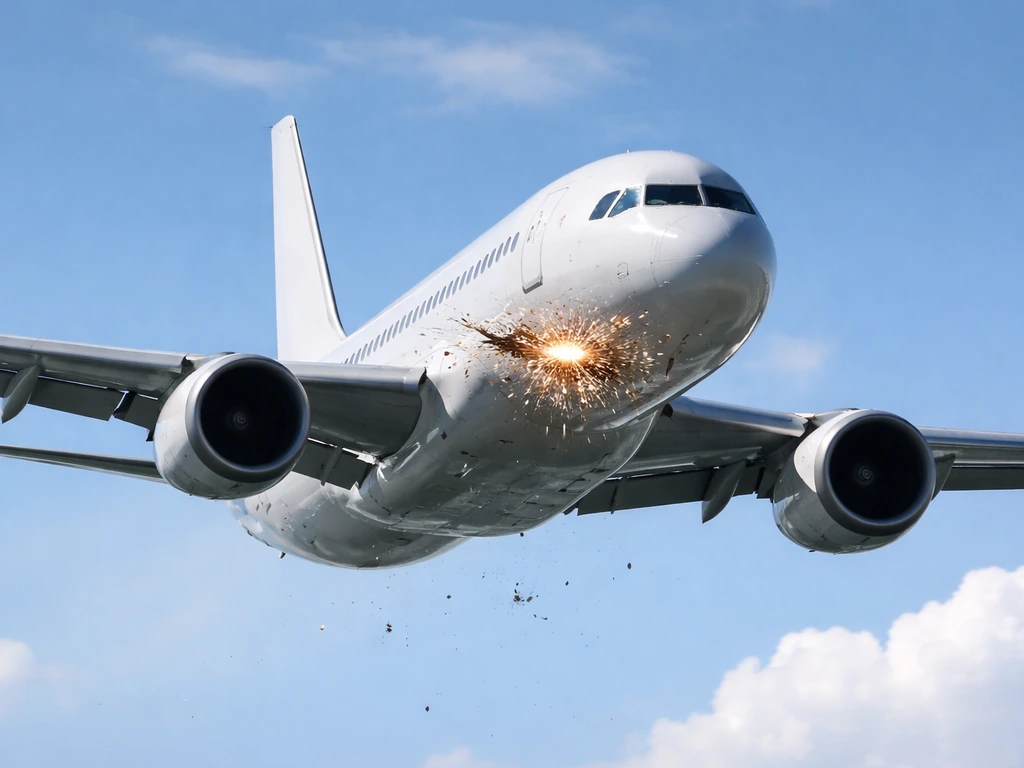
Hitting a bird is not bad luck. For pilot-facing guidance on what to do after a bird or wildlife strike, including reporting once you have landed safely, AOPA provides specific instructions report once you’ve landed safely. That is the short answer. The longer answer is that "bad luck" is a superstition with no causal mechanism behind it, but a bird strike can involve real, practical concerns worth taking seriously: your safety, the bird's survival, and the risk of biological contamination. Those things deserve attention. The omen stuff does not.
Is Hitting a Bird Bad Luck? What to Do After a Crash

Maya Chen
4 Apr 2026
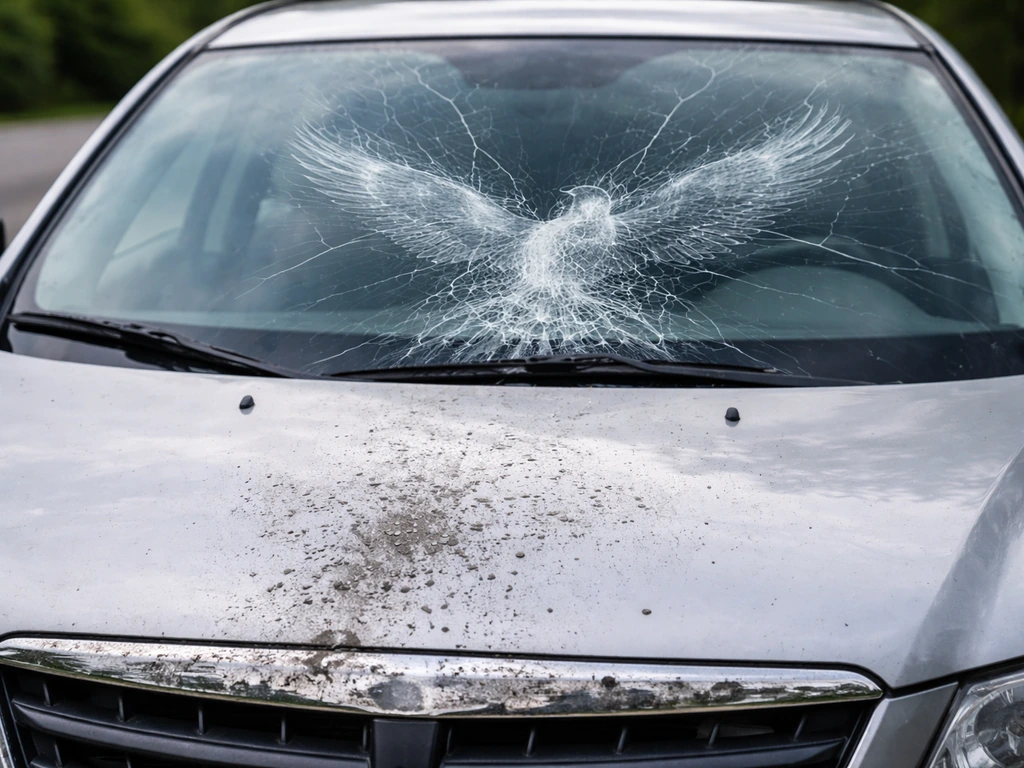
Myth vs. reality: is hitting a bird really "bad luck"?
Bird-related omens have been around for centuries. Audubon has catalogued over a dozen bird superstitions that cultures have passed down, everything from magpies predicting misfortune to specific species foretelling death. The Chicago Ornithological Society echoes the same point: these beliefs are cultural traditions, not science-based explanations for real outcomes. They spread because they feel meaningful, not because they predict anything.
The "bad luck" framing that applies to hitting a bird while driving, running one over, or watching one fly into your window has the same roots. If you are wondering whether it is bad luck if a bird hits your windshield, the honest answer is that no credible evidence ties the event to future misfortune. What it does do is create a situation you need to handle practically and calmly.
Aviation safety provides a useful comparison here. The Air Force Safety Center frames bird strikes as operational hazards to be managed through reporting and procedures, not as events with mystical significance. That is a healthier frame for anyone on the ground too: something happened, now what do you do about it?
What to do right after hitting a bird
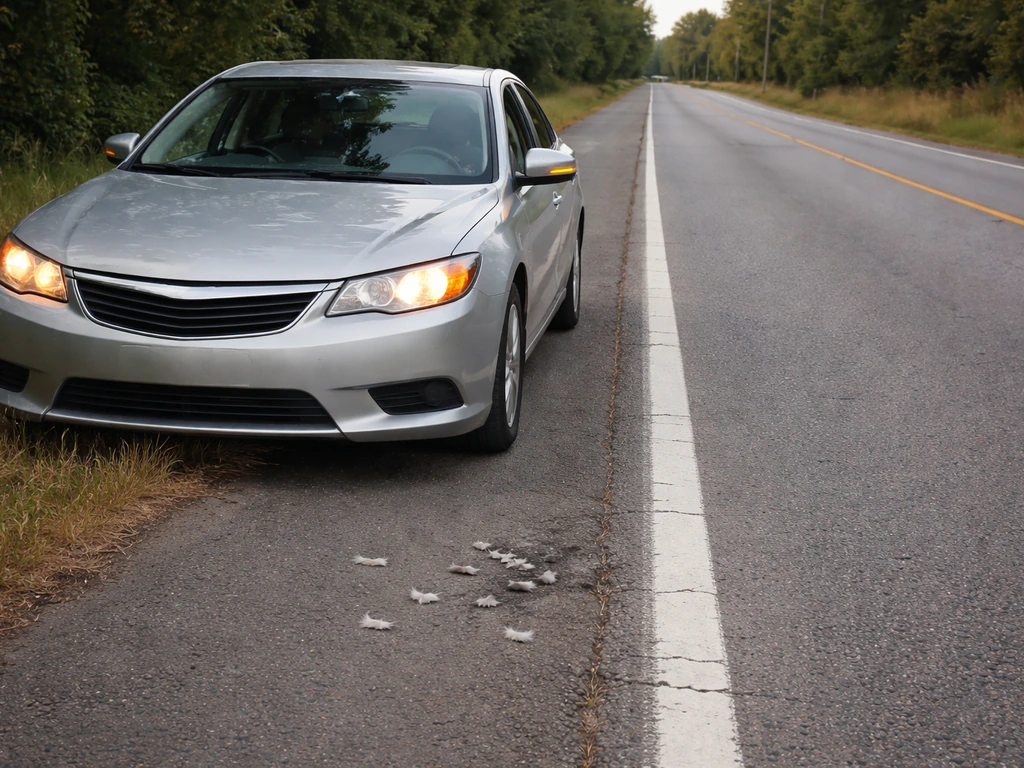
If you are driving and you hit a bird, pull over safely when it is possible to do so. Check your vehicle for damage, particularly to the windshield, hood, and grille. A larger bird like a hawk, goose, or turkey vulture can cause real structural damage, and anything that cracks your windshield affects visibility and integrity.
If the bird is in or near the road and you want to check on it, approach carefully. Do not put yourself in traffic to do it. If you can reach the bird safely, resist the urge to pick it up with bare hands. The CDC recommends using disposable gloves or an inverted plastic bag over your hand before touching any dead or injured wild bird. After handling, avoid touching your face and wash your hands thoroughly with soap and water as soon as possible. If soap is not available, an alcohol-based hand sanitizer works as a temporary measure.
If the bird appears dead and you need to move it off the road, double-bag it in plastic bags, seal them, and place the package in a sealed container or garbage receptacle. Do not leave biological material in your vehicle.
Health and safety risks: what contact actually means
The real risk with a dead or injured wild bird is not bad luck. It is biological exposure. Wild birds can carry West Nile virus, avian influenza, and other pathogens. The CDC notes that a small number of H5N1 cases have been linked to close contact with infected wild birds or their feathers and feces without proper protective equipment. The USGS adds that while human infection under normal handling conditions is unlikely, you should still protect yourself with gloves and wash your hands immediately afterward.
WildCare, a wildlife rehabilitation organization, recommends wearing both gloves and eye protection when handling any wild animal. That might feel like overkill for a bird you clipped on a highway, but it is the right instinct if you are going to be handling it closely. At minimum: no bare hands, no face-touching, and wash up afterward.
Dead bird reporting also serves a public health purpose. State agencies like Michigan's MDARD and Oregon's ODFW track dead bird reports to monitor for West Nile virus and other diseases in the environment. South Carolina's Department of Public Health makes the same request. Reporting a dead bird you have found is not an overreaction; it is data that helps wildlife and public health managers do their jobs.
Does the bird survive, and can you help?
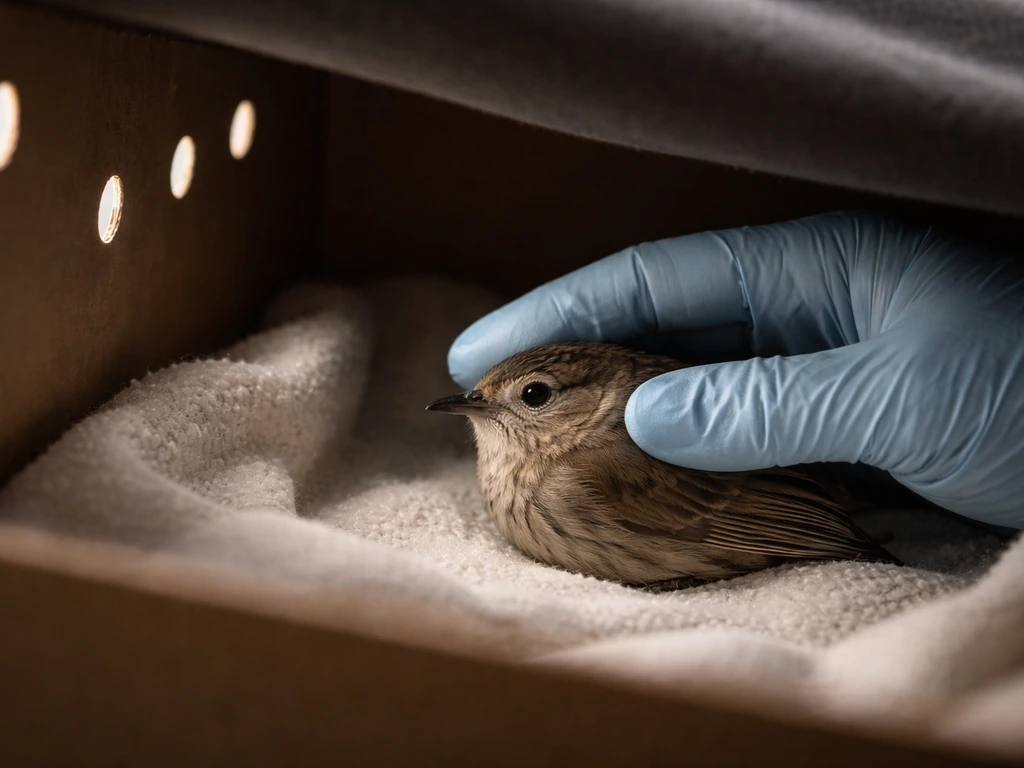
Sometimes a bird hit by a vehicle or glancing off a surface is stunned rather than dead. Audubon notes that birds involved in window collisions can appear dead when they are actually in shock, and many recover. The same logic applies to a low-speed vehicle graze. If the bird is breathing and upright but not flying, it may need time to recover.
If you want to help a stunned bird, Tufts Wildlife Clinic advises wearing gloves, gently covering the bird with a towel, and keeping its wings tucked against its body to reduce stress and prevent further injury. Place it in a cardboard box or paper bag with ventilation, somewhere dark and quiet, away from pets, children, and traffic noise. Think Wild, a wildlife hospital, specifically advises against offering food or water unless a licensed rehabilitator tells you to do so.
The goal is to create a calm, safe holding space and then get the bird to a licensed wildlife rehabilitator as quickly as you can. Do not attempt to treat it yourself.
Common scenarios: window strike, moving vehicle, or running over
Not every "hitting a bird" situation is the same, and the right response depends on how it happened.
| Scenario | Likely bird outcome | Key immediate steps |
|---|---|---|
| Bird strikes a house window | Stunned, may recover with rest | Box the bird, dark/quiet space, call a rehabber |
| Bird hits your windshield while driving | Often fatal at speed; may be stunned at low speed | Pull over safely, assess with gloves, contact rehabber if alive |
| Bird is run over by a tire | Usually fatal | Do not handle without gloves; report if required locally |
| Bird strikes a building window at work/public | Varies; often stunned | Use gloves, box it, or call animal control/wildlife rehab |
Window collisions deserve a specific note. Audubon Great Lakes points out that window strikes can injure even apparently healthy birds, and the harm is not always visible immediately. If you have ever searched whether it is bad luck when a bird hits your window, the real issue is not superstition but the bird's welfare and what to do next. Running over a bird at highway speed is a different scenario entirely and almost always fatal, so the focus there shifts from rescue to safe disposal and contamination control.
When to call for help and who to contact
Call a licensed wildlife rehabilitator any time a bird cannot fly, has visible injuries, or is unresponsive but alive. Back to the Wild, a wildlife rehabilitation center, recommends calling a local rehab center rather than attempting improvised care at home. Your state's fish and wildlife agency website typically has a directory of licensed rehabilitators organized by region, and many wildlife rehab organizations have phone hotlines.
Contact animal control when the bird is in a dangerous location, such as a busy road or near a domestic animal that could cause further harm. If a cat or dog has had the bird in its mouth, California wildlife guidance specifically says the bird must be seen by a rehabilitator, because puncture wounds from animal bites carry serious infection risks even when not visible.
For dead birds, check whether your local or state public health department or wildlife agency has a reporting line. Oregon and South Carolina both run dead-bird reporting programs tied to West Nile virus surveillance, and similar programs exist across the country. You do not have to report every single bird, but if you notice multiple dead birds in one area, that is worth flagging.
Preventing it from happening again
Driving habits that reduce bird strikes
Birds often fly low across roads at dawn and dusk, when light is poor and they are most active. Slowing down in areas with heavy vegetation on both sides of the road, near water, and in known wildlife corridors reduces both strike frequency and severity. If you see a bird perched near the road edge, ease off the gas rather than assuming it will move in time.
It is also worth knowing what the odds are of hitting a bird while driving so you can put the risk in perspective. Bird strikes are more common than most drivers realize, especially in rural areas and during migration seasons, which makes defensive driving around bird habitat a genuinely useful habit rather than overcaution.
Making windows safer
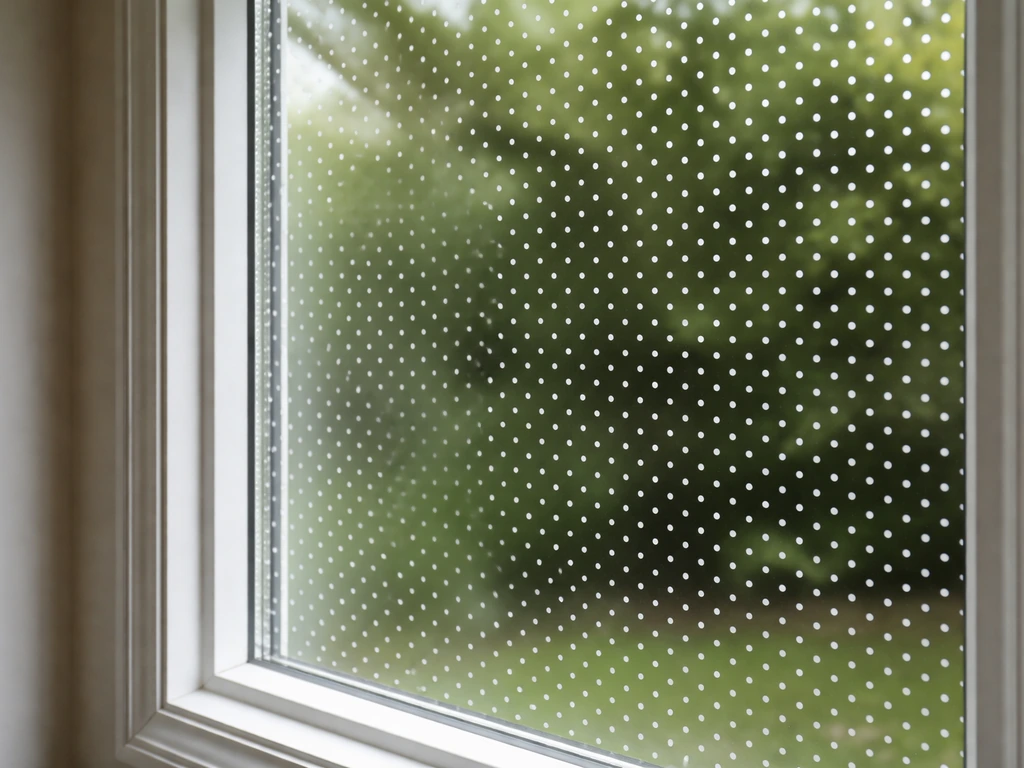
Window strikes on homes and buildings are preventable. The U.S. Fish and Wildlife Service recommends bird-safe window treatments as part of their Bird-Friendly Home guidance, and the American Bird Conservancy lists several options that work: exterior insect screens, tempera paint patterns applied directly to glass, closely spaced decals, and commercially available products. The key word in all of this is "closely spaced." A single sticker in the center of a pane does almost nothing.
Audubon recommends vinyl dots arranged in dense patterns, with spacing tight enough that birds perceive the glass as a solid barrier rather than open air. Hoy Audubon Society adds a lighting angle: covering exterior lights directed upward reduces the disorientation that draws migrating birds toward buildings at night, which is one of the leading causes of mass collision events in cities during spring and fall migration.
If you are thinking about prevention more broadly, the question of whether killing a bird is bad luck comes up in a similar context, and the answer follows the same logic: the folklore is just that, but the wildlife conservation concern is real. Reducing bird mortality through practical steps, whether in how you drive, how you treat your windows, or how you respond when an impact does happen, is genuinely worthwhile. Not because of what it means for your luck, but because birds matter and the steps are not hard.
FAQ
If I hit a bird and it flies away, do I still need to worry about disease or damage?
Usually the immediate disease risk is lower if you did not handle the bird or contact any feathers or bodily fluids. Still check your vehicle for windshield or hood damage, and if you had to touch the bird or clean up debris, avoid touching your face and wash your hands afterward.
What should I do if the bird hit my car at speed and I cannot safely pull over right away?
If it is unsafe to stop, prioritize driving to a safe location first, then assess damage and clean up debris there. Do not search for the bird in traffic, and avoid direct handling until you can use gloves (or an inverted plastic bag) and a proper disposal method.
Should I report a bird strike I witnessed but did not find a body?
For most locations, reporting is mainly for dead or multiple found birds, but if you see several birds collapsing or dead in a short span, flag it to your state or local wildlife or public health contact. If the bird is only injured and you can safely contact a rehabilitator, that is often more useful than “reporting” the incident.
Is it safe to put a dead bird in the trash if I do not have gloves?
Gloves are strongly preferred, but if you truly must, use an alternative barrier like an inverted plastic bag as a glove. Double-bag the bird, seal the bags, and then wash hands thoroughly. If you cannot safely bag it without bare contact, wait until you can.
If my windshield is cracked, can I just drive and get it fixed later?
Avoid driving if the crack affects your visibility or makes the windshield unstable. Even a “small” crack can spread, and a bird strike can create an area of weakened glass. When in doubt, get the vehicle inspected promptly by a windshield repair or auto glass professional.
What if a cat or dog brought the bird to me, but I did not see it bite?
Treat it as higher-risk. Puncture wounds and contamination can occur even if you cannot see obvious injury. Contact a licensed wildlife rehabilitator, and for yourself, wash hands and avoid touching the bird’s mouth area or any bodily fluids.
Can I relocate a bird that is injured or stunned, for example off the road shoulder?
You can move it only if it is safe, using gloves and minimizing handling time. Keep the bird in a ventilated box or paper bag, keep it warm but not hot, and get it to a rehabilitator quickly. Do not attempt to “walk it off” or drive it long distances yourself without guidance if it is severely injured.
What are safer first steps for a bird I find alive but not flying?
Create a calm holding space: gloves, gently towel-cover the bird, reduce stress, and place it in a dark, quiet, ventilated container away from pets and children. Do not give food or water unless a licensed rehabilitator instructs you, and call for intake as soon as possible.
How do I handle cleanup if I find feathers or blood on the driveway or inside my garage?
Wear disposable gloves, avoid sweeping dry material into the air, and use disposable towels for initial cleanup. Dispose of materials in sealed bags, then wash hands and any tools with soap and water. If you used your vacuum, empty and clean it carefully, and consider using respiratory protection if you generate dust.
Does “bad luck” change anything about what I should do next?
No, but a calm, practical response matters. Focus on safety, vehicle integrity, and infection-prevention steps. If a bird is injured, unresponsive, or cannot fly, the best “next step” is contacting a licensed wildlife rehabilitator rather than relying on superstition.
Next Article
Bird Causes Plane Crash? Risk, Mechanisms, Myths, Prevention
Whether bird strikes can cause plane crashes, how they happen, real risk data, debunked myths, and prevention steps