
No, a bird hitting your window is not bad luck. It is a visibility problem, plain and simple. The U.S. Fish & Wildlife Service frames window collisions as a design and perception issue: birds cannot reliably distinguish glass from open air, especially when a window reflects sky or vegetation. There is no credible evidence linking a bird strike to misfortune, death, or any spiritual outcome. What it does signal is that your windows look dangerously passable to birds, and that is something you can actually fix.
Is It Bad Luck If a Bird Hits Your Window? What to Do

Maya Chen
10 Apr 2026
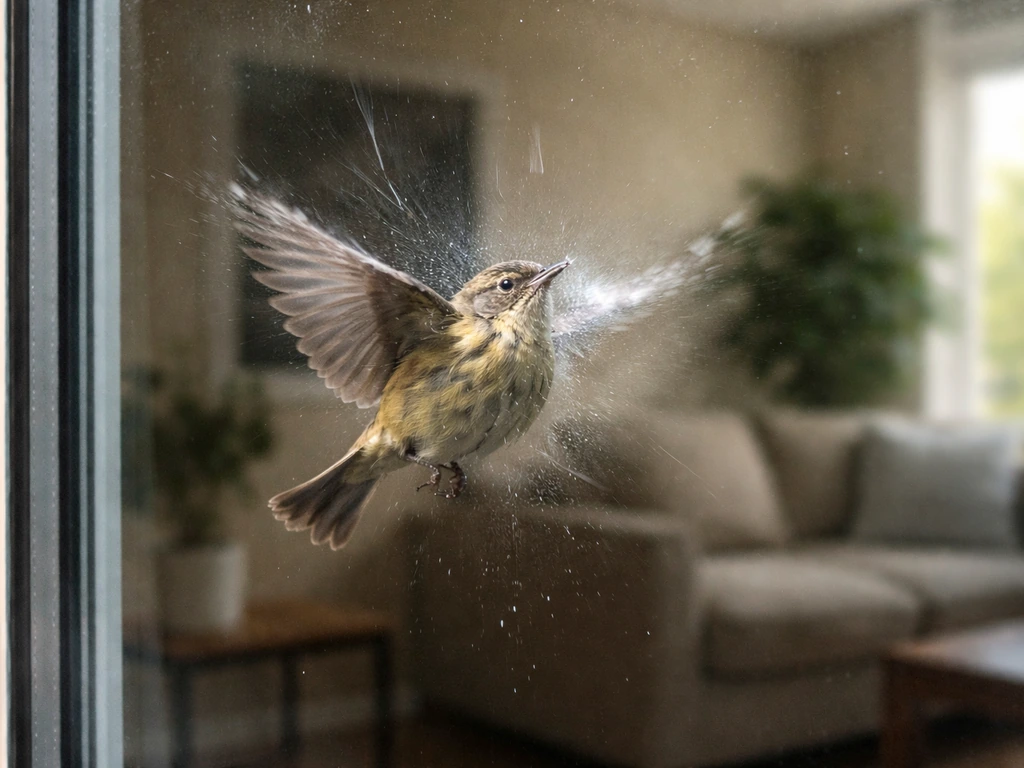
What to believe: bad luck vs myths
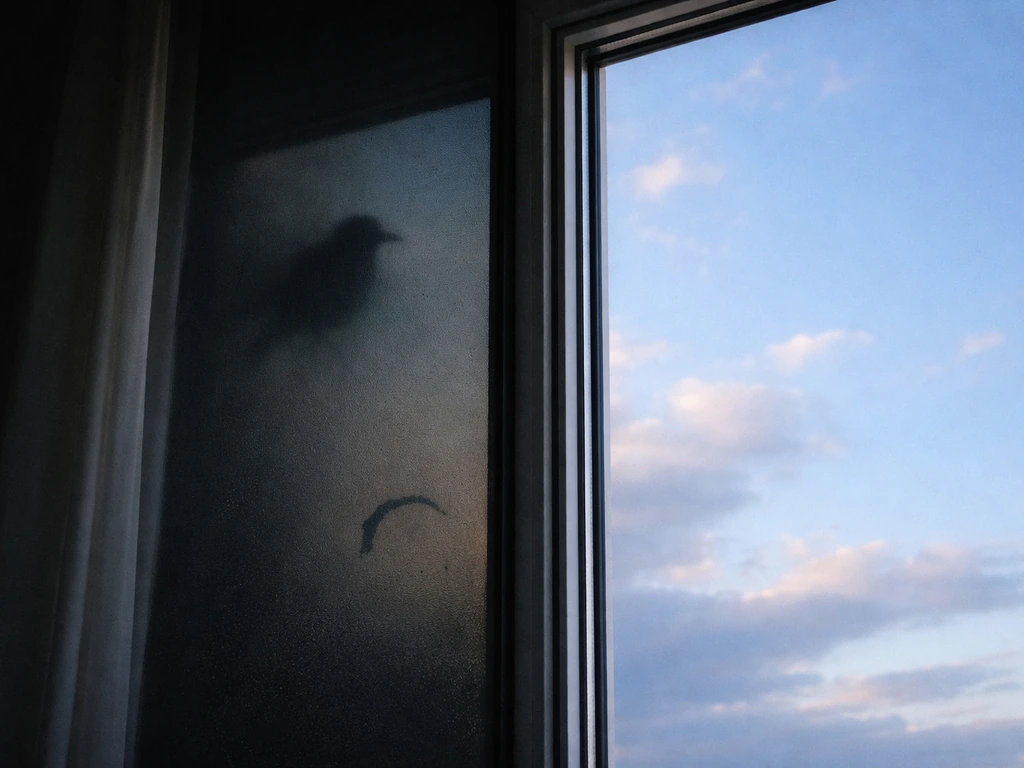
The idea that a bird hitting your window predicts death or disaster is folklore, full stop. These beliefs come from older cultures that used natural events to explain the world before science was available to do it better. A bird hitting a window is no more an omen than a bird flying into a tree branch or a car bumper. The event has a mechanical explanation, not a supernatural one.
If you are searching this because you are anxious about what it means, you can relax. The same collision that might have felt ominous to someone a few centuries ago is now understood as a predictable outcome of putting reflective glass in a bird's flight path. The only thing it predicts is that more birds may hit the same spot if you do not take action.
This question sits in a broader pattern of bird-related superstitions. If you have also wondered about whether hitting a bird is bad luck in other contexts, the answer follows the same logic: these are natural events with physical causes, not omens.
Common reasons birds hit windows
Birds hit windows for a few well-understood reasons, and reflection is the main culprit. When a window mirrors trees, shrubs, or open sky, the bird sees what looks like a clear flight path. It does not register the glass as a barrier until impact. This is especially common on windows that face gardens or sit at angles that catch the sky.
Nighttime collisions have a different driver: light pollution. As Audubon Pennsylvania has documented, artificial lighting can make windows reflective or transparent at night, drawing in migrating birds that navigate by stars and natural light cues. Buildings that leave interior lights on become traps during spring and fall migration peaks, when millions of birds travel at night and are already fatigued. This is not mystical, it is physics and bird biology.
Sometimes a bird hits a window repeatedly because it sees its own reflection and treats it as a rival. USGS explains that repeated strikes can happen because birds see reflections and/or perceive a territory threat, and it recommends placing effective patterns on the outside of the window using a 2-inch by 2-inch grid so birds can’t find a gap to fly through repeatedly because it sees its own reflection and treats it as a rival. This is common during breeding season. The bird is not trying to get inside, it is defending its territory from what it perceives as another bird. These strikes are usually lower-speed than panicked flight impacts.
Low-rise homes actually present higher collision risks than tall skyscrapers in many cases, because windows at ground and mid-levels sit directly in birds' natural flight zones and are more likely to reflect the habitat birds are actively using.
Is there any real risk to you or the bird
The risk to you personally is minimal in almost every scenario. The CDC notes that health concerns around birds are primarily linked to accumulated droppings, particularly when those droppings are disturbed and spores become airborne. The Illinois Department of Public Health specifically states that fresh bird droppings have not been shown to present a health risk. A single collision event, even if the bird leaves a small smear on the glass, does not create a meaningful exposure risk. Clean the spot with gloves, dispose of materials, wash your hands, and you are done.
The real risk in a window strike is to the bird. Even a strike that looks minor can cause internal bleeding, brain injury, or spinal trauma. A bird that is sitting quietly after impact may look fine but could be in serious trouble. Do not assume stillness means recovery.
What to do right now after a window collision
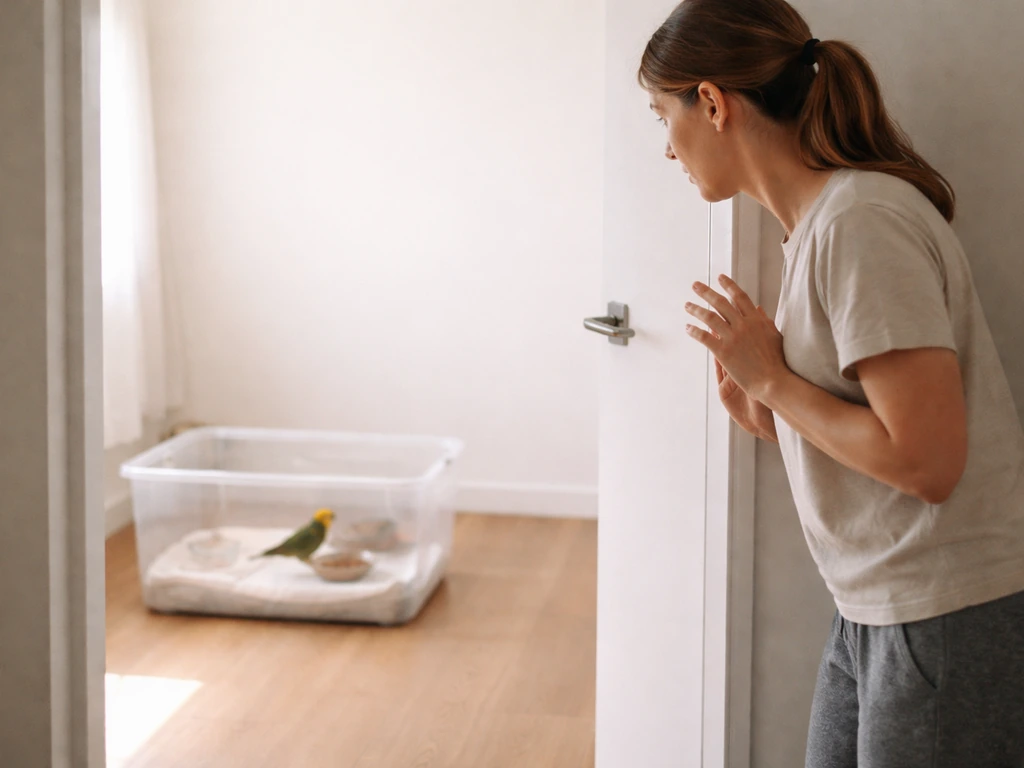
The first thing to do is get the bird into a safe, quiet space as quickly as possible. Tufts Wildlife Clinic recommends placing a stunned bird in a dark, quiet container like a shoebox lined with a small towel or paper so the bird has something to grip. Keep the lid on, keep the box away from pets and children, and put it somewhere warm but not hot. Do not try to give the bird food or water, this is a common instinct that can actually cause harm.
Then observe from a distance. The USFWS guidance suggests giving the bird time to recover on its own if it shows no obvious distress, but also states clearly that if the bird shows labored breathing or cannot hold its head up, you should contact a licensed wildlife rehabilitator right away rather than waiting.
St. Francis Wildlife advises making sure the box setup allows the bird to grip the bottom surface, since a smooth surface can add stress to an already disoriented animal. A folded paper towel works fine for this.
- Put on gloves before handling the bird.
- Gently place the bird in a shoebox lined with a paper towel or soft cloth for grip.
- Close the lid and keep the box in a quiet, warm spot away from pets.
- Do not offer food or water.
- Check on the bird every 30 minutes without opening the box unnecessarily.
- If it has not recovered and flown off within about an hour, or if it shows signs of distress like drooping wings or labored breathing, call a wildlife rehabilitator.
Audubon also makes an important point: even if the bird seems alert, a lay person may miss internal injuries that a rehabilitator would catch. Getting a professional involved is almost always the better choice over waiting it out at home.
How to prevent repeat collisions
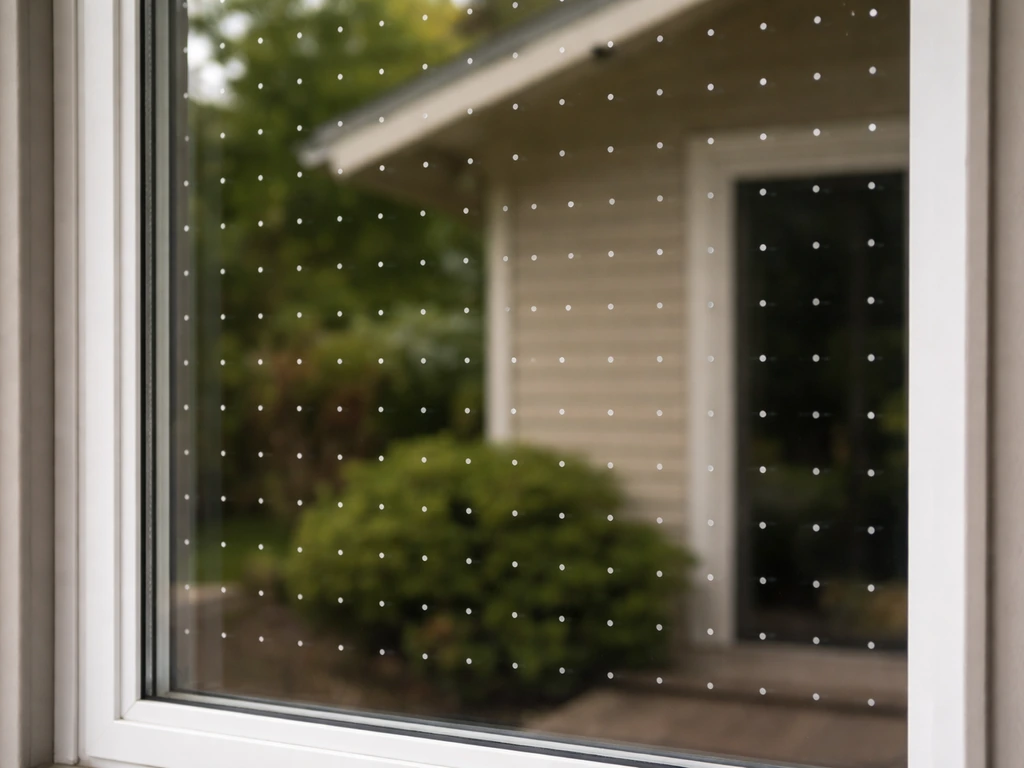
Prevention is where you can make a real difference, and most solutions are inexpensive and easy to install. The core goal is to break up reflections on the exterior surface of the glass so birds can perceive it as a barrier rather than open space.
Window treatments that actually work
External decals, films, and tape are the most common DIY solution. The key detail is placement and spacing: the USFWS recommends placing markers on the exterior surface with no more than two inches between each marker. That spacing matters because birds will try to fly through any gap they perceive as passable. Decals spread two inches apart give birds a consistent visual cue that the entire surface is a barrier, not a frame with open holes.
WindowAlert decals, for example, should be placed on the outside of the glass for best results and replaced roughly every four months as UV exposure fades them. Be aware that hawk silhouette decals alone rarely work well because they leave large unmarked gaps that birds still fly into.
External screens are one of the most effective options because they reduce reflections significantly by creating a textured surface in front of the glass. Awnings, shutters, and exterior shading do the same job by cutting down on the reflected sky or vegetation image that fools birds.
If you need a temporary fix while you source better materials, Tufts Wildlife Clinic suggests taping paper or cardboard to the inside of the pane. It is not pretty but it works immediately by eliminating transparency and reflection from that section of glass.
Lighting and migration timing
For nighttime strikes, the most effective action is to turn off interior lights near windows during spring and fall migration, roughly March through May and August through November. USU Extension recommends closing drapes and blinds at night during migration periods as an additional step. These simple habits remove the light cues that draw birds toward glass in the dark.
The scale of what light can do is striking: a single building in Chicago once killed nearly 1,000 migrating songbirds in one night during peak migration conditions, largely because of low-slung building lights combined with window-lined walls and a weather pattern that forced birds low. That is an extreme case, but it illustrates why lighting really matters.
| Prevention Method | How It Works | Cost Level | Effort Level |
|---|---|---|---|
| Exterior decals or film (2-inch spacing) | Breaks up reflection so glass reads as a barrier | Low | Low |
| External insect screens | Creates textured surface that reduces reflection | Low to medium | Medium |
| Awnings or exterior shutters | Blocks reflected sky and vegetation from glass | Medium to high | Medium |
| Temporary paper or cardboard inside | Eliminates transparency immediately | Minimal | Very low |
| Closing blinds or curtains at night | Reduces interior light that makes glass visible at night | Free | Very low |
| Turning off lights near windows during migration | Removes nighttime light cues that attract birds | Free | Very low |
When to get help (injury, persistent birds, health concerns)
Call a licensed wildlife rehabilitator if the bird shows any of the following after the collision: drooping or asymmetrical wings, inability to stand, labored or open-mouth breathing, eyes that will not stay open, or failure to fly after about an hour in the quiet box. These are signs of injuries that need professional treatment, including anti-inflammatory medications and imaging that you cannot provide at home.
If a bird keeps hitting the same window repeatedly and it is not the same individual defending its reflection, you likely have a design problem that is pulling birds in from the surrounding habitat. That is a prevention problem, not a medical one. Review the solutions above and prioritize exterior treatment on that specific window.
If you have concerns about health risks, keep them in perspective. The main scenario where bird-related illness becomes a real concern is when accumulated droppings are disturbed, creating airborne particles. The CDC's guidance on histoplasmosis prevention focuses on exactly that: preventing accumulation and avoiding dust generation when cleaning. A single window strike with minimal contact does not meet that threshold, but basic hygiene, gloves and handwashing, is always the right call.
For anyone who has also encountered birds in other collision contexts, you might find it useful to know what the odds are of hitting a bird while driving, since the causes and aftermath differ meaningfully from window strikes at home.
If the collision happened on a vehicle rather than a building window, the situation is a little different. Understanding whether it is bad luck if a bird hits your windshield follows the same myth-busting logic but involves different prevention steps.
And if the bird did not survive the impact, some people feel genuinely upset and worried about what that means. The question of whether killing a bird is bad luck comes up in exactly that context, and the answer is the same: what happened was physical, not fated.
The bottom line is this: a bird hitting your window is a solvable problem, not a sign of anything. Treat the bird, treat the window, and you have done everything that actually matters.
FAQ
Should I cover the window or keep it as-is after a bird strike to prevent another hit?
Start preventing immediately. If you can, do a quick temporary barrier (paper or cardboard on the inside, or move a screen/curtain) right away, then add a proper exterior solution (decal film, markers, or exterior screens). Repeated hits often happen the same day because the bird is following the same perceived flight path.
How long should I wait before deciding the bird needs a wildlife rehabilitator?
If the bird cannot hold its head up, has labored breathing, is drooping or lying in an abnormal position, or fails to fly after about an hour in a quiet, dark recovery setup, contact a licensed wildlife rehabilitator. If it looks alert, still call if you notice subtle asymmetry (one wing lower, uneven posture), because internal injuries can be missed at home.
Is it safe to touch the bird to move it, and what if the bird is bleeding?
Use gloves if you need to handle the bird, because contact can involve stress, parasites, and blood. If there is visible bleeding or the bird is disoriented, avoid prolonged handling and prioritize getting it into a dark container quickly, then transfer to a rehabilitator as soon as possible.
If the bird flies away after the collision, do I still need to worry about injury or clean-up?
If it flies off strongly and looks coordinated, injury is less likely, but it can still be injured. Check for a clear second collision or continued weakness nearby. For clean-up, wipe any smear or debris from the glass with gloves and wash hands afterward, especially if you are dusty or cleaning other surfaces.
Can I use the same decals or markers on both the inside and outside of the glass?
Most effective collision prevention focuses on what birds see before impact, which is the exterior surface. Inside-only applications can work in some situations but often underperform because reflections or transparency can still fool birds. If you do place anything inside temporarily, plan to upgrade to an exterior approach for long-term results.
What’s the common mistake with DIY window markers spacing?
The frequent error is leaving larger unmarked gaps. Birds will attempt flight through any perceived opening, so consistent coverage matters. Follow the tight spacing concept (small gaps across the whole visible pane area) rather than placing a few markers far apart.
Do hawk silhouette decals work, and how can I tell if they are failing?
They often fail when they leave large clear sections that birds can interpret as passable. If you see collisions on the same window area, that suggests the pattern is not creating a uniform barrier. Upgrade to exterior films or a denser, gap-minimizing marker system, or use an exterior screen for the best reflection reduction.
Is light pollution the only cause of night collisions?
No. Night collisions can also increase when birds are forced low by weather (fog, rain, low cloud) or when interior lights are bright near windows for long stretches during migration peaks. Even if a building is in a good location, leaving lights on near glass can still raise risk substantially.
What time of year and day are most critical for prevention at home?
Most critical windows are during spring and fall migration nights, and especially when you leave interior lights on near glazing. In addition, dawn and dusk can be busy movement times, so if you notice activity at those hours, schedule prevention steps (dimming lights, closing blinds, adding exterior markers) for those periods first.
If a bird keeps hitting the same window, is it a medical situation for the bird?
Usually it is a prevention problem, not a medical one. It can mean the glass still looks passable from the bird’s flight approach, or that the bird is mistaking its reflection as a rival. Since it may not be the same individual, focus on correcting the specific visual trigger on that pane (exterior coverage, screens, or reflection control).
Do I need special cleaning steps if the bird left droppings on the window or nearby surfaces?
For a single collision, basic hygiene is enough for most people. Wear gloves if you are scraping or wiping dried material, avoid dry sweeping that creates dust, and wash hands thoroughly. The higher concern is when droppings accumulate over time and become dusty, such as in neglected outdoor ledges or repeated roosting areas.
If the bird is stunned, is it okay to put it back outside right away?
Generally no. A bird that is stunned may appear calm but still be unable to fly properly and could be vulnerable to predators or repeated strikes. Give a short recovery period in a dark, quiet, safe container, and involve a rehabilitator if it shows any red-flag symptoms or cannot fly after about an hour.
Next Articles
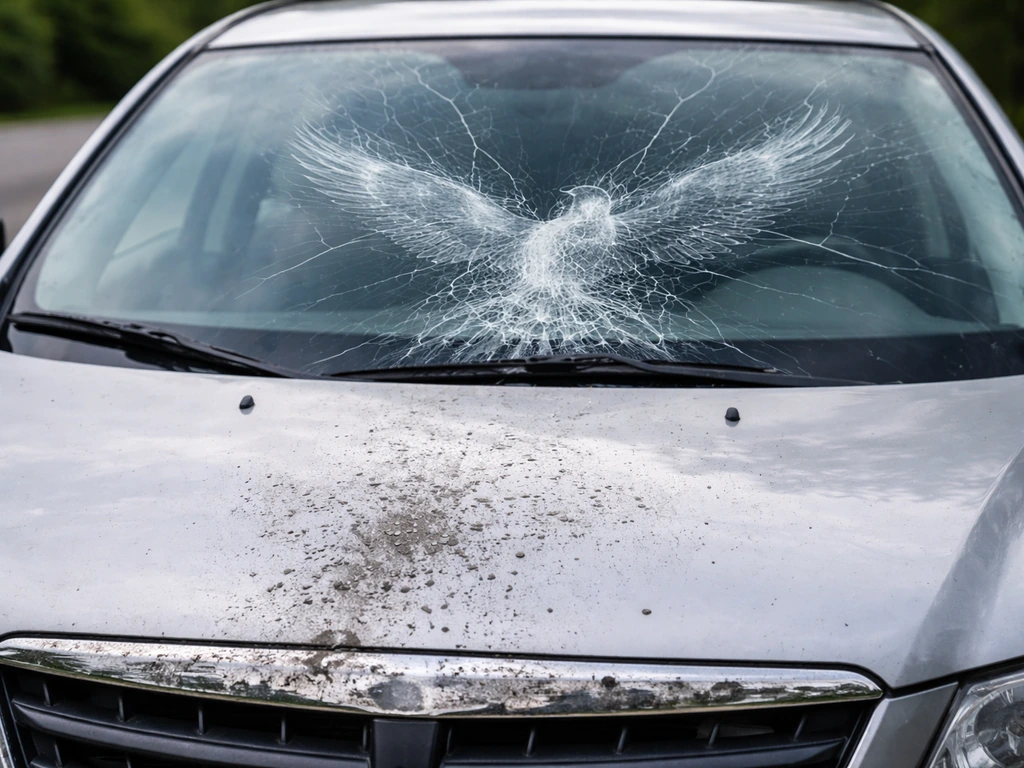
Is Hitting a Bird Bad Luck? What to Do After a Crash
Learn if hitting a bird is bad luck and what to do after a vehicle impact, including safety, first checks, and preventio
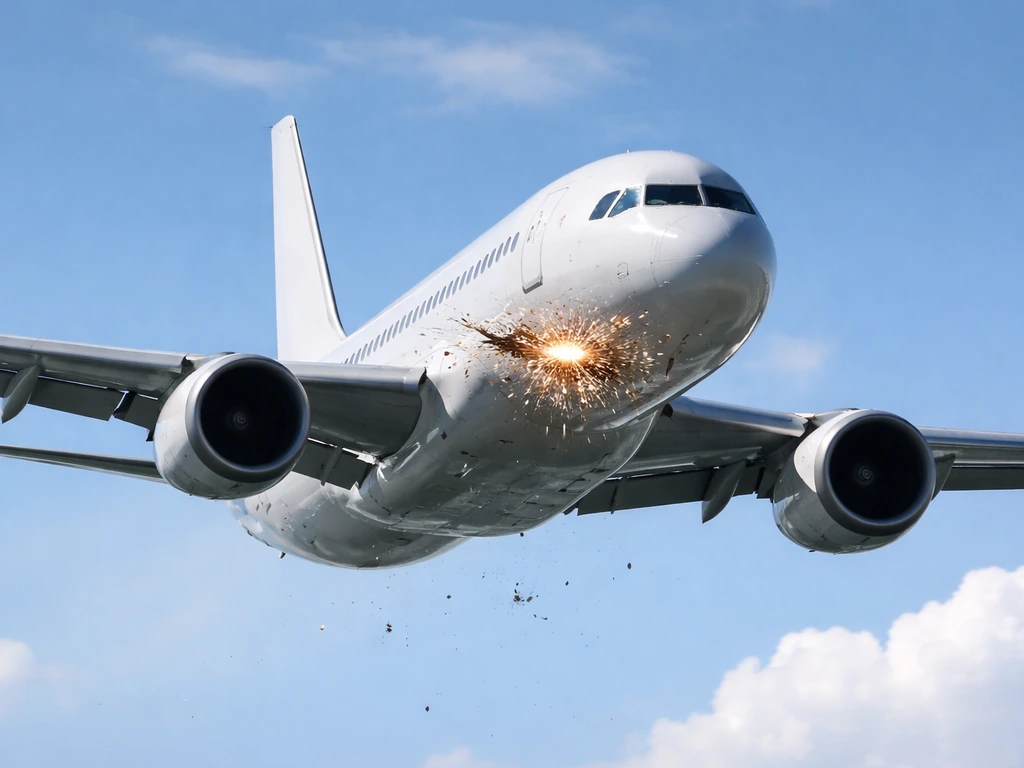
Bird Causes Plane Crash? Risk, Mechanisms, Myths, Prevention
Whether bird strikes can cause plane crashes, how they happen, real risk data, debunked myths, and prevention steps

Can a Plane Crash Because of a Bird? Facts and Safety
Understand if a bird strike can crash a plane, what it damages, how often it happens, and what airports do to prevent it