
A secretary bird could seriously injure a human, but there are no documented cases of one killing a person. These birds are powerful enough to deliver kicks measuring around 195 Newtons of force, which is roughly comparable to being struck hard by a trained martial artist. That kind of impact can break skin, bruise bone, and cause real damage, but a lethal outcome would require a very specific and unlikely set of circumstances. Terror birds are different kinds of flightless predators, so it is useful to compare how their hunting behavior and anatomy would translate to humans. For most people, including visitors to wildlife parks and safari-goers, the practical risk of being attacked at all is extremely low.
Can a Secretary Bird Kill a Human? Realistic Risk and Safety

Maya Chen
4 May 2026
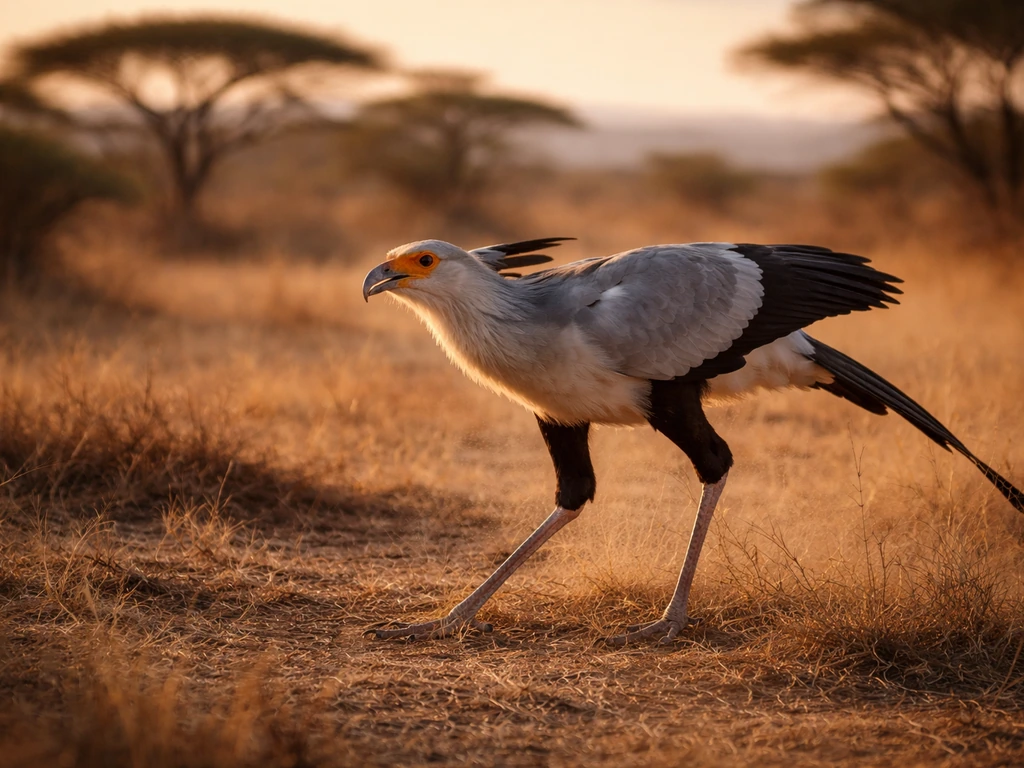
What secretary birds are actually like
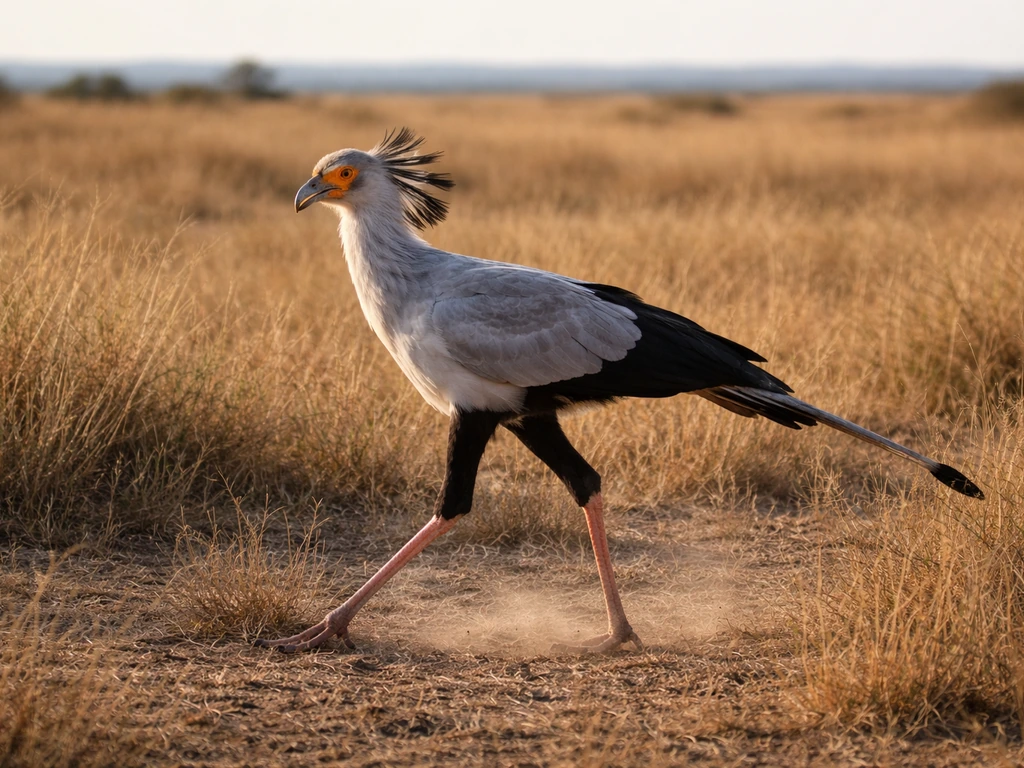
Secretary birds (Sagittarius serpentarius) are large, long-legged raptors native to the open grasslands and savannas of sub-Saharan Africa. They stand around 1.2 to 1.4 meters (roughly 4 to 4.5 feet) tall, have a wingspan of up to 2.1 meters, and weigh between 2.3 and 4.3 kilograms. They look striking, with an eagle-like head, long crane-like legs, and a distinctive crest of black feathers at the back of the skull.
Unlike most raptors, secretary birds spend most of their time on the ground, hunting by walking and stamping prey to death rather than diving from the air. Their primary weapons are their feet and legs, not their beak. Those legs are adapted to deliver fast, powerful, downward strikes, which is what makes them dangerous in a way that catches people off guard. They're not aggressive by nature, but they are assertive, territorial during nesting, and fully capable of using those legs defensively if they feel threatened.
How secretary bird attacks actually happen
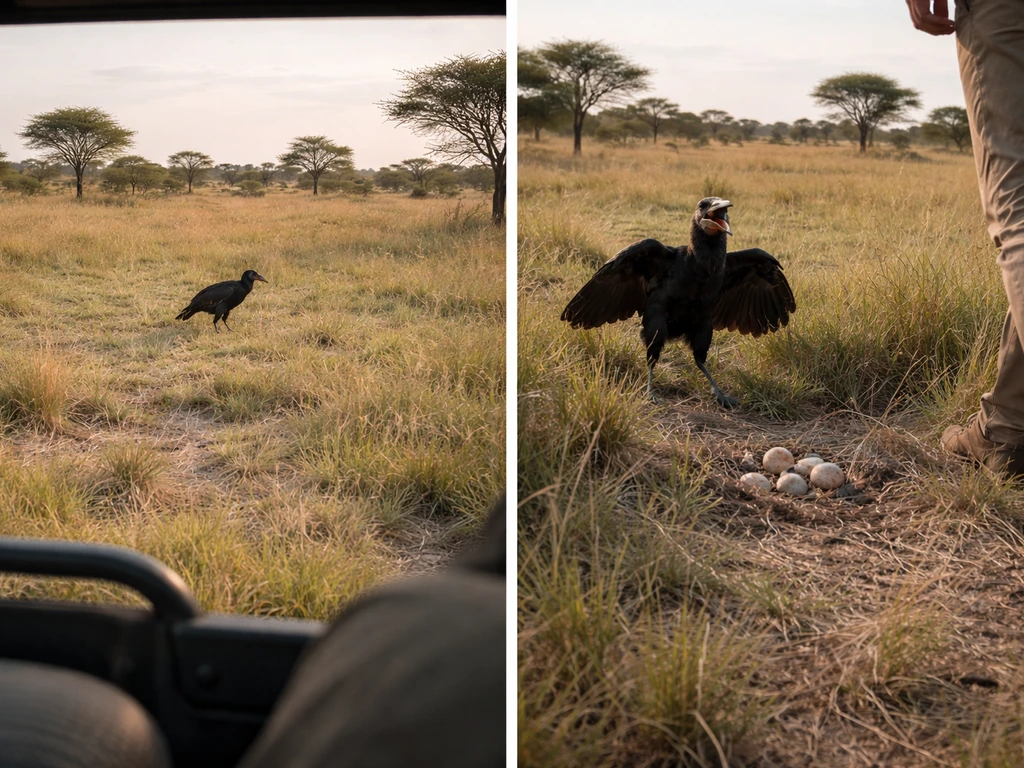
Secretary birds don't hunt humans and have no instinct to treat people as prey. The scenarios where a person gets hurt almost always involve one of two things: the bird defending itself or its nest, or a handler or keeper getting too close in a captive setting without proper precautions.
In the wild, if you approach a nesting secretary bird too closely, it may charge and kick. The kick is extremely fast, described in research as occurring in under 15 milliseconds per strike, which is fast enough that you can't see it coming or pull back in time. The force recorded in studies, around 195 N, is enough to cause lacerations, contusions, or fractures, particularly if the blow lands on a vulnerable area like the face, knee, or shin.
In captivity, the risk is higher simply because proximity is unavoidable. A bird used to humans may be less fearful, but that doesn't make it safe to handle without training. A secretary bird trained to strike a rubber snake at the Royal Veterinary College demonstrated exactly the same rapid, powerful kick mechanics that it would use defensively on a perceived threat. The injury severity in any attack depends on where the strike lands, whether the bird's talons make contact, and whether the person can back away quickly.
Factors that raise or lower the severity of an encounter
| Factor | Lower Risk | Higher Risk |
|---|---|---|
| Setting | Open safari viewing from a vehicle | Captive handling or nest approach on foot |
| Bird behavior | Calm, foraging at distance | Defensive posture, wings spread, stamping |
| Human behavior | Staying still, giving space | Cornering, reaching toward, or provoking bird |
| Season | Non-breeding months | Nesting season (breeding pair is more defensive) |
| Strike landing zone | Body/torso hit | Face, eye, or joint struck directly |
How realistic is the risk for most people
For the overwhelming majority of people, the risk of being injured by a secretary bird is negligible. How many people have died from bird attacks overall depends on the country, the types of birds involved, and whether incidents are reported as deaths from animal attack. These birds are not common household animals, they're not widely kept as pets, and in the wild they typically avoid humans rather than confront them. Animal Diversity Web, one of the standard zoological reference databases, explicitly notes no known adverse effects of secretary birds on humans.
The people with any meaningful risk are wildlife sanctuary workers, zookeepers, rehabilitation handlers, and researchers who work with these birds hands-on. Even then, with proper handling protocols the risk is manageable. Comparing this to birds that have actually caused documented human fatalities, like cassowaries, puts the secretary bird in a much lower-risk category. Some other birds, such as cassowaries, are often cited in discussions about which bird has killed the most humans. While the kicking mechanics are similar in some ways to a cassowary's, secretary birds lack the cassowary's large, dagger-like inner claw, and they are significantly lighter.
What to do if a secretary bird attacks or threatens you
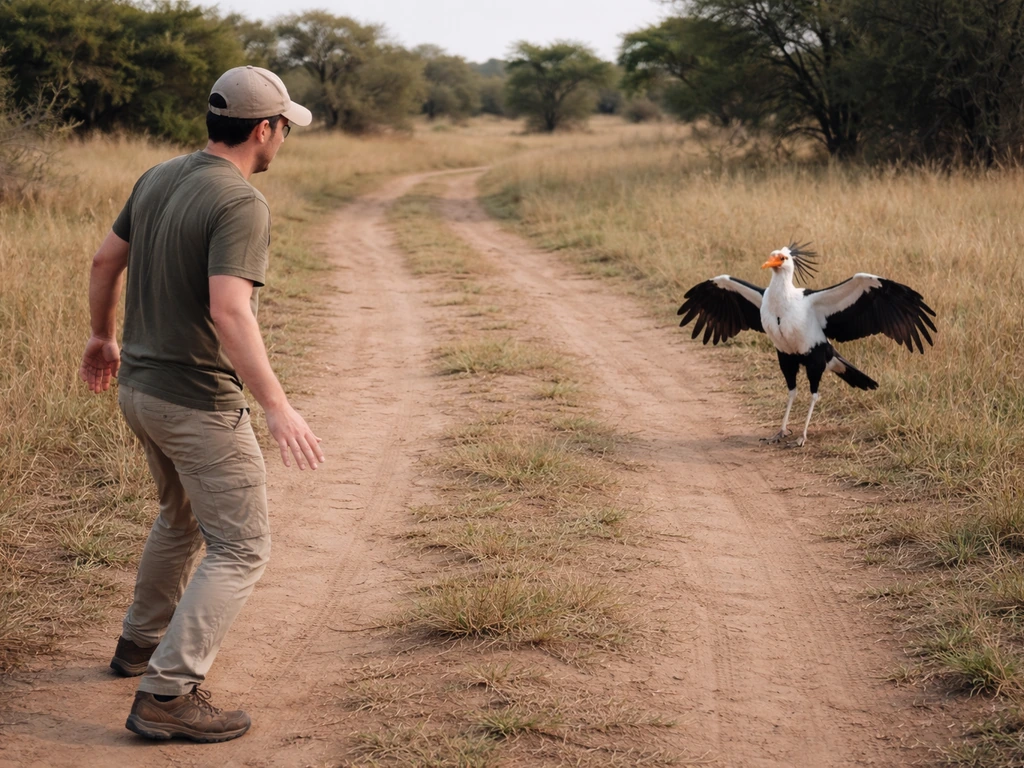
If you're in a situation where a secretary bird is acting aggressively, the first priority is putting distance between you and the bird without running directly at it or turning your back quickly, which can trigger a pursuit response. Back away slowly and give it a wide berth.
If you've been struck and the skin is broken, treat it like any animal-related wound. Here's what to do immediately:
- Get to a safe distance from the bird before doing anything else.
- Apply firm pressure to any bleeding wound with a clean cloth.
- Wash the wound thoroughly with soap and running water for at least 5 minutes as soon as possible.
- Cover it with a clean bandage.
- Seek medical evaluation, especially if the wound is deep, you can't stop bleeding, or the strike was near your face or eyes.
- Tell the medical provider it was a bird strike so they can assess for tetanus (bird-related wounds carry infection risk), antibiotic need, and any puncture depth concern.
- If the eye or head was struck, go to an emergency department rather than waiting.
Tetanus is worth raising with a doctor even for what looks like a superficial wound. Bird talons and feet carry bacteria from the ground and prey, and puncture wounds can be deceptively deep. This is a standard concern with any raptor-related injury, not specific to secretary birds.
How to stay safe around secretary birds
Whether you're visiting a wildlife park, working in a rescue center, or doing fieldwork near wild birds, a few consistent habits dramatically reduce risk.
- Maintain a respectful viewing distance of at least 10 to 15 meters in the wild, and stay further during nesting season.
- Never approach a nesting pair on foot without a guide who knows the territory.
- In captive settings, never enter a secretary bird enclosure alone or without proper training and supervision.
- Use barriers (glass, mesh, railings) designed for raptor enclosures and don't reach through or over them.
- Watch for warning signs: a bird that stops foraging, spreads its wings, lowers its head, or begins stamping is signaling discomfort.
- If you work with birds professionally, wear appropriate leg and hand protection when handling or approaching large raptors.
- Never attempt to hand-feed or physically restrain a secretary bird without specific training.
Clearing up the myths about birds and human danger
Two opposite myths circulate about birds and human safety, and secretary birds get caught in both of them.
The first myth is that birds can't really hurt people. This is wrong for large, powerful species. A secretary bird's kick force of 195 N is not trivial. A direct strike to the knee or face from a bird that weighs up to 4.3 kg and is delivering a strike faster than the eye can track is a genuine injury risk. Dismissing that because it's a bird is how people get hurt.
The second myth is that powerful birds are inherently deadly. Secretary birds are extraordinary hunters that can kill snakes, lizards, and small mammals with their feet. That capability does not mean they're hunting people or that encounters are routinely fatal. However, there's no evidence that a secretary bird can kill a python in the way people sometimes claim.
There are no recorded human deaths from secretary birds. Lethal bird attacks on humans are documented, but they involve specific species and specific circumstances. Treating every large bird as an imminent lethal threat leads to poor decisions and unnecessary panic. Would a terror bird kill a human?
See the related analysis of how big flightless predators differ in threat to people.
The honest middle ground is this: secretary birds can injure a human, and those injuries can be serious if the circumstances are wrong. You might wonder if a kiwi bird can kill you, but reports and documented cases are extremely rare compared with birds like cassowaries can a kiwi bird kill you. But with reasonable awareness and basic precautions, the risk for most people is genuinely very low. Understanding the actual mechanics of how these birds act, and when they're most likely to defend themselves, gives you everything you need to stay safe around them.
FAQ
If a secretary bird charges, should I run or try to scare it off with noise?
Don’t run, running can encourage a pursuit response. Instead, increase distance while staying calm, back away slowly, and avoid sudden turns. If you have a barrier available, use it (vehicle, fence line, or keeper area) rather than trying to confront or wave at the bird.
What body areas are most at risk if a secretary bird kicks?
Injuries are most likely when the strike lands on vulnerable, unprotected areas such as the face, shin, and knee, especially if talons make contact. Having boots and keeping distance reduces the chance of a leg or lower-body hit, which is where most people cannot react fast enough.
Can a secretary bird harm someone without actually “attacking,” like during feeding or while you’re photographing?
Yes. The common risk pattern is defensive behavior, especially near nesting, and accidental proximity during photography or observation. Even if the bird seems calm, treat it as potentially territorial in the vicinity of nest areas and keep a wide filming or viewing distance.
Are secretaries more dangerous in captivity than in the wild?
The injury risk is often higher in captivity because proximity is unavoidable and handling may reduce the bird’s fear response. This does not mean the bird is more “lethal,” it means you are closer to the kick range and may be unable to retreat quickly, so only trained staff should handle them.
Do secretary birds use their beak, or is the kick the main threat?
The kick is the main threat. Secretary birds primarily use their legs and feet for fast, downward strikes, their beak is not typically the key weapon in human encounters. Still, assume multiple defensive motions are possible if the bird feels threatened.
What should I do after a secretary bird strike if bleeding seems minor?
Treat it as potentially serious even when bleeding looks small, especially if there is a puncture or torn skin. Clean the area, cover it, and get medical advice, puncture wounds can extend deeper than they appear and raptor feet can introduce ground bacteria.
Is tetanus always necessary after a raptor-related puncture or scratch?
It’s generally worth discussing with a clinician, because puncture wounds can be deceptively deep and raptor feet carry bacteria from the environment. Your tetanus protection depends on your vaccination history and the wound type, so don’t rely on appearance alone.
Could a secretary bird’s nest area cause risk even if the bird never makes contact?
Yes. Nest-defense behavior can include charging and kicking within a short reaction window, and the bird may not need to touch you to cause harm if it lands a glancing kick. If you notice defensive postures, stop moving closer and back away to widen the gap.
How close is “too close” to a secretary bird in the wild?
A practical rule is to keep far enough that you can retreat without rushing. If the bird shifts into charge-ready behavior, closes distance repeatedly, or fixates on you, you are likely inside its defensive range. For observation, stay behind natural or managed boundaries when available and follow local wildlife rules.
Are children or people with mobility issues at higher risk?
Yes, because they may not be able to back away quickly or maintain footing during a fast kick. Extra distance and supervision matter, and avoiding close encounters near nests is especially important for anyone who cannot retreat promptly.
Could myths about “birds are harmless” or “powerful birds always kill” lead to bad safety choices?
They can. Large birds can injure seriously through forceful kicks, and assuming they are harmless increases the chance of unsafe proximity. On the other hand, assuming every encounter is instantly lethal can cause panic, so the safer approach is to respect the risk of injury while keeping calm and using distance as your main protection.
If I work with secretary birds, what’s the safest general preparation for handling?
Use established handling protocols, ensure retreat routes are clear, and don’t rely on the bird’s apparent tolerance. Planning matters because the kick happens extremely fast, so safety depends on environment design and trained positioning more than on “knowing the bird” socially.