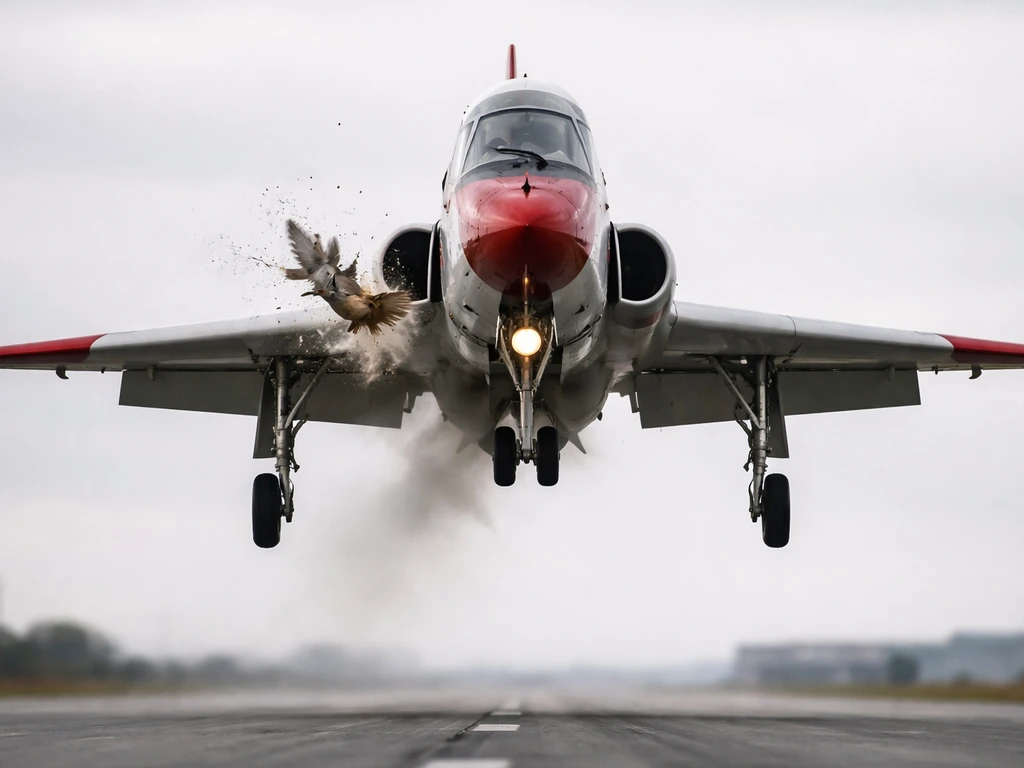
When you see a headline about a plane bird strike today, it almost certainly means a bird flew into an aircraft engine, windshield, or airframe during takeoff, approach, or landing. For the latest southwest airlines bird strike today updates, check your route's flight status and the airline or airport's official safety notices plane bird strike today. The vast majority of these incidents cause minor or no damage, the flight continues or lands safely, and the crew files a report. In many cases, that "plane bird strike today" story is simply a routine report that still helps improve hazard awareness for future flights. A small fraction involve engine damage or aborted takeoffs and make bigger news. True catastrophic losses from bird strikes are rare, but they do happen, and knowing how to read the severity of a report makes a real difference in how alarmed you should be.
Plane Bird Strike News: What It Means and What to Do Now


What 'plane bird strike news' usually means

Bird strikes are collisions between wildlife (overwhelmingly birds, occasionally bats) and aircraft. They happen most often during the phases of flight closest to the ground: takeoff roll, initial climb, approach, and landing. That's also where birds concentrate. The FAA's Wildlife Strike Database tracks all reported strikes to civil aircraft in the United States, and the data going back to 1990 consistently shows that over 90% of strikes occur below 3,500 feet altitude. Most involve small or medium-sized birds, and most result in no damage at all.
When a strike makes the news, it's usually because: an engine ingested a large bird or a flock and lost thrust; the flight was aborted or diverted; there were visible injuries to crew or passengers from windshield strikes; or the aircraft involved was high-profile (a commercial airliner, a military jet). High-profile incidents like the Jeju Air crash investigation and the Air India plane crash bird strike inquiry drew sustained attention precisely because large commercial aircraft and fatalities were involved. In some high-profile cases, the strike can even involve an albatross bird crash landing scenario, with investigators focusing on engine impact, damage, and crew actions. For example, south korea plane crash bird strike reports often emerge when a major incident prompts renewed attention to how bird strikes can lead to severe outcomes. Most daily bird strike reports, though, describe a thud on climb-out and a precautionary maintenance inspection on landing.
How bird strikes are tracked and reported
In the United States, the FAA manages the National Wildlife Strike Database under Advisory Circular 150/5200-32C. Pilots, air traffic controllers, airport operations staff, and airline maintenance crews can all submit reports. The FAA also runs a feather identification program where remains collected after a strike are sent to the Smithsonian Institution's Feather Identification Lab for species identification, which helps airports understand exactly which birds are the problem.
Each report captures a detailed picture of the incident. Key fields in the database include phase of flight, species and number of birds seen, aircraft type, part of the aircraft struck, and effect on the flight. Operational outcomes recorded include things like aborted takeoff, high-speed emergency stop, aircraft left the pavement area, and precautionary landing. The FAA publishes regular summary reports, most recently covering 1990 through 2022, which form the baseline for understanding how often strikes happen and how serious they tend to be.
Internationally, ICAO coordinates reporting through its Bird Strike Information System (IBIS). The IBIS form captures required fields including phase of flight, bird species, parts struck, and damage codes. Not all countries report consistently, so global data is patchier than U.S. data, but ICAO member states are encouraged to feed national data into the international system. When a foreign airline or military aircraft is involved in a notable strike, the investigation usually follows ICAO Annex 13 protocols, with the host country's aviation authority leading the inquiry.
Where to check credible updates right now

- FAA Wildlife Strike Database (publicly searchable at wildlife.faa.gov) for U.S. civil aviation incidents
- NTSB Aviation Accident Database for any incident that triggered a formal investigation
- Aviation Safety Network (aviation-safety.net) for international incidents and ongoing investigation status
- Official airline or airport press releases for confirmed operational details
- ICAO safety reporting portals for international data summaries
How dangerous are bird strikes in practice
The honest answer is: mostly not very, but occasionally extremely. FAA data covering 1990 to 2022 records tens of thousands of strikes to civil aircraft in the U.S. alone. The overwhelming majority caused no damage and no effect on the flight. A smaller but still substantial share caused minor airframe or engine damage that required maintenance but not an emergency. A much smaller fraction caused serious damage leading to diversion, precautionary landing, or in rare cases, accidents.
Risk scales sharply with bird size and flock density. A single starling hitting a fuselage is almost never a problem. A Canada goose or a vulture ingested into a turbofan engine at rotation speed is a different matter entirely. That's exactly what happened in the Miracle on the Hudson in 2009, where a flock of Canada geese caused dual engine failure shortly after takeoff from LaGuardia. A much smaller but still notable example of an engine bird strike in the news is the Jeju Air crash involving a bird Miracle on the Hudson. Multiple turbine blades can shatter from a single large bird ingestion, and at low altitude, there's very little time or altitude margin for recovery.
Phase of flight matters enormously. Strikes during climb-out or approach at low altitude leave less room for crew response than cruise-altitude strikes (which are far rarer). Engine ingestions are more dangerous than fuselage or windshield strikes. Multi-engine failures are more dangerous than single-engine failures. When you're reading a news report, those are the specific factors that determine whether it's a minor maintenance event or a serious emergency.
| Factor | Lower Risk | Higher Risk |
|---|---|---|
| Bird size | Starling, sparrow, pigeon | Canada goose, vulture, pelican |
| Number of birds | Single bird | Flock (multiple ingestions) |
| Phase of flight | Cruise altitude | Takeoff roll, initial climb, approach |
| Strike location | Fuselage, tail | Engine intake, windshield |
| Engines affected | One engine | Both engines |
Myths vs facts about bird strikes
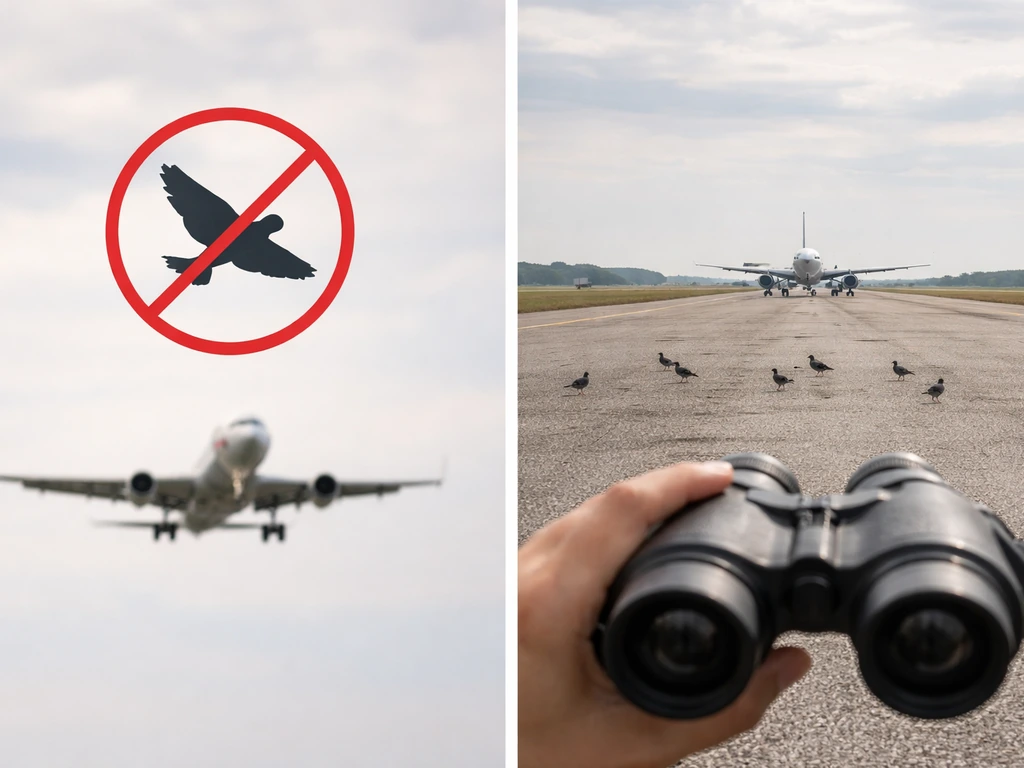
Myth: Planes are designed to avoid birds automatically. Fact: Aircraft have no active bird-avoidance systems. Pilots rely on visual lookout, ATC radar advisories (which don't reliably detect birds), and NOTAMs about bird activity near airports. The design standard for engines involves certifying them to ingest a certain bird mass without catastrophic failure, but that's a safety floor, not an avoidance system.
Myth: Airports use noise cannons and that solves the problem. Fact: Pyrotechnic deterrents (cannons, bangers, screamers) are one tool in a broader wildlife management toolkit, but birds habituate to them quickly if they're used in isolation. Effective airport wildlife management is a continuous, multi-method program, not a single device.
Myth: Bird strikes are getting rarer as aviation safety improves. Fact: Reported strikes have increased substantially over the decades covered by the FAA database, driven by growing bird populations (especially large species like geese, which rebounded strongly after conservation programs), increased flight operations, and better reporting culture. The number of strikes causing significant damage has also risen in absolute terms, though the rate per flight operation has been more stable.
Myth: Birds are more of a threat at night. Fact: Most strikes occur during daylight hours because most bird activity and most flight operations coincide during the day. Migratory birds do move at night, and strikes involving nocturnal migrants do occur, but the bulk of the database reflects daytime operations.
Myth: There's a significant disease risk from a bird strike for passengers or crew. Fact: The public health risk from a bird strike is extremely low. Passengers are inside a sealed cabin. Even crew who handle aircraft after a strike are exposed to feathers and tissue in the same general category as any outdoor bird contact. Standard precautions (gloves, handwashing) during cleanup are sensible, not because of unusual pathogen risk, but because any animal remains warrant basic hygiene. The far more common bird-related health concerns on this site, such as window collision injuries and disease from prolonged close contact with bird flocks, are statistically much more significant than anything arising from a single aircraft strike event.
Prevention at airports: what wildlife management actually looks like
FAA Advisory Circular 150/5200-33 guides airports on reducing wildlife hazards. The core principle is habitat modification: if the airport environment doesn't attract birds, birds don't concentrate there. That means managing grass height (keeping it between 7 and 14 inches discourages large birds like geese and gulls from foraging on the airfield), eliminating standing water, removing berry-producing shrubs from the perimeter, and coordinating with nearby land managers to reduce attractants just outside the fence line.
Active dispersal methods are used on top of habitat control. These include trained falconry (using raptors to flush other birds), border collies on the airfield, pyrotechnics, laser devices, distress call broadcasts, and in some cases, lethal control under USDA Wildlife Services permits. The key is varying the methods so birds don't habituate. Airports with serious gull or goose problems often have dedicated wildlife biologists on staff or under contract.
Runway lighting and approach path management also play a role. Some airports coordinate with local municipalities to limit waste facilities, wetland restoration, and other bird-attracting land uses within a defined perimeter around the airport, typically several miles depending on the species of concern. This is why bird strike management is partly a community and land-use planning issue, not just an airport operations issue.
What aircraft and crew do to reduce and respond to strikes
Pilots receive training on bird strike avoidance and response. During takeoff and approach, they're alert to bird activity reported by ATC or ATIS advisories. If birds are spotted on the runway or in the immediate departure/approach path, the crew can request a delay or alternative runway. In some cases, they can climb or descend to avoid a concentration of birds on radar or visually.
If a strike occurs, the immediate crew response depends on where and what was hit. An engine strike requires the crew to assess power output, vibration, and fire warnings using established checklists. A windshield strike may be visually startling but rarely compromises structural integrity on modern aircraft. The crew declares the nature of the event to ATC, follows abnormal or emergency procedures as applicable, and decides whether to continue, divert, or land immediately.
After landing, maintenance inspects the aircraft thoroughly before it returns to service. The strike is documented, remains are collected if possible, and a wildlife strike report is filed. On commercial flights, investigators from the airline's safety department may also be notified depending on the severity. For military aircraft like the T-45 Goshawk, which has been involved in bird strike incidents given its low-altitude training profiles, the reporting chain runs through military aviation safety channels rather than the FAA civil database.
What to do if you witness a bird strike or find aftermath
If you're a pilot and a strike occurs, follow your aircraft's emergency procedures first. Once safely on the ground, collect any bird remains (feathers, tissue) in a bag and preserve them for species identification. Report the strike to the FAA Wildlife Strike Database at wildlife.faa.gov, or through your airline's safety reporting system. Detailed reports, especially ones that include species identification, help airports understand local hazard patterns and adjust wildlife management programs.
If you're airport operations or ground crew and you find remains on the runway or taxiway after a reported strike, wear gloves during collection. Place remains in a sealed plastic bag with the date, location, and flight information written on the outside. Frozen remains can be sent to the Smithsonian Feather Identification Lab through the FAA program. Don't discard them without checking with your wildlife coordinator, since species data is genuinely useful.
If you're a member of the public who witnesses a bird strike near an airport (visible from a public area during approach or departure), you can report what you observed to the airport's operations center. You won't have the aircraft data, but your observation of species, flock size, and location can still be valuable. Avoid approaching any restricted airfield areas, and don't try to retrieve remains from active movement areas.
On the question of the birds themselves: most birds involved in aircraft strikes do not survive the impact. Large birds ingested into engines are killed instantly. Smaller birds that strike fuselages or windshields at speed also rarely survive. If a bird is found alive near a runway after a suspected strike, contact a licensed wildlife rehabilitator rather than handling it directly. Injured raptors in particular can cause serious lacerations even when severely hurt.
Quick action checklist
- If you're a pilot: follow emergency checklists, land safely, then file a FAA Wildlife Strike Report at wildlife.faa.gov
- If you're ground crew: wear gloves, collect and bag remains, label with date/location/flight, contact wildlife coordinator
- If you're tracking breaking news: check Aviation Safety Network or NTSB database for official incident status
- If you want to verify airline-specific information: go directly to the airline's press office or official social media
- If you're concerned about a live injured bird near a runway: call the airport operations center, then contact a licensed wildlife rehabilitator
- If you're near an airport and want to reduce bird attractants on your property: remove berry-producing plants, cover standing water, and contact the airport's wildlife manager if you're within a few miles of the fence line
FAQ
When I see plane bird strike news, how can I tell if my specific flight is actually affected (delay vs cancellation)?
Search the exact flight number or tail number in the airline’s “track your flight” page, then cross-check the airport duty page for runway closures. Bird strikes often trigger a delay for inspection, even if the aircraft “landed normally,” so the maintenance turnaround time is usually the practical clue, not the headline itself.
What wording in a plane bird strike news report usually signals a serious event versus a routine one?
A headline may describe a “strike” without listing damage. If the report says engine ingestion, “dual engine,” “thrust loss,” “high-speed rejected takeoff,” or “precautionary landing/diverted,” treat it as higher severity. If it mentions “inspection only,” “no effect,” or “continued to destination,” the event typically stayed within abnormal procedures but not emergency response.
What should I do differently if the bird strike news involves an aircraft that is likely to be reassigned to my departure soon?
If your flight is within about 15 to 30 minutes of departure, the most useful step is to check whether the aircraft has returned from the prior leg with an inspection hold. For tight schedules, crews may keep the aircraft on the ground longer for engine borescope or fan-damage checks, even when passengers are told “minor impact.”
If the plane bird strike news is about bird activity near the airport, can I assume it will be visible on radar or weather tools?
Don’t rely on ATC radar advisories or weather radar alone. Birds can appear visually near the runway even when onboard and ATC surveillance systems do not “show” them as targets. For personal planning, assume that an airport may issue bird-activity delays that are short notice and not fully predicted by weather apps.
As a passenger, what are the practical, safety-related actions to take when bird strike news affects an airport or gate?
For passengers, the main behavioral change is comfort and situational awareness. If you see an inspection delay, expect you might board later than the posted time. Avoid assuming that “landed safely” means the aircraft is cleared immediately, because maintenance inspections can take time before takeoff clearance.
If I’m a pilot and I’m involved in a bird strike, what should I prioritize if remains are hard to collect?
If you are a pilot, preserve what you can without creating extra hazard, but follow your aircraft’s emergency checklist first. After shutdown and safe access, bag remains and label location, time, and flight number. If you cannot retrieve remains safely, document what you observed instead, and report through your normal incident channel.
What are the common mistakes pilots make when interpreting a bird strike as “minor” and continuing without the proper checks?
If there are signs of more than a “single thud,” like unusual vibration, abnormal engine indications, or visible fire warnings, treat it as an emergency classification decision point and follow aircraft abnormal or emergency procedures. The decision to continue, divert, or land immediately is not just based on how it felt, it is based on checklist outcomes and indications.
For ground crew, how should remains be handled so species identification is actually useful?
When collecting remains, use gloves and keep the material sealed and labeled, because species ID depends on sample integrity. If remains are wet, contaminated, or partially damaged, it can still be usable, but you improve chances by keeping it sealed, cool, and clearly identified rather than loosely bagged or discarded.
What are avoidable errors airport staff make after a bird strike, especially related to disposal or sample contamination?
For ground operations, avoid sweeping remains into drains or turf where they can contaminate other areas. Also coordinate with your wildlife coordinator before disposal decisions, because the airport program may need the sample for trend analysis and mitigation updates.
What should I do if plane bird strike news is unfolding and I find a live bird near a runway?
If you find an alive bird, do not assume it is safe. Call a licensed wildlife rehabilitator, and keep people away because stressed birds (especially raptors) can cause serious injury. For reporting, include whether it was found near the runway centerline, taxiway, or approach path to help investigators map hazard zones.
If a bird strike occurred near my route or runway recently, how can I interpret whether it’s a one-off versus a recurring hotspot?
Bird activity can peak due to seasonality and local land-use changes, so a single day’s incident may reflect a broader pattern. Ask the airport’s wildlife point of contact whether there is a current wildlife management notice or mitigation change around your runway or approach segment.
I witnessed plane bird strike news near the airport from a public area, what details are most helpful if I report it?
No, passengers should not try to retrieve remains or enter operational areas for “proof.” If you are observing from public ground, provide airport ops with approximate time, location, direction of approach or departure, bird type if you can identify it, and flock size estimate. That’s usually enough to help the airport refine hazard management.
T-45 Crash Bird Strike: What to Do Now and How to Verify
Immediate response and verification steps for a T-45 crash or bird strike, plus injury, investigation, and prevention gu