
Yes, a slingshot can kill a bird. It doesn't require a powerful setup or perfect aim to cause serious harm. Even a basic slingshot launching a steel ball bearing or a smooth rock can deliver enough force to fracture bones, cause internal bleeding, or kill outright, especially smaller birds. That said, the outcome depends heavily on several variables: the ammo you're using, how far away the bird is, how hard you're pulling back, and where the projectile hits.
Can a Slingshot Kill a Bird? Risk, Injuries, and Safer Options

Maya Chen
16 May 2026
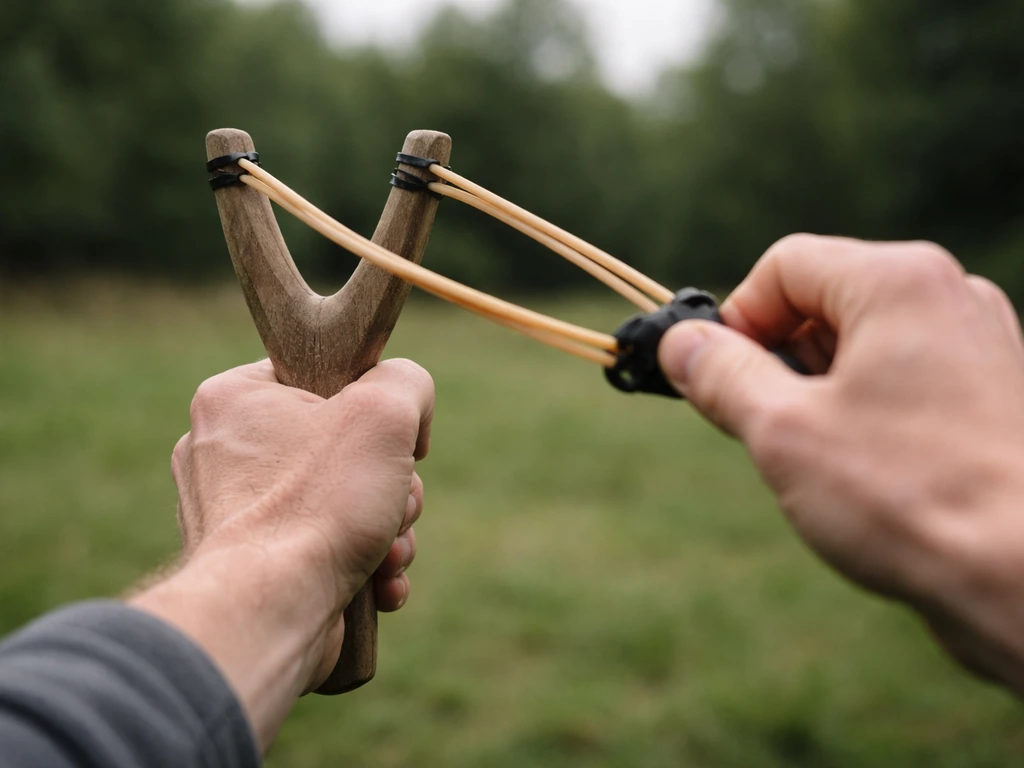
Understanding those variables matters whether you're worried about accidentally injuring a bird, trying to assess what happened to one you found, or looking for safer ways to deal with a bird problem. That same basic danger is why people also ask whether a Nerf gun can kill a bird, even though it is much lower power than a slingshot can a nerf gun kill a bird.
How slingshot injuries actually happen
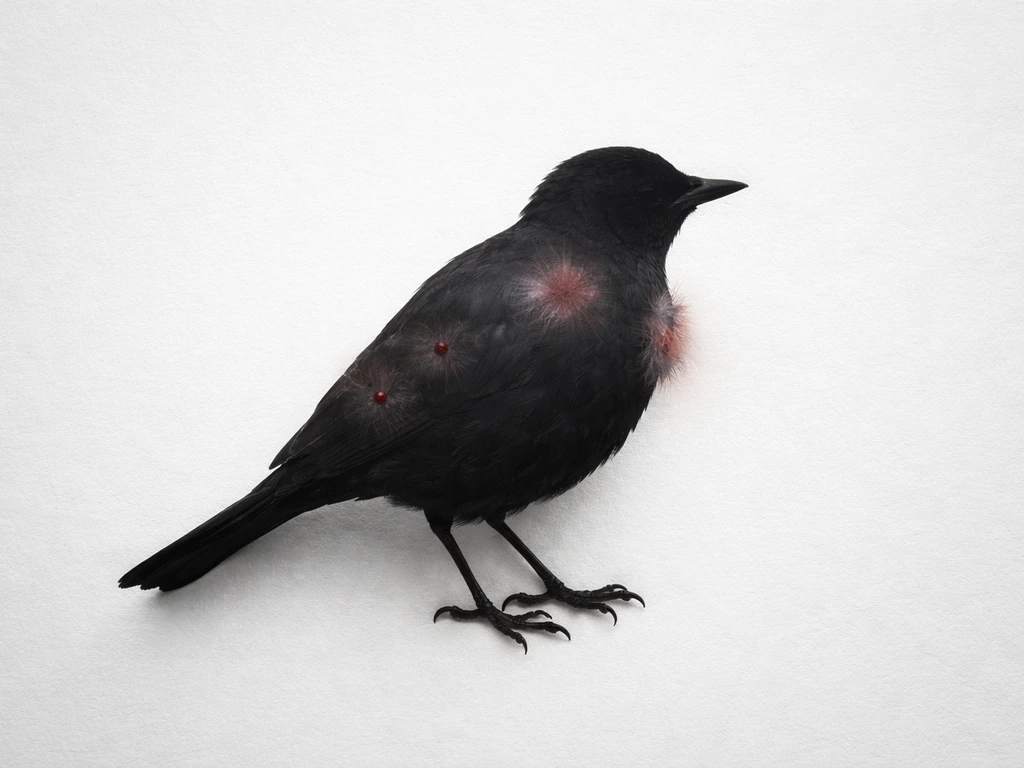
There are three main ways a slingshot projectile can injure or kill a bird, and they don't all look the same.
Penetrating wounds
Hard, dense ammo like steel ball bearings, lead balls, or sharp rocks can puncture a bird's skin and muscle, or even crack through the lightweight, hollow bones that make up a bird's skeleton. A penetrating wound to the chest cavity can collapse an air sac, cause internal bleeding, or damage the heart or lungs. Birds don't have a lot of body mass buffering those vital structures, they're remarkably compact animals, so a direct hit to the torso is often fatal.
Blunt force trauma
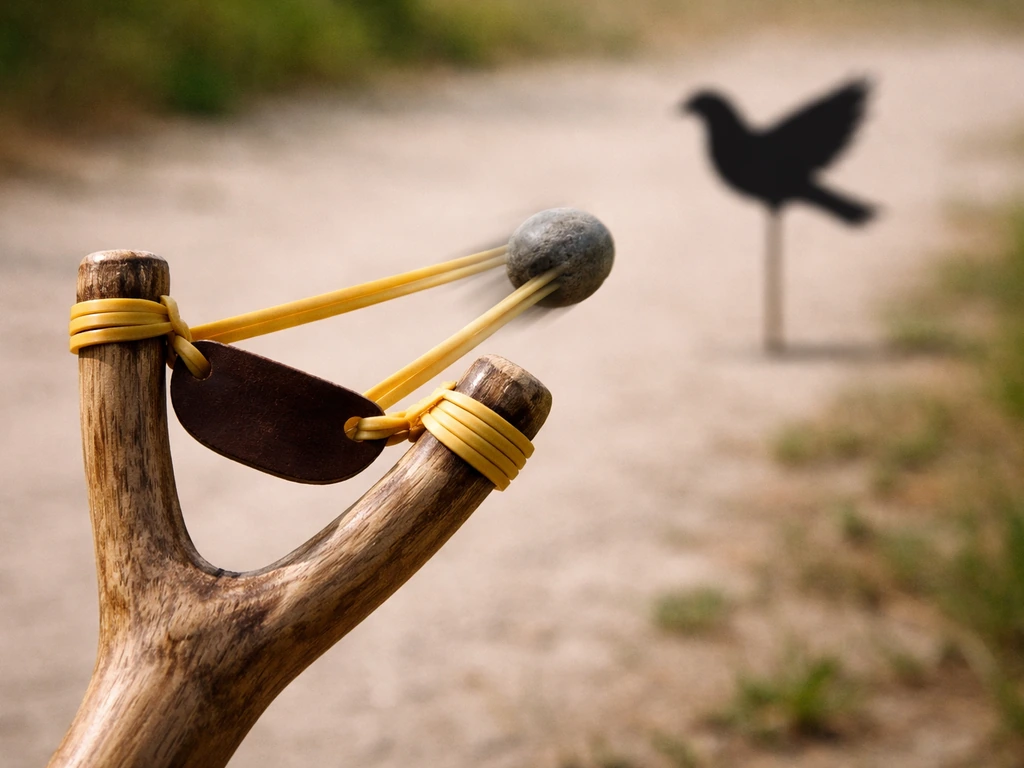
Even a projectile that doesn't penetrate can cause serious harm through sheer impact force. A round river rock or rubber ball hitting a bird at speed transfers kinetic energy through tissue. This can cause internal hemorrhaging, broken bones, or head trauma without leaving an obvious external wound. A bird that appears outwardly uninjured after being struck may still be dying from internal injuries.
Contact wounds and secondary trauma
Glancing hits can break a wing, damage an eye, or cause enough disorientation that the bird crashes into something and sustains additional injury. Secondary trauma from falling, being unable to fly, or becoming vulnerable to predators after a non-fatal strike is a real cause of death in birds hit by projectiles.
What makes a slingshot strike lethal vs. survivable
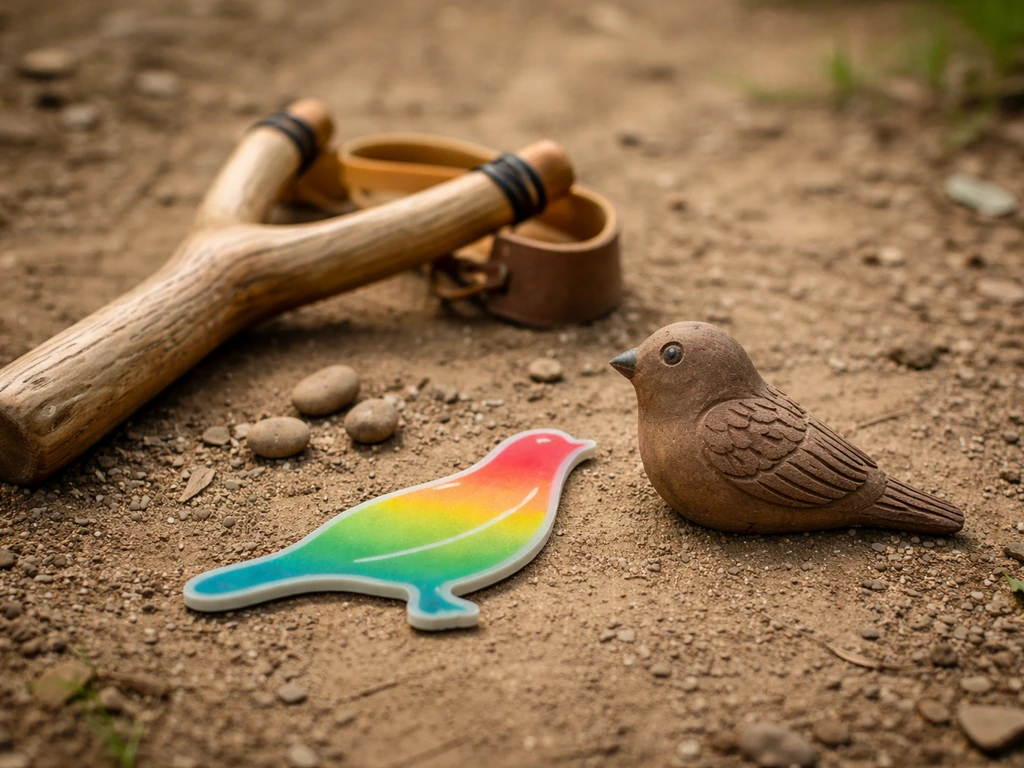
Not every hit is a kill. Here are the factors that shift outcomes one way or the other.
| Factor | Higher Lethality | Lower Lethality |
|---|---|---|
| Bird size | Small birds (sparrows, finches, wrens) | Large birds (geese, hawks, crows) |
| Ammo type | Steel ball bearings, lead balls, sharp rocks | Rubber bands, foam, soft clay |
| Draw strength | Heavy bands, full draw | Light bands, partial draw |
| Distance | Close range (under 15 feet) | Long range (50+ feet) |
| Shot placement | Head, chest, spine | Wing tips, tail, feet |
Bird size and species
A small songbird like a sparrow or wren can weigh as little as half an ounce. A steel BB traveling at even moderate velocity carries enough energy to be immediately lethal to a bird that size. Medium birds like pigeons or starlings are more resilient but still very vulnerable to direct hits. Larger birds, Canada geese, raptors, herons, have more body mass and tougher bones, but they're not bulletproof. A well-placed slingshot shot can still break a wing or cause a concussion-level head injury in a large bird.
Ammo type
This is probably the biggest variable. Steel ball bearings (3/8 inch or larger) are dense, hard, and fast, they're the most dangerous option for birds. Lead balls are similarly lethal. Smooth pebbles and river rocks vary a lot by size and shape but can still be lethal at close range. Rubber or soft ammo reduces penetration risk but doesn't eliminate blunt trauma. Paintballs are far less lethal than steel but can still injure a small bird at close range, a topic worth considering alongside slingshots when comparing projectile-based devices.
Draw strength and distance
A slingshot with heavy latex or theraband tubing pulled to a full draw can launch a 3/8-inch steel ball at 150 to 200 feet per second or more. At that velocity, anything in the small-bird category is at serious risk within 30 feet. There is no guaranteed safe range, so understanding what FPS can kill a bird helps you avoid accidental harm. At longer distances, velocity and accuracy both drop, which reduces lethality but doesn't eliminate it. A lighter draw with thinner bands is less dangerous but still not safe to aim at a bird.
Shot placement
Head and chest hits are most likely to be fatal in any bird. A spine hit can cause immediate paralysis. Hits to the wings or legs are more likely to injure without killing outright, but as noted above, a grounded bird that can't fly is often a dead bird within hours due to exposure or predation.
The legal reality you need to know
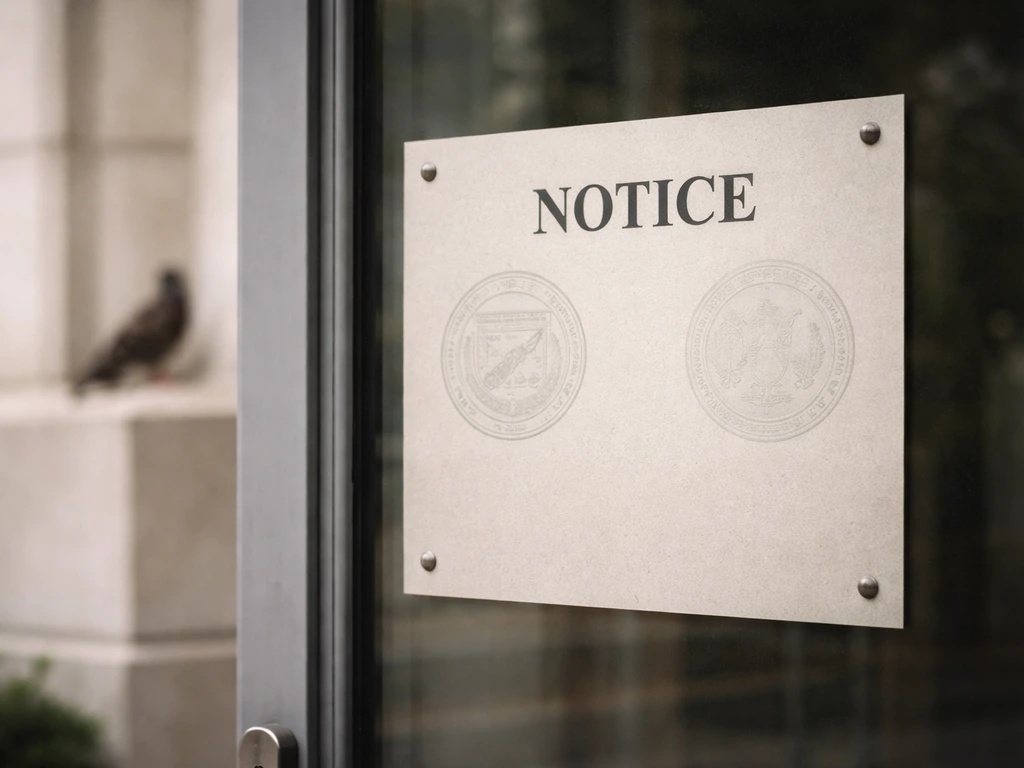
This part catches a lot of people off guard: in the United States, most wild birds are federally protected under the Migratory Bird Treaty Act (MBTA). That includes birds most people don't think of as protected, robins, sparrows, starlings (with some exceptions), mockingbirds, swallows, and hundreds of other common species. Under the MBTA, it's illegal to pursue, hunt, shoot, wound, kill, trap, capture, or collect any protected migratory bird or attempt to do so.
If you're thinking about can you shoot skye's bird as a fix, keep in mind it can still be considered illegal “take” under the MBTA. The U. S. Fish & Wildlife Service [uses the word "take" to cover all of that conduct, and it includes harming or harassing a bird, not just killing one.
](https://www. fws. gov/glossary/take)
What makes this complicated is that you don't have to intend to kill a bird to face legal consequences. The Department of the Interior has interpreted MBTA "take" to include incidental harm, meaning harm that results from your actions even if killing the bird wasn't the goal. If you're shooting a slingshot near birds and one gets hit, intent doesn't fully protect you. Penalties under the MBTA can include fines up to $15,000 and up to six months in prison for misdemeanor violations, and up to two years for felony violations.
State laws add another layer. Many states have their own wildlife protection statutes that apply to non-migratory species or that are stricter than federal law. Some states also classify using a slingshot on animals as a form of animal cruelty, which carries its own separate penalties. Even for pest species like pigeons in some jurisdictions, there are usually specific legal methods permitted for control, and a slingshot typically isn't one of them without a specific permit.
Safer ways to deal with bird problems
If the reason someone's thinking about a slingshot is to scare birds away from a garden, roof, dock, or other area, there are much more effective, and legal, alternatives. Deterrents work better long-term anyway, because lethal methods tend to attract more birds over time as territory opens up.
- Reflective tape or holographic ribbon hung around the problem area disorients and deters most small birds without any contact.
- Physical exclusion netting is the most reliable method for gardens, balconies, and fruit trees. It keeps birds out entirely.
- Bird spikes on ledges, railings, and rooflines prevent roosting without harming birds.
- Predator decoys (plastic owls, hawk silhouettes) work short-term and are more effective when moved regularly.
- Motion-activated sprinklers deter birds and other animals humanely and without injury.
- Sonic deterrent devices emit distress calls or predator sounds that discourage flocking birds from settling in an area.
- For crop protection, commercial bird repellent sprays (methyl anthranilate, for example) are EPA-registered and food-safe on many plants.
If you're dealing with a specific protected species causing repeated problems, say, a great blue heron repeatedly taking fish from your pond, the legal path is to contact your state wildlife agency. They can advise on depredation permits or approved deterrents for that specific situation. Trying to handle it yourself with a slingshot puts you at real legal risk.
If a bird is injured: what to do right now
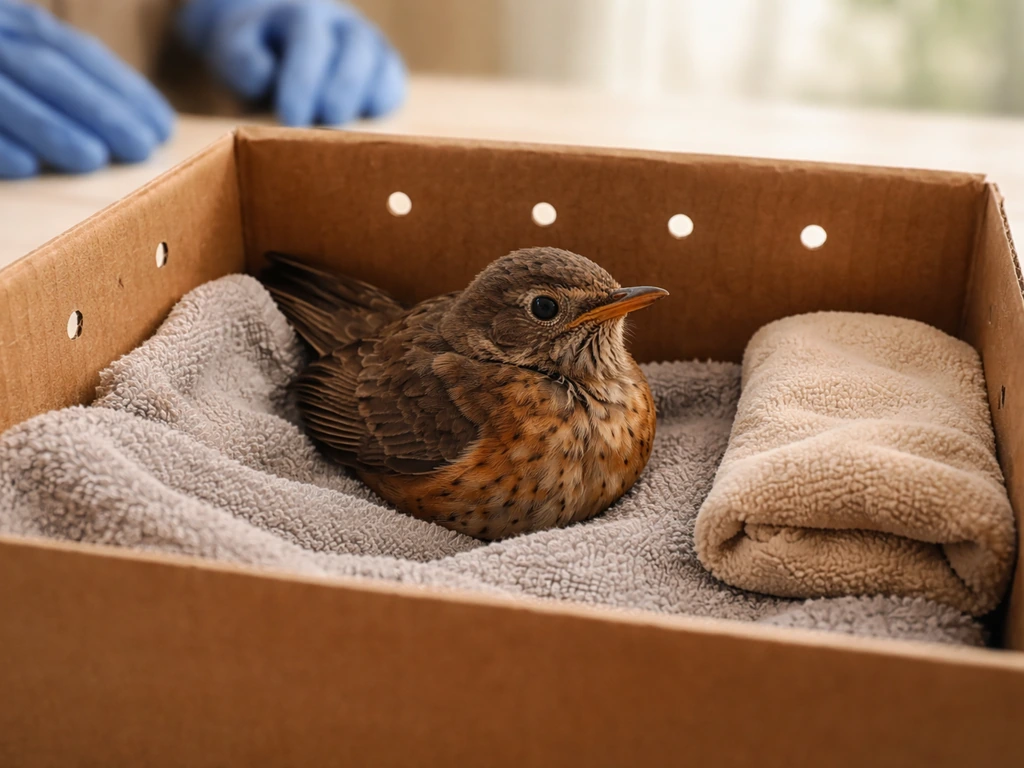
If you find a bird that's been struck by a projectile, or you suspect one has been injured, the priority is to stabilize the situation quickly and get it to professional help. If you notice signs like bleeding, shivering, lethargy, or unresponsiveness, the IWRC emergency guidance recommends contacting a wildlife rehabilitator immediately. Here's what to do step by step.
- Contain the bird carefully. Use a cardboard box with small air holes. Line the bottom with a soft cloth or paper towel. Don't use a wire cage — injured birds can hurt themselves further trying to escape.
- Put the box somewhere warm, dark, and quiet. Darkness reduces stress. Avoid handling the bird more than necessary, and keep pets and children away.
- Do not give food or water. This is a common instinct but it can cause serious harm — aspirating water or receiving the wrong diet can make injuries worse, according to Tufts Wildlife Clinic and Best Friends Animal Society guidance.
- Look for these urgent warning signs: active bleeding, open wounds, broken or dangling limbs, inability to hold the head up, seizure-like movement, or complete unresponsiveness. Any of these means the bird needs professional care immediately.
- Contact a licensed wildlife rehabilitator. You can find one through the National Wildlife Rehabilitators Association (NWRA) or by calling your state fish and wildlife agency. Many operate emergency lines. The International Wildlife Rehabilitation Council also maintains emergency contact resources.
- If an avian vet is closer and the bird is in acute distress, call them directly. Trauma from a projectile hit is a serious injury — comparable in urgency to blunt-force trauma in any animal — and delay can be fatal.
- Transport the bird yourself only if a rehabilitator instructs you to. Keep the box stable and the car warm during transport. Do not open the box unnecessarily.
It's worth knowing that some injuries from projectile strikes are not survivable, even with expert care. Head trauma, spinal injuries, and severe internal bleeding can be beyond treatment. A rehabilitator or vet may assess the bird and determine that humane euthanasia is the kindest outcome. That's a difficult reality, but knowing it helps you set realistic expectations and act quickly rather than waiting to see if the bird recovers on its own, time spent waiting usually makes survivable injuries worse.
Putting it all together
A slingshot is genuinely capable of killing birds, and it doesn't take an expert marksman or a powerful setup to cause serious harm. Small birds can be killed by a moderate slingshot at close range. Larger birds can be seriously injured. The legal risk is real and applies even when killing wasn't the intent. And if you're dealing with a bird problem, the deterrents and exclusion methods listed above will work better and longer than any attempt to drive birds off by force. If a bird has already been hurt, get it into a dark, quiet box and call a wildlife rehabilitator as fast as you can, that's the single most useful thing you can do for it.
FAQ
If I miss the bird, can a slingshot still hurt it?
Yes. Even if you miss the bird, a slingshot shot can still injure it indirectly if the projectile knocks it into a fence, tree, glass, the ground, or sparks a chase that leads to crashes. “No direct hit” does not mean “no risk,” especially for glancing strikes that disorient a bird.
What should I assume after a slingshot hit even if the bird seems okay?
Treat a hit as potentially fatal until a professional assessment says otherwise. Birds that look alert can still be suffering internal bleeding, air-sac collapse, or head trauma, and they may decline over hours. A good rule is to keep the bird contained, warm, and in the dark, then contact a wildlife rehabilitator right away.
Is there any slingshot setup that is reliably “safe” for birds?
Often, yes. At close range, many common slingshot projectiles can penetrate or cause lethal blunt trauma to small birds. There is also significant variation in band tension, pull length, ammo shape, and wind-up accuracy, so you cannot reliably create a “safe” setup by switching to a weaker-looking projectile.
If a bird lands after being hit but can’t fly, is it likely to survive?
A bird that is grounded after being struck, even if it is breathing, should be handled as injured. Birds cannot compensate well for wing damage and head or neck injury, and stress plus exposure can worsen outcomes quickly. Contain it, minimize handling, and prioritize professional help.
Does “I wasn’t trying to kill it” protect me legally?
Laws vary by location, but in the U.S. you can still face consequences under wildlife protection rules even if you never intended to harm. “Wounding” and “harassing” are part of what enforcement can treat as unlawful take, and intent is not a strong shield when harm happens during a shot.
What about situations where birds are near nesting areas or multiple birds are present?
Yes, collateral harm matters. A shot near a roost or nest can injure different birds than the one you aimed at, and a wounded bird may be more vulnerable to predators or starvation. If your scenario involves recurring birds, the safer legal path is deterrents or exclusion, not repeated projectile attempts.
If the ammo is “soft” like paintballs, can it still injure or kill a bird?
Paintballs and foam rounds are not guaranteed harmless. Even lower-energy projectiles can cause eye injuries, broken bones, and concussion-level trauma at close range, especially with accurate shots. If you cannot guarantee a non-injurious outcome, treat them as still capable of harm.
What are the safest first-aid steps I can do before contacting a wildlife rehabilitator?
Use containment and calm instead of rehabilitation attempts. Put the bird in a dark, quiet container with breathable ventilation, keep it warm but not hot, and avoid giving water or food. Never attempt surgery or force-feed, and avoid keeping it out in the open where it can overheat, chill, or attract predators.
If slingshots are not allowed for my bird issue, what’s the next legal step?
If you are dealing with birds repeatedly, document the problem and contact your state or local wildlife agency for permitted deterrence methods. Many jurisdictions have specific rules for pest species control, and slingshots are commonly not an approved method. Getting the correct permit or plan upfront reduces both legal risk and repeated harm.
Next Articles
Can You Kill an Old Bird Lethal Company? What to Do Now
Myths vs facts on an old bird dying: triage distress signs, safe first aid, vet help, and prevention tips
Can 200 FPS Kill a Bird? Real-World Risk and What to Do
Whether 200 FPS can seriously injure or kill birds, what affects lethality, and what to do after a suspected impact.
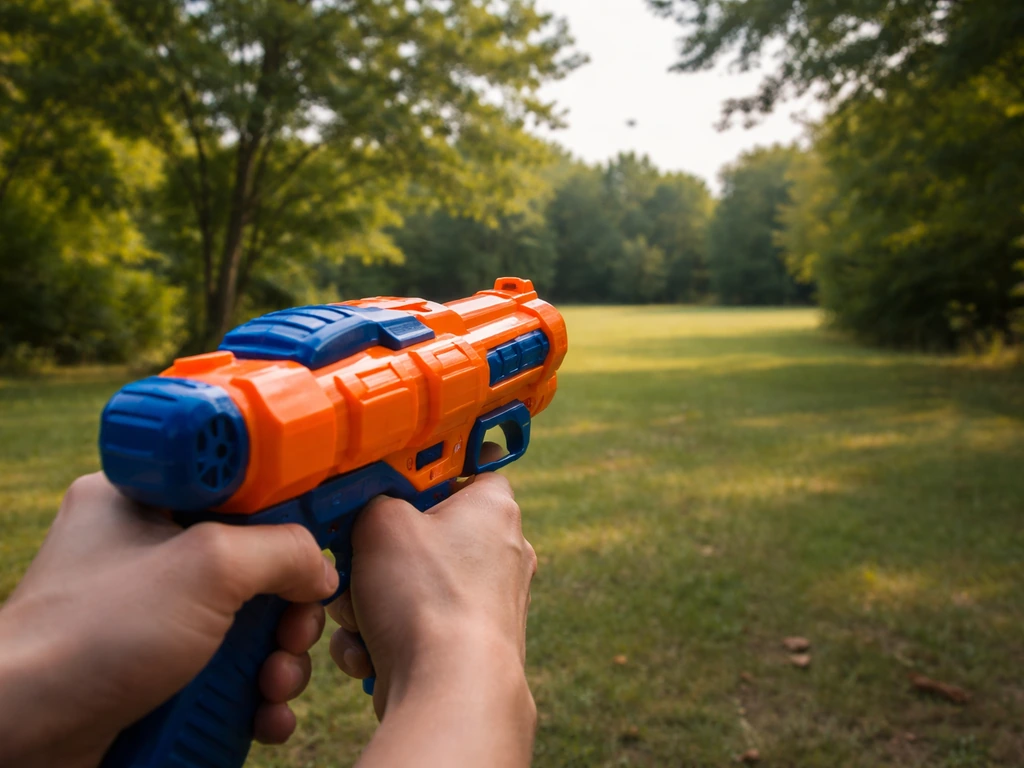
Can a Nerf Gun Kill a Bird? Safety, Risk, and What to Do
Can a Nerf gun kill a bird? Learn real risk factors, signs of injury, what to do, and safer deterrent options.