
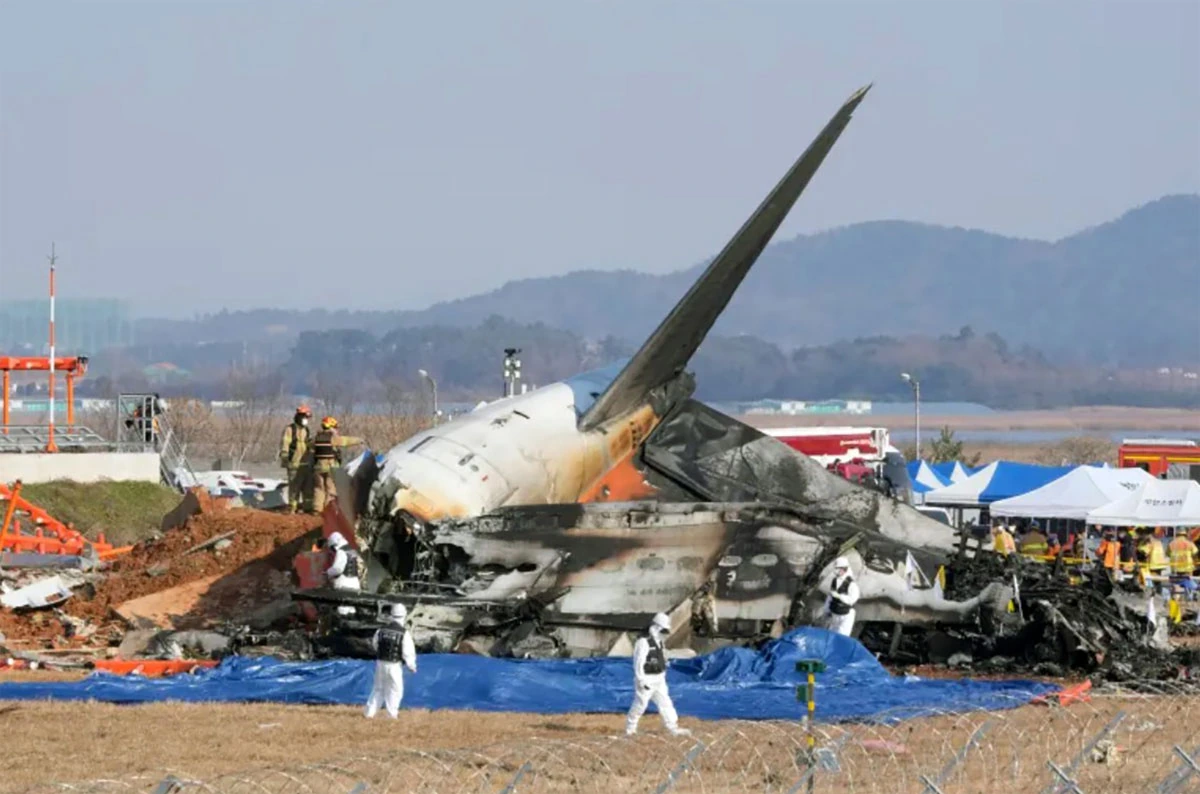
The South Korea plane crash most people are searching for is Jeju Air Flight 2216, which crashed at Muan International Airport on December 29, 2024. As of the latest official reporting, there is verified physical evidence of a bird strike: investigators from South Korea's Aviation and Railway Accident Investigation Board (ARAIB) found feathers and bird bloodstains inside both engines, and DNA analysis identified the birds as Baikal teals. That confirms a bird strike occurred. What investigators have not yet officially declared is whether the bird strike was the sole or primary cause of the crash, and the full investigation remains open.
South Korea plane crash bird strike: What’s known and how to verify

Maya Chen
26 May 2026
What a bird strike actually is, and why it matters for aircraft
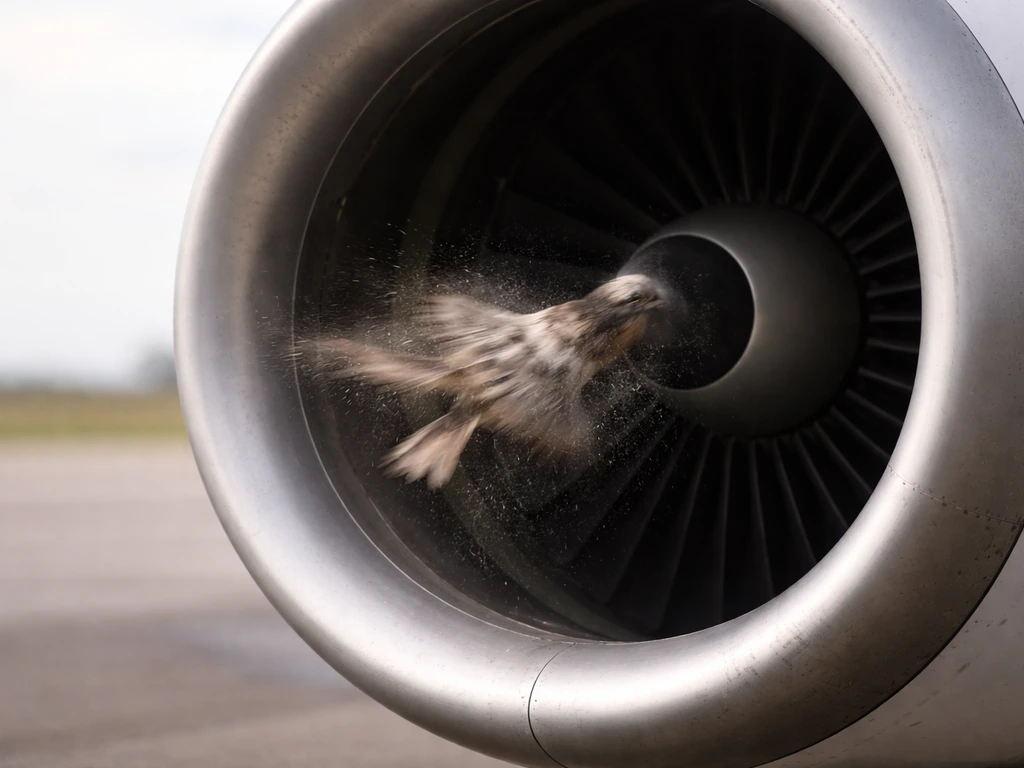
A bird strike is exactly what it sounds like: a collision between a bird (or flock of birds) and an aircraft in flight or during takeoff and landing. The term covers everything from a small songbird tapping a windshield to a Canada goose getting ingested into a jet engine at 180 knots. The severity depends heavily on where the bird hits and how large it is.
The most safety-critical scenario is engine ingestion. When a bird enters the core of a turbine engine, it can damage or destroy compressor and turbine blades, cause an engine stall, or result in a sudden loss of thrust. FAA guidance is explicit that engine ingestion is among the most serious categories of bird strike. Other high-risk impacts include windshield strikes (which can incapacitate the crew) and damage to the nose/radome, fuselage, or wing leading edges.
The FAA's wildlife strike database, built from decades of U.S. reporting, shows that most reported bird strikes cause little or no damage. Damaging strikes have actually fallen from around 6% of all reported strikes in 1996 to about 3.7% by 2024. But that minority of damaging strikes is where the real risk concentrates, and engine ingestion events are a big part of that picture. Waterfowl are a particularly outsized contributor: they represent only about 4% of reported strikes but account for roughly 27% of damage-causing strikes, largely because of their size and flock density.
Under ICAO's formal definitions, a bird strike is only classified as "confirmed" when physical evidence is present: a carcass, bird remains on the aircraft, or clear damage consistent with a strike. That standard matters a lot when you're trying to separate facts from rumor in a crash investigation.
The Jeju Air crash at Muan: what's confirmed and what's still open
Jeju Air Flight 2216, a Boeing 737-800, crashed while landing at Muan International Airport in South Jeolla Province on December 29, 2024. It is the deadliest aviation accident in South Korea's history. Early reporting immediately raised the bird strike question because the airport's control tower had issued a bird-strike warning to the crew approximately six minutes before the crash, and the crew issued a Mayday shortly after.
In the early hours and days after the crash, much of the online discussion mixed confirmed facts with speculation. Some posts claimed the bird strike was definitively the cause; others dismissed it entirely. The honest answer at that early stage was: the bird-strike warning and timing were suggestive, but not yet confirmed evidence of an actual strike.
That changed with the ARAIB's preliminary report, released around January 27, 2025. Investigators found feathers and bird bloodstains inside both engines. Samples were sent for DNA analysis and came back as Baikal teal, a migratory waterfowl species. In the t45 crash and bird strike context, investigators focus on whether confirmed bird ingestion lines up with the damage evidence and engine-event timeline t45 crash bird strike.
That meets ICAO's standard for a confirmed bird strike. What the preliminary report did not do is declare bird strike as the definitive cause of the crash. Investigators were still working through multiple factors, including the sequence of events after the strike and what role, if any, other variables played. There is an important difference between "a bird strike happened" and "the bird strike caused the crash" and reputable coverage has tried to maintain that distinction.
One notable complication: the flight data recorder and cockpit voice recorder reportedly failed to capture the final four minutes of the flight, which is the window investigators most need. That data gap is one reason the full causal determination is taking time.
How investigators figure out whether a bird strike caused a crash
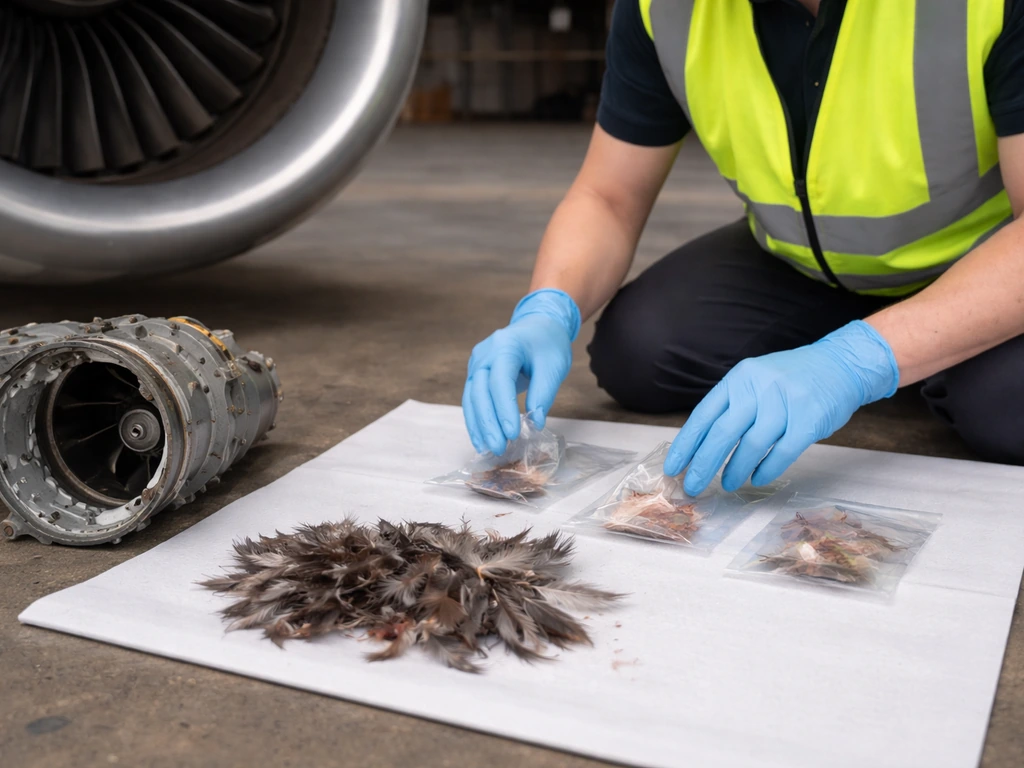
Accident investigators don't guess. They work through a structured evidence hierarchy that, for bird strikes, starts with physical remains and works outward to corroborating data.
- Physical remains: feathers, tissue, blood, or whole carcasses found on or in the aircraft. This is the primary confirmation method. The Smithsonian Institution's Feather Identification Lab, which works with the FAA, can identify species from fragments, and DNA barcoding from feather barbs or blood is used when morphological clues are insufficient.
- Aircraft damage patterns: the location, shape, and severity of engine or airframe damage can indicate whether a bird ingestion event occurred and give a rough size estimate for the bird involved.
- Air traffic control records: tower logs, voice recordings, and radar data establish a timeline. In the Jeju Air case, the tower's bird-strike warning and the Mayday timing are logged sequentially.
- Flight data recorder and cockpit voice recorder: these capture engine performance parameters (such as sudden thrust loss or N1/N2 anomalies) that can confirm an engine event consistent with ingestion.
- Maintenance history and inspection findings: post-crash teardown of engines can reveal blade damage, foreign material, and biological contamination.
When investigators have all five data streams pointing the same direction, causation becomes much clearer. In the Jeju Air case, physical remains and ATC records are confirmed. The flight recorder gap makes the engine-event timeline harder to reconstruct precisely, which is why investigators haven't closed the causal question yet.
Which birds and conditions create the highest risk
Not all bird strikes are equal in risk, and the species, location, and timing all matter. Large birds or dense flocks are the main danger. In the U.S. context, waterfowl (ducks and geese), gulls, and raptors are consistently ranked as the highest-damage species groups. Globally, the pattern is similar: it's size and flock density, not species per se, that drives risk.
Baikal teal are a migratory waterfowl species. They're medium-sized ducks that travel in large flocks, particularly during migration seasons in East Asia. South Korea's Muan Airport region is documented in aviation charts (the blank" rel="noopener noreferrer">Republic of Korea AIP amendment) as an area where Baikal teal flocks have been observed, and the airport uses non-lethal deterrents including gas cannons. The December 29 crash date falls squarely in the winter migration period for this species.
As a general pattern, bird strike risk peaks at certain times and conditions:
- Low altitude: FAA data shows the majority of reported strikes happen below 500 feet AGL, which corresponds to takeoff and landing phases.
- Migration seasons: spring and fall (and in some regions, winter) migration concentrate large numbers of birds at low altitudes near airports.
- Dawn and dusk: many species are most active at these times, overlapping with high-traffic flight schedules.
- Wetland and coastal airports: locations near water bodies attract waterfowl, which are disproportionately dangerous.
- Poor visibility or weather: birds and pilots alike have reduced time to react.
One important nuance from the Jeju Air aftermath: a post-crash bird study commissioned near Muan Airport focused on Eastern spot-billed ducks rather than Baikal teals, the species actually found in the engines. That mismatch is a reminder that wildlife surveys and crash-specific evidence don't always align, and that species presence studies are not the same as identifying the birds involved in a specific strike event.
What happens to the birds, and are there any health risks to know about
For the birds, a strike with a commercial aircraft is almost always fatal. At approach or takeoff speeds, the kinetic energy involved is enormous. Birds ingested into jet engines are killed instantly and typically reduced to fragmentary remains, which is why DNA analysis is often required for species identification. There's no survivability scenario for a bird caught in an engine core.
From a public health standpoint, the realistic concern is narrow and applies specifically to people handling bird remains at a crash or incident scene, not to passengers or the general public nearby. IATA has published biosafety guidance for bird-strike cleanup that recommends standard PPE and proper handling procedures to avoid aerosolization of biological material. This is standard occupational precaution, not a signal of elevated disease risk to anyone not directly handling remains.
The broader concern people sometimes raise, that bird strikes could spread avian influenza or other diseases through an aircraft's air systems, is not supported by evidence. The birds are struck externally; there is no mechanism by which remains would enter a cabin air supply. Public health agencies have not flagged bird-strike events as disease transmission vectors for passengers. The biosafety guidance is for incident responders and maintenance crews handling physical remains, not for travelers.
Where to find reliable updates and what to look for

If you're following the Jeju Air investigation and want accurate updates, there are specific sources worth bookmarking. The ARAIB is the official investigating body and publishes formal reports and statements. South Korea's Ministry of Land, Infrastructure and Transport issues supplementary official communications. For English-language coverage, AP and Reuters have consistently cited official documents rather than speculation, which makes their reporting more reliable than social media summaries.
When reading updates, a few questions help you filter signal from noise:
- Is the source citing an official ARAIB statement or preliminary/final report, or is it paraphrasing secondary reporting?
- Does the article distinguish between 'a bird strike occurred' (confirmed by physical evidence) and 'the bird strike caused the crash' (which requires a full causal determination)?
- Has the investigation addressed the flight recorder gap and what additional evidence was used to fill it?
- Has the ARAIB issued an interim or final report beyond the January 2025 preliminary findings?
The Jeju Air crash is not an isolated case for this type of question. Related incidents, including other airline bird-strike events and military aircraft collisions with birds, follow the same investigative logic. The fundamentals are consistent: physical evidence confirms a strike occurred; a full causal chain requires more data. Keeping that distinction clear is what separates useful information from online noise.
The broader takeaway on bird strikes and aviation safety
Bird strikes are not rare events. FAA data logs tens of thousands of reported strikes per year in the U.S. alone, and global numbers are higher. The overwhelming majority result in no damage. But the small percentage that do cause damage can be serious, especially when large birds or flocks are ingested into engines during critical flight phases. Airports manage this risk continuously through wildlife habitat modification, active deterrence (gas cannons, pyrotechnics, trained raptors), and coordination with air traffic control.
The Jeju Air crash is a genuine tragedy and a significant case for aviation safety research, precisely because the combination of factors involved, confirmed bird ingestion, possible dual-engine impact, the landing gear situation, and the data recorder gap, raises important questions for how airports and airlines manage wildlife risk during landing approaches. The investigation findings, when final, will likely influence bird-strike prevention protocols at airports in South Korea and possibly beyond.
For now, what the evidence actually says is this: a bird strike involving Baikal teals was confirmed inside both engines of Jeju Air 2216. The full causal picture is still under investigation. Anyone telling you more than that with certainty is getting ahead of the official record.
FAQ
How can I verify a claim that the Jeju Air south korea plane crash bird strike was “the cause” and not just that a strike happened?
Check whether the source explicitly states causation, not only occurrence. Look for language like “confirmed bird strike” plus a causal chain supported by investigators, including an engine-event timeline that aligns with damage. If the update only confirms bird presence or mentions timing, treat it as “bird strike occurred,” not “bird strike caused the crash.”
What counts as “confirmed bird strike” versus rumor in this case?
Under ICAO-style standards, confirmation requires physical evidence such as feathers or remains, or clear, consistent damage tied to a strike. Claims based solely on eyewitness reports, radar stories, or “the timing seems right” are not the same as confirmed evidence from engines or airframe parts.
Why does the recorder gap (the reported missing final four minutes) matter for the bird-strike question?
That gap reduces investigators’ ability to reconstruct control inputs, engine parameters, and exact sequencing during the critical window after the ingestion. Without those data, it is harder to prove whether the aircraft’s subsequent behavior matches an engine-loss or stall pathway versus other contributing factors.
If both engines showed bird evidence, does that automatically prove the strike was the primary cause?
Not automatically. Evidence supports that birds were ingested and caused damage consistent with a strike, but determining primary causation requires matching engine damage to performance changes and aircraft handling outcomes after the event. Multiple factors can coexist, so “dual-engine ingestion occurred” is stronger than “it was the primary cause.”
Could other birds have been involved even if DNA matched Baikal teal?
Yes. DNA identification of birds found in engines confirms those birds were present, but it does not rule out other wildlife impacts earlier or later. The key is whether investigators found additional remains or patterns of damage that correspond to more than one event, and whether they report those findings.
How should I interpret airport wildlife warnings and a Mayday shortly afterward?
Treat ATC or tower bird-strike alerts as a strong contextual clue, but not confirmation by themselves. The warning suggests bird activity in the area, while confirmation requires physical evidence or documented ingestion and damage consistent with a strike.
Do the biosafety precautions for handling bird remains mean passengers nearby were at infection risk?
No. The biosafety guidance is aimed at responders handling biological material, using PPE to prevent aerosolization during cleanup. It is not the same as an exposure pathway through the cabin for passengers, since the struck remains were external and there is no supported mechanism for remains to enter cabin air supply.
Why did a nearby post-crash bird study focusing on other ducks not line up with the engines’ Baikal teal DNA?
Local species surveys can reflect general habitat use, while engine DNA identifies the birds that actually struck the aircraft at that moment. Differences can occur because birds in migration flocks shift location rapidly, and because a survey’s sampling design may target species or areas that differ from the crash-specific event.
Is it safe to assume the winter migration timing in South Korea means Baikal teals were definitely in the area right then?
Timing increases the likelihood, but it does not prove presence at the exact moment of the strike. The most decision-grade evidence is still the physical remains and DNA results tied to the engines, plus the investigators’ reconstruction of events during approach and landing.
What’s the best way to avoid getting misled by social media when following south korea plane crash bird strike updates?
Prioritize official releases and statements from the investigating body, then look for updates that add new evidence (new physical findings, verified analysis results, or updated causal determinations). Be cautious with posts that jump from “confirmed bird strike” to a definitive cause, especially when the investigation is still open and recorder data are incomplete.
Next Article
Plane Bird Strike News: What It Means and What to Do Now
Guide to plane bird strike news: how reports are tracked, risks and myths, mitigation tips for airports, pilots, and bys